Court allows the restoration of a writ petition dismissed for want of prosecution, emphasizes societal responsibility towards differently-abled individuals.
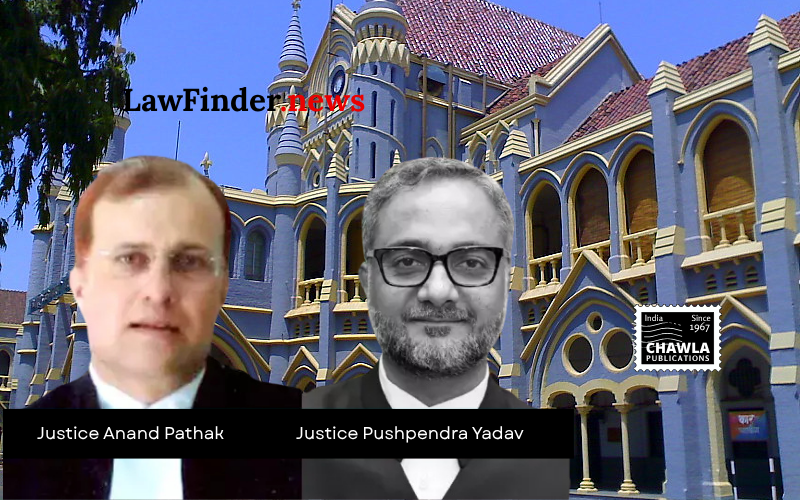
In a significant development, the Madhya Pradesh High Court has restored the writ petition of Sushil Verma, which was previously dismissed for want of prosecution. The Division Bench, comprising Justices Anand Pathak and Pushpendra Yadav, set aside the earlier dismissal order, acknowledging that the petitioner should not suffer due to the fault of his counsel. The court's ruling emphasized the principle that litigants should not be penalized for their counsel's shortcomings.
The case, titled "Sushil Verma v. Madhya Pradesh Industrial Infrastructure Development Corporation Gwalior," involves a writ petition initially dismissed because the petitioner's counsel was unavailable for hearings. The court recognized the dismissal as a technicality and restored the petition, which concerns Verma's claim for a long-pending promotion. The court's decision reflects the judiciary's commitment to ensuring justice by examining the merits of a case rather than dismissing it on procedural grounds.
In an innovative move, the court introduced the concept of "Social Audit" in its judgment. It suggested that professionals and policymakers visit institutions housing differently-abled individuals and those institutionalized, to ensure transparency and accountability in their management. The court also encouraged societal involvement to uplift the standards of living for these individuals.
As part of this social responsibility initiative, the court advised the appellant's counsel to visit the Madhav Andha Ashram in Gwalior, contribute food items worth Rs. 10,000, and spend time with the inmates. This gesture, as highlighted by the court, would demonstrate societal care and compassion.
The court's directive extends beyond the immediate case, urging policymakers, including the Department of Women and Child Welfare Development and the Department of Social Justice, to develop tangible solutions for the effective implementation of Social Audits. Such audits aim to ensure that management of institutions for vulnerable populations is conducted with integrity and accountability.
This ruling not only restores the appellant's writ petition but also sets a precedent for incorporating social responsibility into legal proceedings. The court's proactive approach in suggesting community service and advocating for Social Audits underscores its role in fostering a more inclusive society.
Bottom Line:
Restoration of writ petition dismissed for want of prosecution - Litigant should not suffer due to fault of counsel - Concept of 'Social Audit' introduced, emphasizing responsibility of society towards differently-abled individuals and institutionalized persons.
Statutory provision(s): Madhya Pradesh Uchcha Nyayalaya (Khand Nyaypeeth Ko Appeal) Adhiniyam, 2005, Section 2(1)