Court Affirms Juvenile Convictions Cannot Disqualify Employment in Military Forces, Reinforcing Rehabilitation Focus
In a significant decision, the Madhya Pradesh High Court has dismissed the appeal filed by the Union of India against a writ petition order which allowed Pushpraj Singh, a respondent previously convicted as a juvenile for minor offenses, to secure employment in the defense sector. The court reaffirmed the principles of the Juvenile Justice (Care and Protection of Children) Act, 2015, emphasizing that past convictions for trivial offenses committed as a juvenile should not act as a disqualification for future employment, including in the military forces.
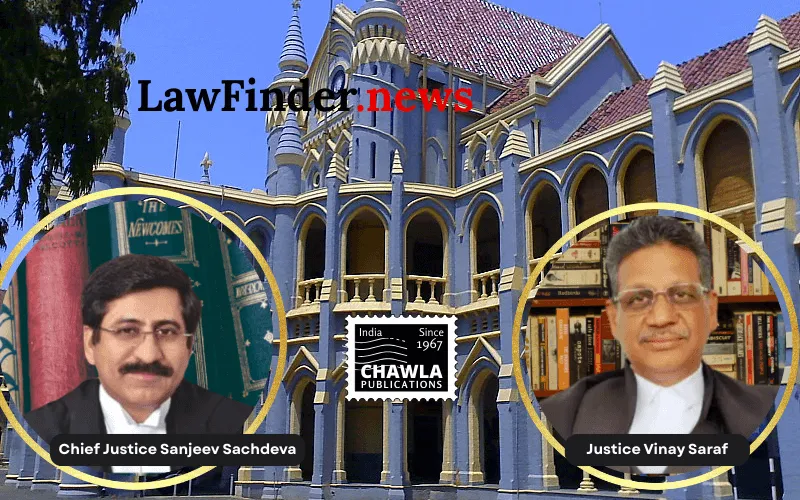
The Division Bench comprising Chief Justice Sanjeev Sachdeva and Justice Vinay Saraf noted that the respondent's prior conviction under Sections 294, 323, and 506 of the Indian Penal Code, for which a mere fine of Rs. 1000 was imposed, does not constitute a disqualification for employment. The judgment highlighted that the Juvenile Justice Act mandates the sealing and erasure of all past juvenile records to facilitate the reintegration of such individuals into society without stigma.
The High Court's decision aligns with previous judgments by the Delhi High Court and the Supreme Court, which have consistently held that the objectives of the Juvenile Justice Act are to prevent the labeling of juveniles as criminals and to promote their rehabilitation. The court referenced the Supreme Court judgment in Union of India v. Ramesh Bishno, which emphasized that no stigma should attach to crimes committed by juveniles, and the law aims to reintegrate them as normal individuals.
In this case, the respondent, having cleared all recruitment stages for the post of Soldier (General Duty), was initially denied an appointment due to his juvenile conviction. However, the High Court ruled that the mere conviction for trivial offenses could not bar him from employment, as the Juvenile Justice Act does not create exceptions for specific employment sectors, including military forces.
This judgment reinforces the rehabilitative intent of the Juvenile Justice Act and stresses that juveniles should not face lifelong consequences for mistakes made in their youth. The court's decision underscores the necessity to provide juveniles with opportunities for a fresh start, thereby dismissing the appeal by the Union of India and upholding the writ petition order in favor of Pushpraj Singh.
Bottom Line:
Juvenile Justice Act, 2015 - Past criminal conviction of a juvenile cannot act as a disqualification for future employment unless covered by specific exceptions under the Act.
Statutory provision(s): Juvenile Justice (Care and Protection of Children) Act, 2015 Sections 24, 25; Indian Penal Code, 1860 Sections 294, 323, 34, 506
Union of India v. Pushpraj Singh, (Madhya Pradesh)(DB)(Jabalpur) : Law Finder Doc id # 2887812