Court rules shrine encroaching public property must be removed, emphasizing statutory duty of municipal authorities under the Tamil Nadu Urban Local Bodies Act.
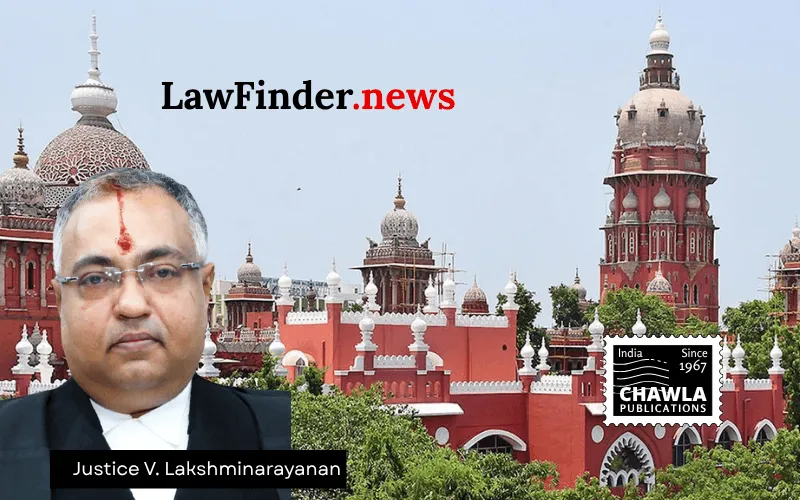
Chennai, January 22, 2026 - In a significant judgment, the Madras High Court, presided over by Justice V. Lakshminarayanan, has directed the removal of an unauthorized religious structure from a public road in Thiru.Vi.Ka.Nagar, Chennai. The court emphasized the statutory obligation of municipal authorities under Section 128 of the Tamil Nadu Urban Local Bodies Act to clear encroachments on public property.
The case arose from a petition filed by A. Sarath, a resident who purchased property adjacent to the disputed shrine in 2024. Sarath claimed that the structure, a shrine dedicated to Mother Mary, obstructed the main entrance to his property and caused inconvenience to pedestrians. Despite assurances that the structure was temporary, it remained, prompting Sarath to seek legal intervention for its removal.
The court heard arguments from various parties, including Mr. Daniel, who claimed responsibility for establishing the shrine nearly three decades ago. Daniel argued that the shrine had become a community focal point for local Christians, offering spiritual solace to many. He appealed for the shrine’s preservation, citing its longstanding presence and communal harmony it fostered.
Justice Lakshminarayanan, however, underscored that no individual has the right to erect religious structures on public thoroughfares and subsequently resist removal based on religious sentiments. Citing precedent from the Supreme Court and other High Courts, the judge clarified that the fundamental right to worship does not extend to unauthorized structures on public property.
The court instructed the municipal authorities to proceed with removal efforts, as stipulated by the Tamil Nadu Urban Local Bodies Act. The Regional Deputy Commissioner (Central) had already issued a notice to Daniel, demanding the structure’s removal within seven days. Daniel, in his affidavit, expressed inability to remove the shrine independently but assured compliance with the court’s directives.
Justice Lakshminarayanan ordered the municipal authorities to ensure the removal of the structure by February 10, 2026, following due process. The judgment reinforces the principle that public roads and pathways cannot be appropriated for religious purposes, regardless of the duration of encroachment.
The case highlights ongoing tensions between individual religious practices and public space regulations, reflecting broader issues of urban governance and community rights. The court’s ruling is expected to set a precedent for similar cases, affirming the necessity of maintaining public spaces free from unauthorized constructions.
Bottom Line:
Encroachment on public property, even if for religious purposes, cannot be permitted. Mandamus issued for removal of illegal structures under Section 128 of the Tamil Nadu Urban Local Bodies Act.
Statutory provision(s): Article 25 of the Constitution of India, Section 128 of the Tamil Nadu Urban Local Bodies Act
A.Sarath v. Commissioner, Corporation Of Greater Chennai, (Madras) : Law Finder Doc id # 2843844