Chhattisgarh High Court Quashes Lapsing Proceedings Against JSW Steel, The court rules that mining operations cannot commence without environmental clearance, invalidating lapsing provisions under the MMDR Act.
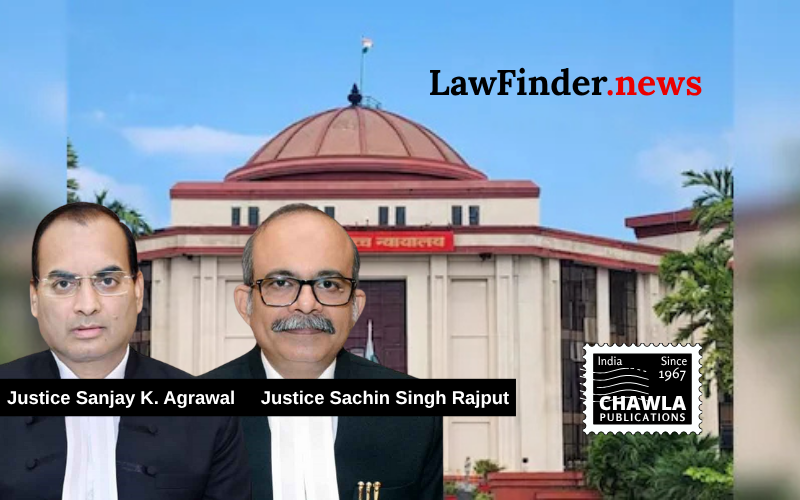
In a landmark judgment, the Chhattisgarh High Court has quashed the lapsing proceedings initiated against JSW Steel Limited regarding its limestone mining lease. The division bench, comprising Justice Sanjay K. Agrawal and Justice Sachin Singh Rajput, delivered the verdict on October 10, 2025, highlighting crucial statutory interpretations and procedural requirements under the Mines and Minerals (Development and Regulation) Act, 1957 (MMDR Act).
The proceedings against JSW Steel were initiated by the State Government under Section 4A(4) of the MMDR Act, citing the non-commencement of mining operations within the stipulated two-year period post-execution of the mining lease. However, the High Court held that the lapsing provisions could not be invoked as mining operations were legally prohibited pending the grant of necessary environmental clearances under the Environment (Protection) Act, 1986.
JSW Steel argued that the legal framework and the lease deed itself prevented the commencement of mining activities without environmental clearance, asserting that the statutory conditions precedent for invoking Section 4A(4) were absent. The court agreed, emphasizing that Section 4(1) of the MMDR Act prohibits mining operations unless they are conducted under a valid lease and in accordance with its terms, which include obtaining environmental clearance.
The judgment further clarified that the lapsing of a mining lease under Section 4A(4) does not occur automatically and requires a specific order from the State Government. The court noted the legislative intent behind the MMDR Amendment Act, 2015, which aimed to safeguard concession holders from lapses due to procedural delays beyond their control.
The court also referenced previous Supreme Court judgments, including Common Cause v. Union of India and Calcutta Discount Co. Ltd. v. Income Tax Officer, to underline the necessity of jurisdictional prerequisites before initiating lapsing proceedings.
The court's decision is expected to have significant implications for mining leaseholders across the country, reinforcing the requirement for environmental compliance before operational commencement. The judgment also leaves open the question of the constitutional validity of Rule 20(3) of the Minerals Concession Rules, 2016, for future adjudication.
JSW Steel, represented by senior advocate Mr. Ashok K. Parija, expressed relief at the judgment, stating that the decision affirms the company's stance on procedural adherence and statutory compliance. The Union of India and the State Government had contended that the proceedings were premature and maintainable against the show-cause notice, a position the court ultimately rejected.
Bottom Line:
The statutory condition precedent for invoking lapsing provisions under Section 4A(4) of the Mines and Minerals (Development and Regulation) Act, 1957 is the existence of a mining lease that legally permits the commencement of mining operations. Proceedings initiated under Section 4A(4) are invalid where the leaseholder is prohibited from commencing mining operations due to statutory or legislative injunctions.
Statutory provision(s): Mines and Minerals (Development and Regulation) Act, 1957 - Sections 4(1), 4A(4), 21(1), 21(5); Environment (Protection) Act, 1986; Minerals (Other than Atomic and Hydro Carbons Energy Minerals) Concession Rules, 2016 - Rule 20(3).
JSW Steel Limited v. Union of India, (Chhattisgarh)(DB) : Law Finder Doc Id # 2792362