Himachal Pradesh High Court Grants Parole to Convict Despite District Magistrate's Objection. Court Quashes Rejection Order, Emphasizes Parole's Role in Reformation and Social Reintegration
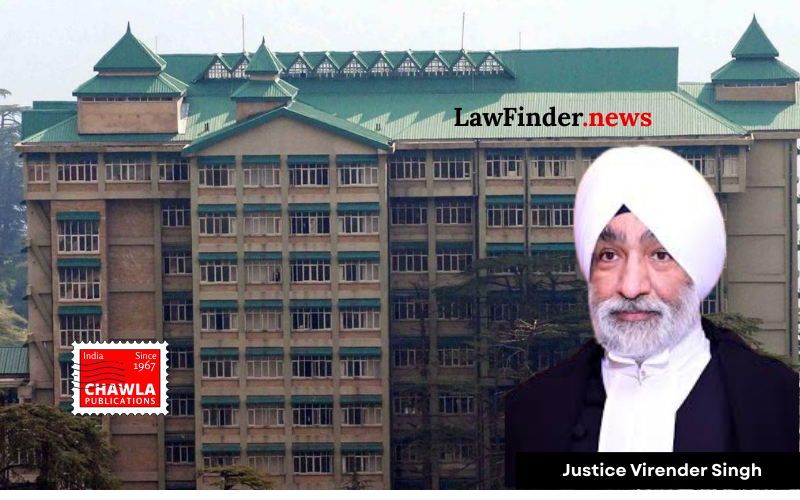
The Himachal Pradesh High Court has overturned a District Magistrate's decision to deny parole to Prem Singh, a convict under the Narcotic Drugs and Psychotropic Substances (NDPS) Act. The court, presided over by Justice Virender Singh, granted Singh parole for 42 days despite objections from the District Magistrate citing the petitioner's involvement in a heinous crime and habitual offending.
Prem Singh, who has been serving a 13-year sentence with a fine of Rs. 1,30,000 following his conviction by the Special Judge in Mandi, Himachal Pradesh, had applied for parole for agricultural purposes. His initial application was rejected on June 16, 2025, without justifiable reasons, leading him to file a writ petition under Article 226 of the Constitution of India. Singh sought to quash the rejection order and be granted parole to maintain family and social ties and address personal issues.
The court highlighted the importance of parole, drawing from the Supreme Court's decision in Asfaq v. State of Rajasthan (2017), which underscores parole as a tool for reformation, allowing convicts to maintain societal connections and resolve personal matters. The court noted that parole serves a dual purpose: aiding the convict's reintegration into society and addressing family matters, which are essential for rehabilitation.
Despite the District Magistrate's recommendation against parole, citing the ongoing trial under the HP Excise Act, the court found no plausible reasons for denying Singh's request. It emphasized that mere registration of another case should not preclude parole, especially when local bodies, including the Gram Panchayat and residents, have expressed no objection to Singh's temporary release.
The court's judgment underscores the principle that convicts should be allowed to maintain their family and social ties, which are vital for their reformation and rehabilitation. The court imposed stringent conditions on Singh's parole, including a personal bond of Rs. 1,00,000 with two sureties, and mandated his surrender post the parole period.
The decision reflects the judiciary's approach towards a humane penal policy, acknowledging the need for rehabilitation alongside deterrence and retribution, thus balancing societal interests with individual rights.
Bottom Line:
Parole granted to petitioner convicted under NDPS Act despite recommendation for rejection by District Magistrate on grounds of heinous crime and habitual offending. Court emphasizes importance of parole for maintaining family and social ties, solving personal and family problems, and enabling societal reintegration of convicts.
Statutory provision(s): NDPS Act Sections 20 and 29, Constitution of India Article 226
Prem Singh v. State of Himachal Pradesh, (Himachal Pradesh) : Law Finder Doc Id # 2796388