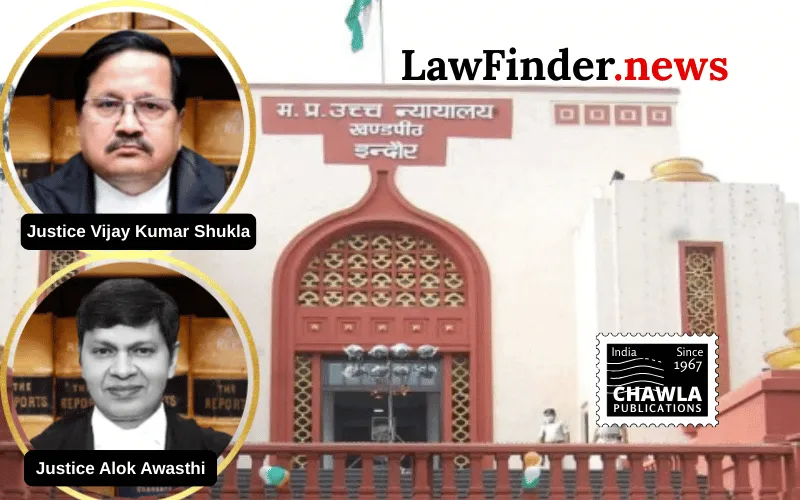
Indore, Apr 23 A Muslim petitioner before the Madhya Pradesh High Court on Thursday claimed that there was no evidence that a specific temple was demolished at the present site of Bhojshala complex in Dhar district and a mosque was built there.
The high court is hearing petitions over the original religious nature of the structure at the site which Hindus claim to be a Saraswati temple built in 1034 by Raja Bhoj of the Parmar dynasty and the Muslims recognise as Kamal Maula Mosque.
Senior advocate Salman Khurshid, representing Maulana Kamaluddin Welfare Society of Dhar, presented detailed arguments before Justices Vijay Kumar Shukla and Alok Awasthi of the Indore bench which has been hearing four petitions and a writ appeal related to the dispute since April 6.
There was no evidence that any "specific temple" in Dhar was demolished during any "specific period" and a mosque was subsequently built on its site, said Khurshid.
Citing a 2003 letter purportedly sent by the British High Commission to the then chief minister of Madhya Pradesh, the senior lawyer claimed that a statue in the British Museum in London, which the Hindu petitioners claim to be of Vagdevi (Goddess Saraswati) from Bhojshala, is actually a statue of the Jain goddess Ambika.
He also cited the Supreme Court's landmark judgment in the Ram Janmabhoomi-Babri Masjid case and argued that the ownership of the disputed complex should be determined on the basis of established principles of law and standards of evidence that govern the proceedings of a civil suit.
The authenticity of all documents, texts, and other materials presented before the high court should be thoroughly scrutinized, Khurshid said.
Citing Ramsevak Garg's Hindi book "Hazrat Maulana Kamaluddin Chishti (Rahmatullah Alaih) and His Era," he said that the city of Dhar, once the capital of the Parmar rulers of Malwa, witnessed numerous attacks, plunder, destruction and reconstruction during the princely era, including by Hindu kings.
Ain-ul-Mulk Multani had no need to plunder and conquer Dhar during his invasion of Malwa in 1305 and after conquering Mandu (another historic city in Malwa), he simply had to establish his rule in Dhar, Khurshid said, citing Garg's book.
According to historians, Ain-ul-Mulk Multani was a general of Alauddin Khilji who played a key role in strengthening Khilji's power in Malwa.
Khurshid also argued that the mosque associated with Maulana Kamaluddin, a Sufi saint of the Chishti order of Ajmer, was built within the disputed Dhar complex by the "then ruler", and rejected the Hindu side's claim that it was built by force.
Khurshid concluded his arguments on Thursday. The hearing would now resume on Monday.