Supreme Court Mandates Permanent Employment for Daily-Wage Labourers in Sensitive Government Establishments, Apex Court sets aside High Court's decision, directing regularisation of services with retrospective effect.
In a landmark judgment, the Supreme Court of India has directed the Union of India to regularise the services of daily-wage labourers engaged in sensitive government establishments, granting them permanent status with retrospective effect from September 9, 2010. The decision comes after a prolonged legal battle initiated by the appellants, R. Iyyappan and others, who have been engaged as casual labourers at the Mahendragiri Unit of the Indian Space Research Organisation (ISRO) since the 1990s.
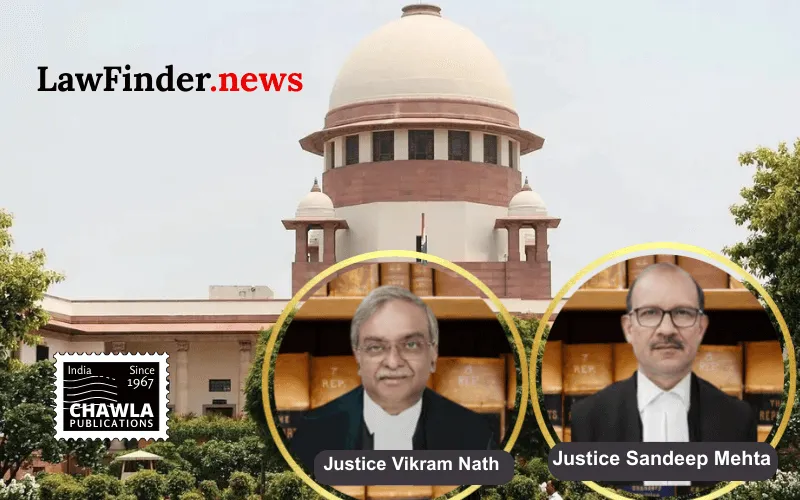
The apex court's bench, comprising Justices Vikram Nath and Sandeep Mehta, set aside the earlier judgment passed by the Madras High Court, which had dismissed the appellants' plea for regularisation. The Supreme Court emphasised that the state must act as a model employer, ensuring fairness and dignity in public employment, especially for those contributing indirectly to national scientific endeavours.
The appellants, who have been working on a daily-wage basis for over two decades, approached the Central Administrative Tribunal (CAT) seeking regularisation of their services. The CAT had directed the creation of permanent posts for these workers, a decision that was challenged by the respondents but eventually attained finality after being upheld by the High Court and the Supreme Court.
However, the respondents framed the "Gang Labourers Scheme," which provided only for temporary engagement, prompting the appellants to challenge its validity. The Supreme Court noted that the scheme failed to comply with the tribunal's directions, which mandated structured and enduring employment arrangements.
The court observed that the High Court erred in revisiting the issue of regularisation, which had already been settled, and criticised the state's arbitrary treatment of the labourers. Highlighting the importance of every individual in the scientific ecosystem, the court underscored the need for the state to respect and recognise the contributions of its workforce.
The judgment mandates the Union of India to regularise the services of the appellants and all similarly situated individuals within four weeks, ensuring compliance with the tribunal's original directive.
Bottom Line:
Directions issued by the Tribunal, mandating the creation of posts and regularisation of services for daily-wage labourers engaged in a sensitive government establishment, must be complied with in letter and spirit. The State, as a model employer, must ensure fairness and dignity in public employment.
Statutory provision(s): Article 14 of the Constitution of India, Article 23 of the Constitution of India, Official Secrets Act, Casual Labourers (Grant of Temporary Status and Regularisation) Scheme, 1993, Gang Labourers (Employment for Sporadic Types of Work) Scheme, 2012.
R. Iyyappan v. Union of India, (SC) : Law Finder Doc id # 2890791