Supreme Court Overturns Tribunal and High Court Orders, Denies Rescheduling of Police Recruitment Test Apex Court Emphasizes Importance of Adhering to Final Selection Schedules in Public Employment
In a significant ruling, the Supreme Court of India has set aside the decisions of both the Central Administrative Tribunal and the Delhi High Court, which had allowed a candidate, Uttam Kumar, to reschedule his Physical Endurance and Measurement Test (PE&MT) for a police recruitment process. The judgment underscores the critical need to adhere to the prescribed selection process timelines in public employment, citing the lack of seriousness and initiative shown by the candidate as the reason for denying rescheduling.
The case arose from an appeal by the Commissioner of Delhi Police against the orders of the Tribunal and High Court that had permitted Uttam Kumar to take the PE&MT with the next batch of job aspirants due to his illness on the scheduled test date. Kumar, who had cleared the initial tier of the selection process, failed to appear for the PE&MT on January 14, 2024, citing ill health, including symptoms like fever and dizziness. Despite submitting three representations requesting rescheduling, the Supreme Court found that these requests lacked acknowledgment of receipt and were not compelling enough to warrant an exception.
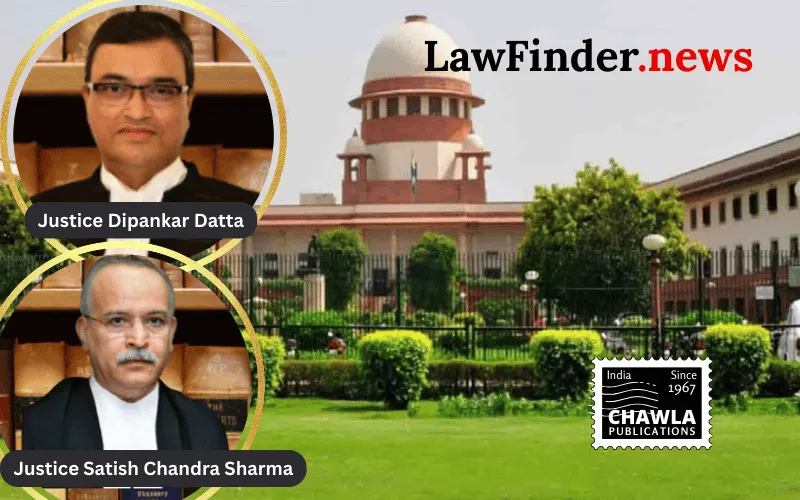
The Supreme Court bench, comprising Justices Dipankar Datta and Satish Chandra Sharma, emphasized that the advertisement for recruitment clearly stated that the schedule was final and could not be altered under any circumstances. The judgment highlighted that Kumar's failure to appear or request rescheduling on the day of the test indicated a lack of seriousness, and his ailment did not justify an exceptional treatment.
Furthermore, the Court dismissed the argument that Kumar's belonging to a backward community should influence the decision, stating that public employment should be based on merit and fairness without undue consideration of community status. The judgment reinforces the principle that grace or compassion should not interfere with the objectivity required in public employment processes.
The Supreme Court's decision reaffirms the importance of maintaining a level playing field in recruitment processes and serves as a cautionary tale for candidates to adhere strictly to prescribed schedules, underscoring that negligence or lack of initiative cannot be grounds for seeking special consideration.
Statutory provision(s): Not explicitly mentioned in the judgment provided.
Commissioner, Delhi Police v. Uttam Kumar, (SC) : Law Finder Doc id # 2877740