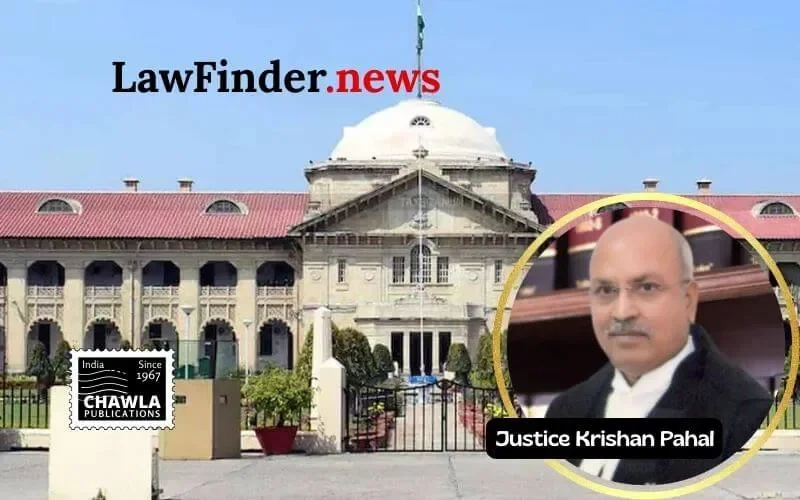
Court Criticizes Administrative Apathy and Directs Authorities to Uphold Justice for Marginalized Individuals
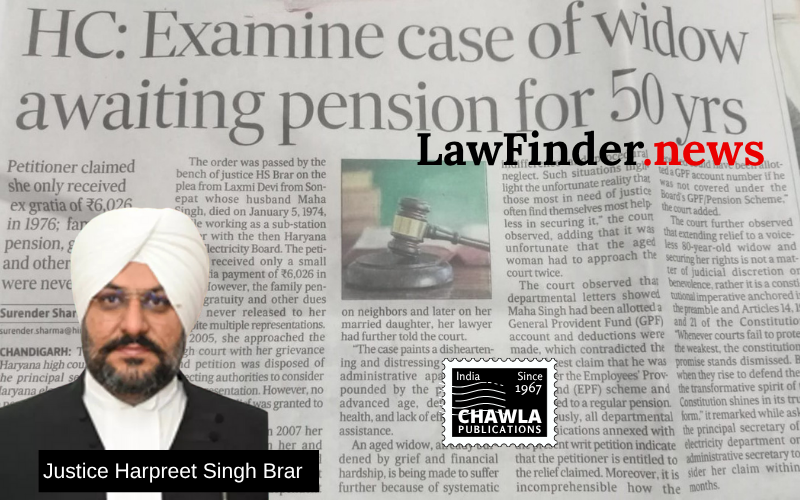
In a landmark judgment, the Punjab and Haryana High Court has directed the Electricity Department of Haryana to immediately release pensionary benefits to Laxmi Devi, an 80-year-old widow, who has been struggling for nearly five decades to secure her rightful dues following the death of her husband, Late Maha Singh. The judgment, delivered by Justice Harpreet Singh Brar, highlights the administrative neglect faced by marginalized individuals and underscores the duty of constitutional courts to protect and provide relief to the voiceless sections of society.
Laxmi Devi's husband served as a Lineman-II in the Electricity Department and passed away in 1974 while in service. Despite numerous representations and petitions made over the years, the widow was deprived of family pension, gratuity, and other retirement benefits. The court criticized the systemic indifference and procedural neglect that kept the petitioner from accessing her rightful dues, portraying a distressing picture of administrative apathy.
Justice Brar emphasized that constitutional courts must uphold fundamental rights and ensure that justice reaches the most vulnerable sections of society. He remarked that social justice is the foundation of democracy and the judiciary acts as its vigilant custodian. The judgment reflects the principle of transformative constitutionalism, asserting that granting relief to Laxmi Devi is a constitutional imperative rooted in human dignity and empathy, rather than mere judicial benevolence.
The court questioned the validity of the respondents' claim that Maha Singh was not covered under the GPF/Pension Scheme, despite being allotted a GPF Account Number. It directed the Principal Secretary of the Electricity Department, Haryana, to personally examine the petitioner's claims and ensure the release of all lawful benefits within two months.
This judgment is a significant reminder of the judiciary's role in safeguarding the rights of oppressed individuals and ensuring that constitutional promises do not remain theoretical. The court's decision brings hope and relief to Laxmi Devi, who has been living in destitution and struggling with health issues, reaffirming faith in the judicial system's commitment to justice and equality.
Bottom Line:
Constitutional Courts must uphold fundamental rights and ensure relief to vulnerable sections, including marginalized individuals and aged widows facing systemic neglect.
Statutory provision(s): Articles 14, 19, and 21 of the Constitution of India, Order 1 Rule 10 and Section 151 of CPC.
Laxmi Devi v. State of Haryana, (Punjab And Haryana) : Law Finder Doc id # 2810767