Court Orders Retrospective Promotions for Petitioners, Emphasizes Need for Statutory Amendments for Reservation
In a landmark judgment pronounced on November 4, 2025, the Punjab and Haryana High Court ruled that the reservation in promotions implemented by the Haryana Health Department was unconstitutional due to the lack of statutory amendments in the service rules. The decision came in response to a writ petition filed by Om Prakash and others, who were denied promotions in favor of juniors benefiting from reservation policies not backed by amended statutory provisions.
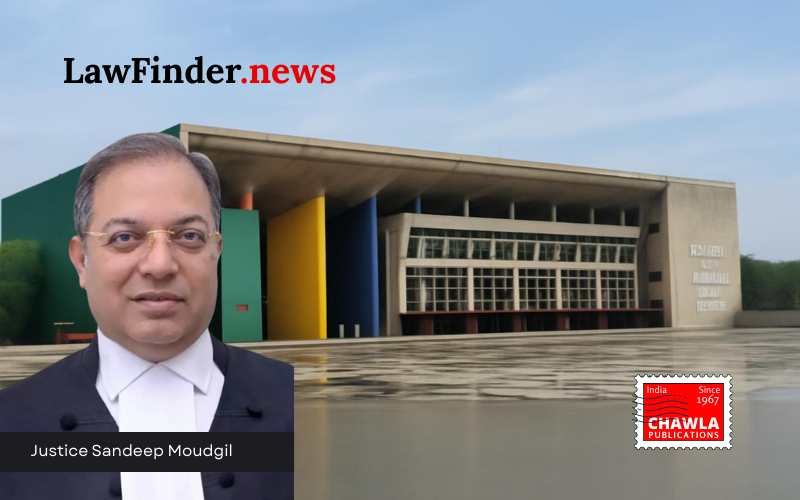
The court, presided by Justice Sandeep Moudgil, highlighted that the Constitution of India mandates that any reservation in promotion must be grounded in statutory rules framed under Article 309. The absence of such amendments in the Haryana Health Department Subordinate Offices Ministerial Staff (Group-C) Service Rules, 1997, and the Group-B Service Rules, 1982, rendered the promotions based on reservation policies ultra vires and in violation of Articles 14 and 16, which ensure equality of opportunity.
Drawing from significant Supreme Court judgments like Indra Sawhney, M. Nagaraj, and Jarnail Singh, the court reiterated that reservation in promotion requires legislative backing and cannot be implemented through executive instructions or judicial pronouncements alone. The judgment asserted that promotions made without amending service rules disregard the principles of natural justice and fair play, particularly when senior eligible candidates are overlooked.
The High Court ordered retrospective promotions for the petitioners, affirming their rightful progression to the posts of Deputy Superintendent and Superintendent with all consequential benefits. This decision underscores the necessity for adherence to constitutional preconditions such as backwardness, inadequacy of representation, and administrative efficiency before implementing reservation in promotions.
This ruling is seen as a reinforcement of the separation of powers doctrine, emphasizing the need for legislative action in policy implementation related to reservations. The court's judgment serves as a reminder that while the aim of reservation is social justice, it must be pursued within the bounds of legality and fairness to all.
Bottom Line:
Reservation in promotion cannot be implemented by executive instructions or judicial pronouncements without corresponding amendment to statutory service rules.
Statutory provision(s): Articles 16(4), 16(4A), 309 of the Constitution of India, Haryana Health Department Subordinate Offices Ministerial Staff (Group-C) Service Rules, 1997, Group-B Service Rules, 1982.
Om Prakash v. State of Haryana, (Punjab And Haryana) : Law Finder Doc Id # 2804798