Landmark judgment reinforces the fundamental right to education under Article 21, allowing government employees to pursue higher studies through distance learning without a three-year service requirement.
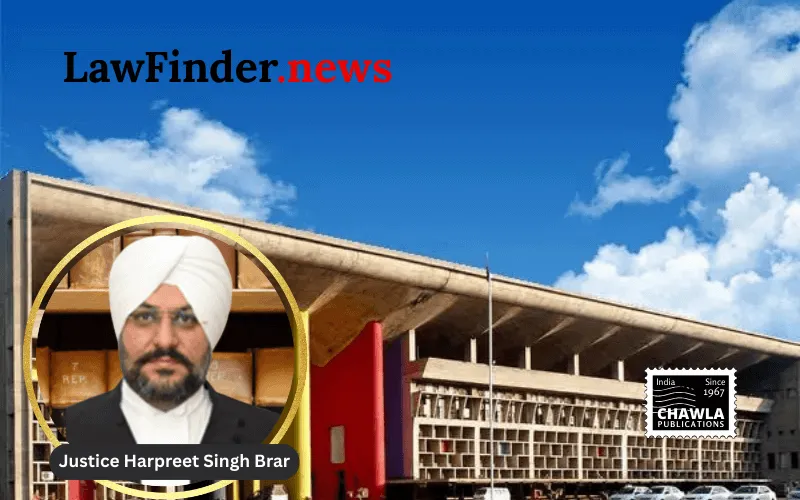
In a significant ruling, the Punjab and Haryana High Court has upheld the right of government employees to pursue higher education through distance learning, emphasizing it as a fundamental right under Article 21 of the Constitution of India. The judgment was delivered by Justice Harpreet Singh Brar in the case of Naveen Kumar v. State of Haryana, in which the court quashed the State's imposition of a three-year service prerequisite for employees wishing to pursue education through non-traditional modes.
Naveen Kumar, a government employee serving as a Veterinary Livestock Development Assistant, sought permission to enroll in a Bachelor of Arts program via Distance Education Mode. His application was initially rejected by the State on the grounds that he had not completed the mandated three years of regular service. The court found this condition inapplicable to distance education, where physical attendance is not required, and hence, no study leave is necessary.
The court underscored that the right to education is intrinsically linked to the right to life and personal liberty, as guaranteed under Article 21. Referring to landmark Supreme Court judgments, the court stated that the right to education is essential for the dignified enjoyment of life and must be made accessible to all, transcending economic and social barriers.
Justice Brar pointed out that the State, as a model employer, holds a constitutional duty to facilitate the professional growth of its employees. The court criticized the rejection of Kumar's application as being contrary to existing government policies that allow educational advancement without affecting official duties.
The decision noted that enhancing the educational qualifications of employees aligns with public interest, as it promotes a more competent and adaptable workforce. The court emphasized the importance of lifelong learning and recognized the denial of educational opportunities as a violation of fundamental rights.
This judgment sets a precedent reinforcing the constitutional mandate for educational accessibility and may influence similar cases across the country. The court directed the State to grant Kumar permission to pursue his studies through distance learning, ensuring he maintains work standards without availing study leave, except during examination periods.
Bottom Line:
Right to education is a fundamental right linked to the right to life and personal liberty under Article 21 of the Constitution of India. Denying the right to pursue education through Distance Education Mode, where no study leave is required, violates this fundamental right.
Statutory provision(s): Article 21 of the Constitution of India, Article 14 of the Constitution of India, Haryana Civil Services (Leave) Rules, 2016
Naveen Kumar v. State of Haryana, (Punjab And Haryana) : Law Finder Doc id # 2857563