Court Directs Public Health and Engineering Department to Regularize Shyam Lal's Employment After Two Decades of Service
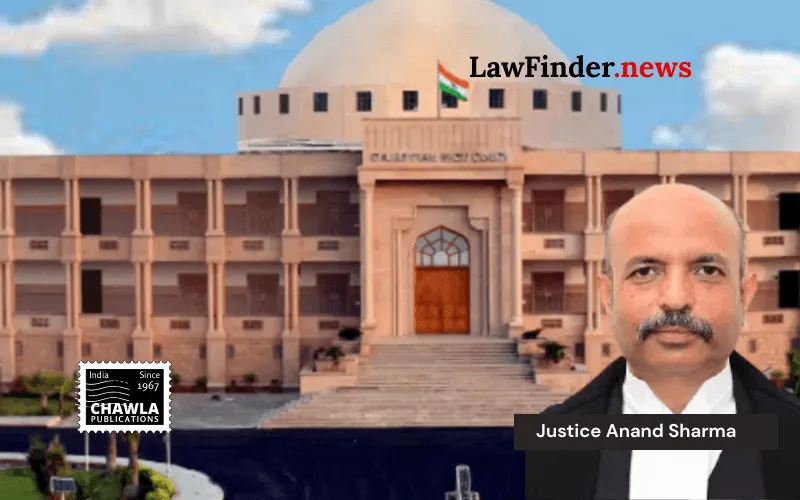
In a significant decision, the Rajasthan High Court has directed the Public Health and Engineering Department to consider the regularization of Shyam Lal, a long-serving ad-hoc employee, after over two decades of service. The court ruled in favor of Lal, who was initially engaged as a daily wage worker in 1997 and has been continuously serving since then. Justice Anand Sharma presided over the case and emphasized the need for fair treatment in public employment.
The court observed that despite performing duties identical to those of regular employees, Lal had not been considered for regularization and was subjected to exploitation by being paid a meager salary. The court held that the refusal to regularize such employees violates constitutional principles of equality and fairness, as outlined in Articles 14 and 16 of the Constitution of India.
Lal's termination in 2001 was previously declared illegal by the Labour Court, which ordered his reinstatement with continuity in service. This decision was upheld through multiple appeals, including before the Supreme Court. Despite this, the department continued to employ Lal without regularizing his position.
The court's judgment referenced several landmark Supreme Court decisions, including Uma Devi's case, which generally discourages regularization of irregular appointments. However, it noted exceptions for employees who have served over ten years in sanctioned posts without illegal appointments, emphasizing the need for a pragmatic approach.
Justice Sharma's judgment directs the department to assess Lal's suitability for regularization within 60 days, in accordance with Supreme Court precedents. If found suitable, Lal is to be granted regular employment status with all attendant benefits, including pay fixation and seniority, though arrears are limited to three years before the petition filing.
The ruling underscores the judiciary's stance against the exploitation of labor and prolonged ad-hoc employment in public service, advocating for dignity of labor and equitable treatment.
Bottom Line:
Regularization in public employment - Employees rendering long and uninterrupted service, possessing requisite qualifications, and performing duties of a perennial nature under the control of the employer must not be subjected to perpetual ad-hocism - Refusal or inaction to regularize such employees amounts to exploitation and violates constitutional principles of equality, fairness, and dignity of labor.
Statutory provision(s):
- Industrial Disputes Act, 1947, Section 25F
- Constitution of India, 1950, Articles 14, 16, and 21