Juvenile Justice Board to Conduct Inquiry, Emphasizing the Definition of Heinous Offences Under the Juvenile Justice Act, 2015
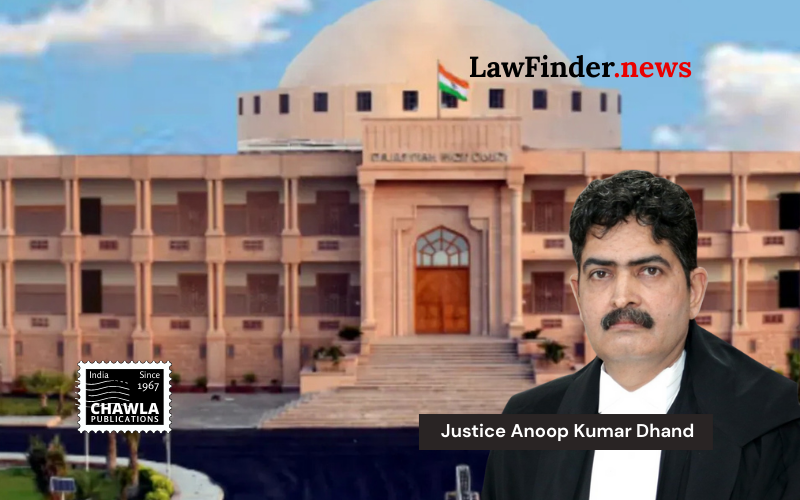
In a significant ruling, the Rajasthan High Court at its Jaipur Bench has set aside a decision by the Special Judge, POCSO Cases, Ajmer, which had remitted juvenile offenders to the Children's Court for trial as adults. The decision, delivered by Justice Anoop Kumar Dhand, underscores the court's interpretation of the Juvenile Justice (Care and Protection of Children) Act, 2015, particularly the classification of offences as "heinous".
The case involved juveniles charged with multiple offences, including attempts to commit rape under IPC Section 376/511, and other charges under the POCSO Act and the IT Act. Initially, the Juvenile Justice Board, Ajmer, decided to conduct the trial. However, the Special Judge, POCSO Act, later ordered the case to be tried in the Children's Court, interpreting the offences as falling within the "heinous" category, which warranted adult trial procedures.
Justice Dhand, upon reviewing the appeal, clarified the statutory definitions, emphasizing that a "heinous offence" under Section 2(33) of the Juvenile Justice Act requires a minimum prescribed punishment of seven years. The court found that the offences in question did not meet this criterion, as none carried a mandatory minimum sentence of seven years. The judgment relied heavily on the Supreme Court's interpretation in "Shilpa Mittal v. State of NCT of Delhi" to reinforce that offences with maximum punishments exceeding seven years but lacking a prescribed minimum do not qualify as "heinous".
Further, the court identified a legislative gap concerning offences that attract a maximum punishment exceeding seven years but lack a minimum punishment stipulation. These are to be treated as "serious offences" until legislative amendments clarify the classification.
Consequently, the High Court directed the Juvenile Justice Board to conduct the inquiry, affirming that the juveniles should not be subjected to adult trial processes. The decision reflects a commitment to the principles of juvenile justice, ensuring that minors are treated within the framework designed to balance accountability with rehabilitation.
The ruling not only impacts the current case but also sets a precedent in interpreting juvenile justice laws, ensuring that the statutory definitions are applied consistently and juveniles are protected from inappropriate legal processes.
Bottom Line:
Juvenile Justice - Offences committed by juveniles not falling under the purview of "heinous offences" under Section 2(33) of the Juvenile Justice (Care and Protection of Children) Act, 2015 cannot be referred to the Children's Court for trial as "Adult Accused."
Statutory provision(s): Section 2(33) of the Juvenile Justice (Care and Protection of Children) Act, 2015, Sections 15 and 18(3) of the Juvenile Justice Act, IPC Sections 376/511, 354-A, 354-D, 384, 306, 120-B, POCSO Act Sections 7/8 & 11/12, IT Act Section 67-A
A Alias S v. State of Rajasthan, (Rajasthan)(Jaipur Bench) : Law Finder Doc Id # 2803460