Supreme Court Cancels Bail of Satinder Singh Bhasin Over Non-Compliance in ‘Grand Venice’ Real Estate Case Bail revoked for failure to settle allottees’ claims, incomplete project delivery, alleged fund siphoning during insolvency; Rs. 50 crore bail deposit forfeited to aid allottees and insolvency proceedings
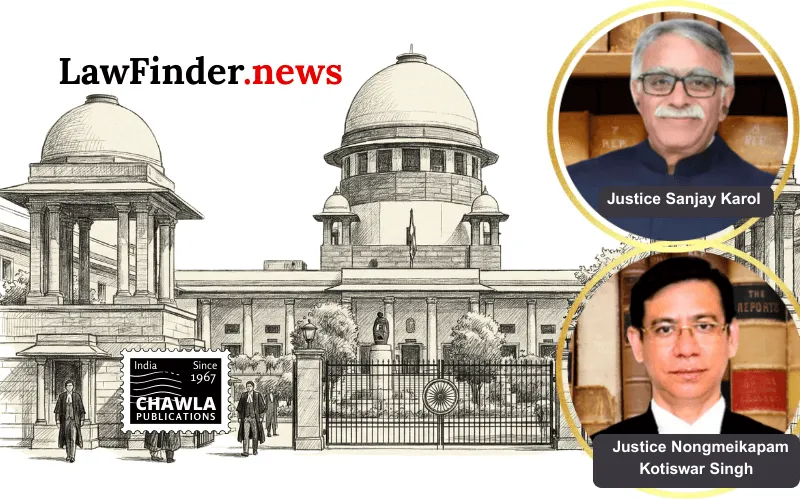
In a landmark judgment dated April 2, 2026, the Supreme Court of India cancelled the bail granted to Satinder Singh Bhasin, the petitioner and director of Bhasin Infotech and Infrastructure Pvt. Ltd. (BIIPL), in relation to multiple FIRs concerning the incomplete real estate project ‘Grand Venice’ in the National Capital Region (NCR). The decision was rendered by a two-judge Bench comprising Justices Sanjay Karol and Nongmeikapam Kotiswar Singh following a series of litigations spanning more than six years.
The Supreme Court’s original bail order dated November 6, 2019, had imposed stringent conditions on Mr. Bhasin, notably a mandatory deposit of Rs. 50 crores as a pre-condition for bail, a personal bond with sureties, and an unequivocal requirement that the petitioner make every possible effort to settle claims of the aggrieved allottees within six to eight months. The bail was conditional on the petitioner not committing similar offenses, not tampering with evidence, and abiding by the settlement efforts.
However, subsequent proceedings revealed that Mr. Bhasin had blatantly violated these conditions. The project remained substantially incomplete with critical infrastructure and statutory approvals lacking, as documented in detailed reports by the Uttar Pradesh State Industrial Development Authority (UPSIDA), the National Company Law Appellate Tribunal (NCLAT) Observer, and a Supreme Court-appointed independent Committee. Facilities such as drinking water, operational lifts, fire safety systems, electrical fittings, and completion certificates were found absent or deficient. Moreover, many allottees who had entered into settlement agreements with the petitioner have neither received possession of their units nor refunds, with several settlements remaining unimplemented on paper.
Adding to the gravity of the petitioner’s misconduct, the Interim Resolution Professional (IRP) overseeing insolvency proceedings under the Insolvency and Bankruptcy Code, 2016 (IBC) presented evidence that during the moratorium period, Mr. Bhasin siphoned off approximately Rs. 74 crores from the corporate debtor’s accounts to entities controlled by his close relatives, in violation of the moratorium provisions. The Court observed that these transactions lacked documentary backing and statutory compliance under Section 185 of the Companies Act, 2013, which prohibits loans to directors without special resolution approval.
The petitioner’s explanations, including claims that delays were attributable to UPSIDA’s refusal to execute tripartite sub-lease deeds or that certain transactions were routine commercial advances, were rejected by the Court as insufficient and unconvincing. The Court also pointed out suspicious fabrication of documents, such as ante-dated agreements referencing the Goods and Services Tax (GST) prior to its enactment, and unauthorized transfers of project units to related companies at undervalued rates.
Despite numerous opportunities and directions from the Supreme Court to file affidavits detailing settlements and to cooperate with mediation efforts, Mr. Bhasin’s conduct was found lacking in bona fides, marked by evasions, incomplete disclosures, and failure to produce comprehensive lists of allottees or clarify the status of units. The Court highlighted discrepancies such as double allotments and inconsistent positions taken by the petitioner regarding specific allottees.
The Supreme Court, therefore, concluded that the bail conditions had not been complied with in both letter and spirit, leading to the cancellation of the bail. Mr. Bhasin was directed to surrender within one week. The Court also ordered forfeiture of the entire Rs. 50 crore bail deposit along with accrued interest. Out of this, Rs. 5 crore plus proportionate interest is to be transferred to the National Legal Services Authority to assist aggrieved allottees, and the balance to the IRP to aid the insolvency resolution process.
The Court clarified that the petitioner may apply for regular bail only after twelve months and subject to full compliance with insolvency orders. Additionally, the petitioner’s passport was ordered not to be released without Supreme Court’s permission.
This judgment underscores the Supreme Court’s firm stance on strict compliance with bail conditions, especially in cases involving financial impropriety and consumer rights in real estate. It also affirms the Court’s role in overseeing complex insolvency and criminal proceedings to protect the interests of investors and ensure corporate accountability.
Bottom Line:
Non-compliance of bail conditions and alleged violations including siphoning of funds, non-settlement with allottees, and fabrication of documents led to the cancellation of bail granted to the petitioner.
Statutory provision(s): Insolvency and Bankruptcy Code, 2016; Companies Act, 2013 Section 185; Criminal Procedure Code, 1973 (bail conditions and cancellation)
Satinder Singh Bhasin v. Government of NCT of Delhi, (SC) : Law Finder Doc id # 2876204