Chhattisgarh High Court Upholds Trial Court's Decision, Dismisses Plaintiffs' Claim Over Government Land. Appellate Court's Reversal of Trial Court's Decision Found Perversely Unsupported by Evidence
In a notable judgment, the Chhattisgarh High Court has reinstated the decision of the trial court, dismissing the suit filed by Smt. Tarabai and others against the Nagar Panchayat, Rajim, regarding the ownership and possession of a piece of government land identified as Abadi land. The second appeal was filed by the defendants under Section 100 of the Civil Procedure Code (CPC), challenging the judgment and decree passed by the Additional District Judge, Gariyaband, which had previously overturned the trial court's decision.
The case revolved around the plaintiffs' claim to a parcel of land near Mahamaya temple, Rajim, which they alleged to have acquired through an auction conducted by the Post and Telegraph Department of the Central Government back in 1953. However, the trial court, after thorough examination of evidence and legal provisions, concluded that the plaintiffs failed to establish legitimate title and possession over the land, which was categorized as government Abadi land.
The trial court noted the absence of crucial documentation such as auction notices and sale certificates, which are essential to substantiate claims of property acquisition through auction. Furthermore, the revenue records and tax receipts presented by the plaintiffs were deemed insufficient to confer ownership, as they primarily serve fiscal purposes and do not establish legal title.
The First Appellate Court reversed the trial court's decision, favoring the plaintiffs without adequately addressing the lack of substantive evidence. This led to the defendants filing a second appeal, arguing that the appellate court's findings were contrary to law and unsupported by the evidence on record.
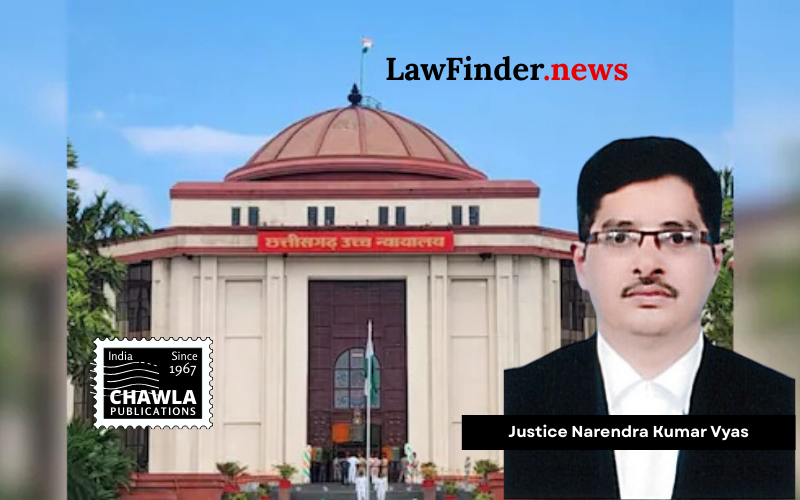
Justice Narendra Kumar Vyas of the Chhattisgarh High Court examined the case in detail and emphasized the importance of concrete evidence in establishing property rights. The High Court found the appellate court's reversal to be perverse, lacking justification, and based on a misinterpretation of the available evidence. Consequently, the High Court restored the trial court's original judgment, dismissing the plaintiffs' suit and affirming the land's status as government property.
The judgment also touched upon procedural aspects concerning the absence of notice under Section 319 of the Chhattisgarh Municipality Act, 1961, before instituting the suit. Although typically required, the High Court deemed the suit maintainable since the defendants participated in the proceedings without objection, effectively waiving their right to contest the procedural lapse.
This decision underscores the judiciary's commitment to uphold well-reasoned trial court judgments and the necessity for substantive evidence in property disputes. The High Court's verdict reinstates the trial court's findings, reinforcing the principle that revenue records and tax receipts alone cannot establish title over government land.
Bottom Line:
Revenue records do not confer title, and tax receipts are insufficient to establish ownership over government land. Without proper documentation of auction or sale certificates, plaintiffs cannot claim title over land defined as government "Abadi" land.
Statutory provision(s): Section 100 CPC, Sections 101 to 103 Evidence Act, Section 319 Chhattisgarh Municipality Act, 1961
Nagar Panchayat, Rajim v. Smt. Tarabai, (Chhattisgarh) : Law Finder Doc Id # 2806670