New Delhi, Nov 28 Observing that "arbitration is often a friend in conferences but a foe in practice", the Supreme Court came down hard on the Patna High Court on Friday and overturned its verdict halting the arbitration proceedings between private firm Hindustan Construction Company Limited (HCC) and Bihar Rajya Pul Nirman Nigam Limited (BRPNNL).
The top court said the high court had itself appointed the arbitrator in 2021 and both parties had participated fully in the process, with more than 70 hearings taking place.
"The high court also extended the arbitrator's mandate twice under section 29A. At that stage, the high court could not, by invoking its jurisdiction under Articles 226 and 227, retrospectively invalidate its own appointment order on the strength of a subsequent interpretation of a similar clause in another matter.
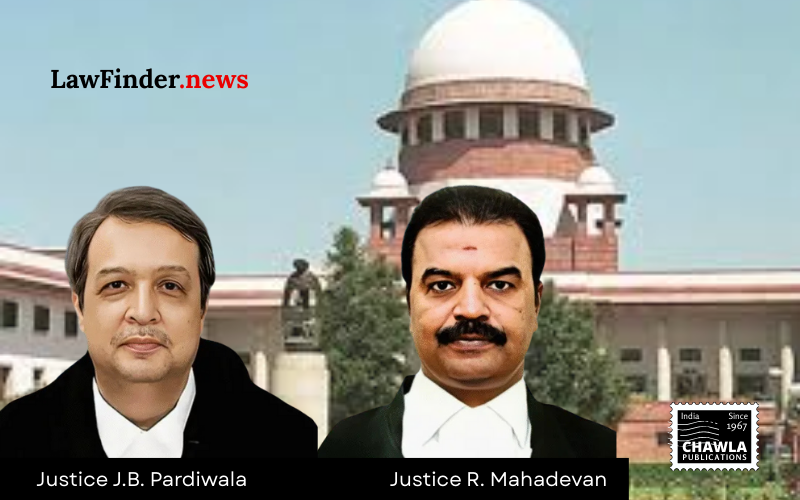
"Such an approach undermines certainty, dilutes the sanctity of judicial orders and erodes confidence in the arbitral process," a bench of Justices J. B. Pardiwala and R. Mahadevan said.
Writing the verdict for the bench, Justice Mahadevan allowed the civil appeal of HCC against the high court's December 9, 2024 order dismissing its plea for the appointment of an arbitrator under a provision of the Arbitration and Conciliation Act.
The bench directed that a substitute arbitrator be appointed within two weeks to carry forward the process from where it was interrupted.
The appeal arose from the decision in a 2020 case, involving a contract for the construction of a major bridge over the Sone river in Bihar's Aurangabad and Rohtas districts.
"Arbitration is often a friend in conferences but a foe in practice. Its raison d'etre has always been to ease the burden on courts and to ensure the expeditious resolution of commercial disputes. Yet, this is not its only virtue. The true advantage of arbitration lies in its freedom and flexibility, with party autonomy as the cornerstone of the arbitral process," the verdict said.
Parties enjoy the liberty to determine the strength and composition of the arbitral tribunal, appoint domain experts as arbitrators and design procedures suited to the nature and complexity of their disputes, it said.
"However, parties often embrace arbitration in good times, only to resist or manipulate it when disputes actually arise -- seeking either to wiggle out of arbitration altogether or to tilt the process unfairly in their favour. In such situations, judicial intervention becomes inevitable, and rightly so, to safeguard the fairness and integrity of the arbitral process," the court said.
It said the evolution of the judicial role from that of a "helicopter parent" to that of a "guardian angel of arbitration has been neither smooth nor uniform".
"Yet, in practice, arbitration has at times become more cumbersome than civil litigation. Parties continue to exploit every procedural avenue to delay proceedings, i.e., filing a maze of applications before the arbitral tribunal, the high court and even this court, often on technical or jurisdictional objections," the bench observed.
Referring to the Patna High Court verdict, it said in the present case, the fine boundary between judicial oversight and arbitral independence is tested.
It said once the high court accepted the existence of a valid arbitration agreement and appointed an arbitrator, its later interference on the same question is a "disguised supervisory review".
The bench was critical of the conduct of BRPNNL.
"We are also constrained to take note of the conduct of the respondent company, a public sector undertaking, which is far from satisfactory. Despite repeated notices in appeal and requests for the appointment of an independent arbitrator, the managing director chose to remain silent, thereby compelling the appellant to seek judicial intervention.
"Such indifference by a public authority, where contractual obligations demand prompt responsiveness, falls short of the standards of fairness required of a State entity under Articles 14 and 298 of the Constitution," it said.
The bench said it was a fit case for imposing costs on the State firm.
"We refrain from doing so, but issue a stern warning to the then managing director of the respondent company, BRPNNL. Public officers are custodians of public faith, not mere administrators. Any repetition of such neglect may invite adverse remarks or even personal accountability. The officer is advised to reflect upon the responsibilities of a public office and ensure that such indifference does not recur," it said.
BRPNNL had awarded the bridge-construction contract to HCC on March 4, 2014, and a clause of the contract provided for arbitration in case of disputes.
The high court had first appointed former judge P. K. Sinha as the sole arbitrator. He delivered an award in December 2021, which BRPNNL accepted and paid up. When new claims relating to extended work periods arose, HCC again invoked arbitration and the high court, in August 2021, appointed former judge Shivaji Pandey as the arbitrator.
Over three years, the proceedings saw more than 70 hearings, multiple consensual extensions of the arbitrator's mandate and active participation from both sides.
But in 2024, BRPNNL suddenly filed a review petition seeking the annulment of the 2021 appointment order.
The high court accepted the plea and halted the arbitration, prompting HCC to approach the top court.
Hindustan Construction Company Ltd. v. Bihar Rajya Pul Nirman Nigam Limited, (SC)