Stay can not merely because suspension of sentence has been allowed. Supreme Court sends back case for re-evaluation of conviction stay High Court's decision to stay conviction lacked assessment of exceptional circumstances, says Supreme Court
In a significant decision, the Supreme Court of India has remitted a case back to the Rajasthan High Court for fresh consideration after finding that the High Court had inappropriately stayed a conviction without assessing the exceptional circumstances required for such a stay. The case, titled "Victim Father v. State of Rajasthan," involved respondent No.2, who was convicted under multiple provisions including the Indian Penal Code and the POCSO Act.
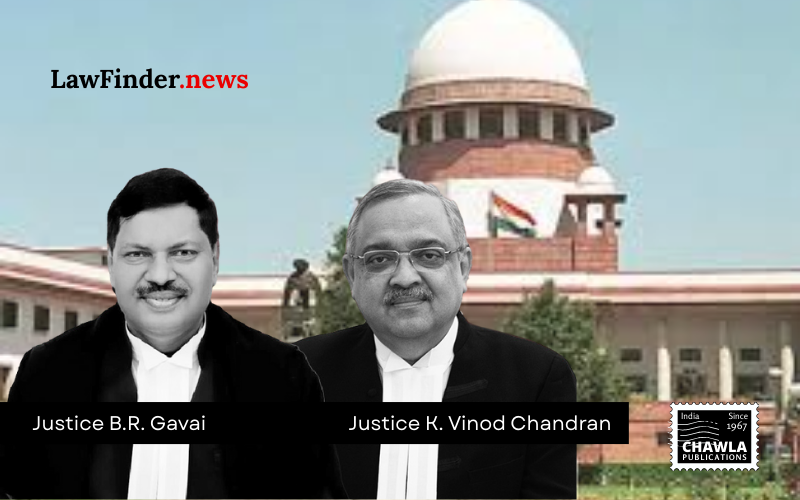
The Supreme Court bench, comprising Chief Justice B.R. Gavai and Justice K. Vinod Chandran, noted that the High Court had granted a stay of conviction based solely on the fact that it had previously suspended the sentence. The apex court emphasized that the parameters for suspending a sentence and staying a conviction are distinct and must be treated as such.
The initial conviction involved serious charges under Sections 305 and 376 of the Indian Penal Code, alongside provisions of the Protection of Children from Sexual Offences Act, 2012, and the Scheduled Castes and the Scheduled Tribes (Prevention of Atrocities) Act, 1989. Despite the gravity of these charges, the High Court's rationale for staying the conviction was deemed insufficient by the Supreme Court, which highlighted the absence of any stated exceptional circumstances that would justify such a decision.
The Supreme Court underscored that granting a stay of conviction should be reserved for the "rarest of rare" cases. It criticized the High Court for failing to provide reasons that demonstrated how the case met this stringent criterion. As a result, the matter has been sent back to the High Court with instructions to reassess the decision in light of these observations.
This judgment reinforces the need for careful judicial scrutiny when considering stays of conviction, ensuring that such decisions are not made lightly or without adequate justification. The Supreme Court's intervention serves as a reminder of the judiciary's role in upholding the integrity of legal processes, particularly in cases involving severe criminal charges.
Bottom Line:
Granting stay of conviction should be based on exceptional circumstances or rarest of rare cases, and not merely because suspension of sentence has been allowed.
Statutory provision(s): Indian Penal Code, 1860 Sections 305 & 376, Protection of Children from Sexual Offences (POCSO) Act, 2012 Sections 3/4, Scheduled Castes and the Scheduled Tribes (Prevention of Atrocities) Act, 1989 Sections 3(1)(w) and 3(2)(v).
Victim Father v. State of Rajasthan, (SC) : Law Finder Doc Id # 2812560