Landmark judgment by the Supreme Court of India recognizes the fundamental right to walk on demarcated footpaths, urging legislative action for pedestrian infrastructure.
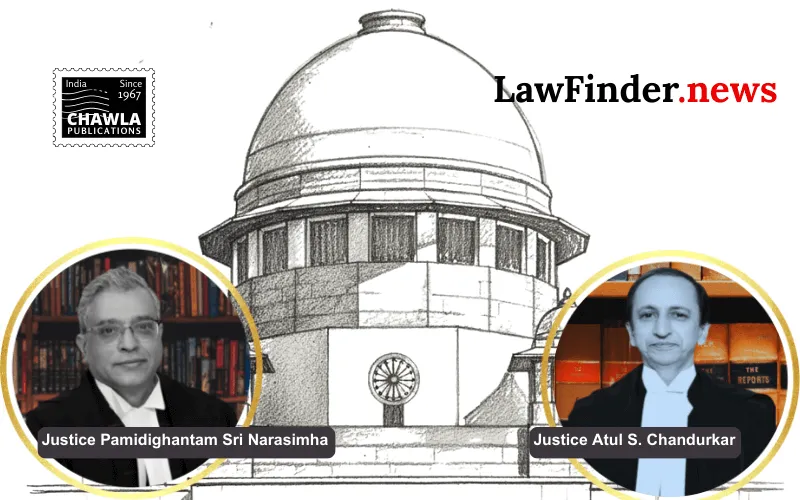
In a landmark ruling, the Supreme Court of India has declared the right to walk as a fundamental right under Part III of the Constitution, emphasizing its integral connection to the right of movement and life. The court's judgment, delivered by Justices Pamidighantam Sri Narasimha and Atul S. Chandurkar, prioritizes the creation and maintenance of pedestrian footpaths over motorized vehicles, thus reshaping urban planning priorities across the nation.
The judgment arose from a tragic incident where a young boy was fatally struck by a tanker due to the absence of a footpath. The Supreme Court underscored the necessity of recognizing walking as a fundamental right, which should take precedence over the movement of motorized vehicles. The court emphasized that this right is essential for equitable access to city and town spaces, urging urban development authorities, municipal corporations, municipalities, and panchayats to fulfill their correlative duty to construct and maintain footpaths.
Highlighting the cultural, social, and historical significance of walking in India, the judgment pointed out that walking is not merely a mode of transportation but a vital part of Indian heritage, as demonstrated through various religious and political movements throughout history.
The court criticized the current infrastructure and policies that prioritize motorized vehicles, noting that the Motor Vehicles Act, 1988, does not adequately recognize pedestrian rights. Instead, the Act has been a hindrance to the protection of these rights, with pedestrian safety often being overlooked in favor of vehicular traffic.
In a significant directive, the court called for the establishment of a statutory framework to protect and enforce the right to walk, including the creation of a regulatory body to oversee the development and maintenance of pedestrian infrastructure. This framework would ensure that the fundamental right to walk is upheld and that citizens can seek restitution and compensation in cases of violations.
Additionally, the Supreme Court recalculated the compensation awarded to the family of the deceased boy, increasing it to Rs. 11,44,628/- to reflect the loss of dependency and other associated costs.
The judgment has been forwarded to relevant government ministries and the Law Commission, urging the formulation of comprehensive legislation to safeguard pedestrian rights.
Statutory provision(s): Articles 19(1)(a), 19(1)(b), 19(1)(c), 19(1)(d), 21 of the Constitution of India, Motor Vehicles Act, 1988.
Maniyar Iliyaz @ Shaik Riyaz v. P. Ayyappan, (SC) : Law Finder Doc id # 2926714