Judicial Decision Upheld as Non-Offensive to Fundamental Rights; Costs Directed to Cancer-Afflicted Children's Charity
In a recent ruling, the Supreme Court of India dismissed a writ petition filed by the Managing Committee of Contai Rahamania High Madrasah challenging the validity of a previous Supreme Court judgment. The petition argued that the earlier decision violated Article 30 rights concerning minority educational institutions. However, the Supreme Court, reaffirming the stance of a nine-Judge Constitution Bench, ruled that judicial decisions do not infringe upon Fundamental Rights. Consequently, the writ petition was deemed not maintainable.
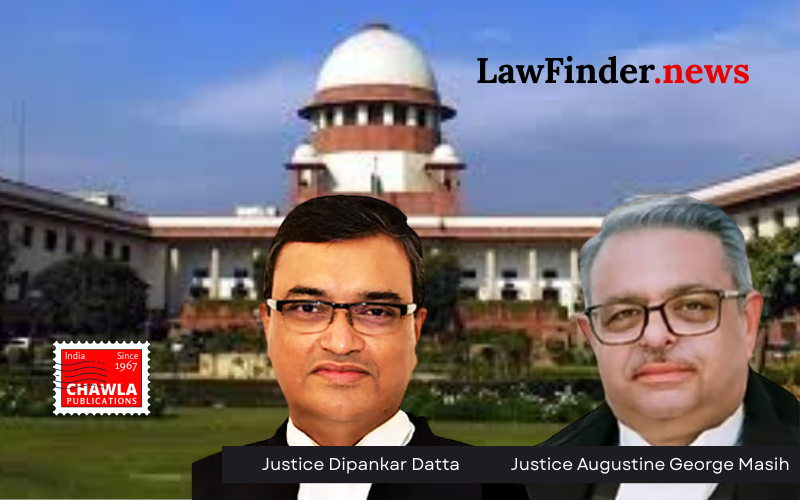
The case, heard by Justices Dipankar Datta and Augustine George Masih, involved a request to reconsider a judgment passed on January 6, 2020, which had declared the West Bengal Madrasah Service Commission Act, 2008 as constitutionally valid. The petitioners contended that this judgment was inconsistent with Article 30 of the Constitution, which safeguards the rights of minorities to establish and administer educational institutions.
The Supreme Court referenced the authoritative decision in Naresh Shridhar Mirajkar v. State of Maharashtra, AIR 1967 SC 1, which clearly established that judicial decisions do not offend any Fundamental Rights. This precedent rendered the petitioner's claims untenable, leading to the dismissal of the writ petition.
Additionally, the court identified the petition as an abuse of judicial process. Imposing a penalty for this misuse, the court ordered the petitioners to pay Rs. 1,00,000 as costs. These funds are directed to a society or organization dedicated to caring for children afflicted by cancer, with identification of the recipient to be managed by the Secretary General of the court. The amount is to be deposited within one month, ensuring compliance with the court's directive.
The Supreme Court's decision underscores the principle that judicial decisions, being interpretations of law, do not infringe Fundamental Rights, thereby maintaining the sanctity of the judicial process and discouraging frivolous challenges.
Bottom Line:
Writ petition under Article 32 challenging the validity of a prior Supreme Court decision was held to be not maintainable as a judicial decision does not offend Fundamental Rights. Abuse of process of the Court was penalized with costs.
Statutory provision(s): Article 32 of the Constitution of India, Article 30 of the Constitution of India, West Bengal Madrasah Service Commission Act, 2008