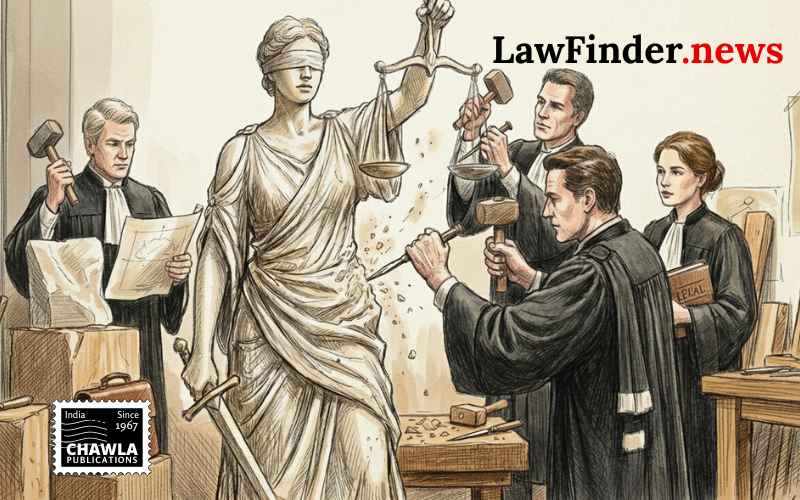
In Landmark Judgment on Oleum Gas Leak, SC Emphasizes Absolute Liability of Hazardous Enterprises and Broadens Access to Justice via Public Interest Litigation
In a landmark judgment delivered on December 20, 1986, the Supreme Court of India, in the case of M.C. Mehta v. Union of India, significantly expanded the scope of social action litigation and clarified the constitutional responsibilities of enterprises engaged in hazardous activities. The Court addressed critical questions of constitutional law arising from the escape of oleum gas from the Shriram Foods and Fertiliser Industries plant in Delhi, which caused harm to nearby residents.
The petition was initially filed seeking closure of Shriram’s hazardous units. However, during the pendency of the writ petition, oleum gas leaks occurred on December 4 and 6, 1985, prompting applications by the Delhi Legal Aid and Advice Board and the Delhi Bar Association for compensation on behalf of affected persons. The Supreme Court, recognizing the magnitude and urgency, referred these issues to a larger five-judge Bench for detailed consideration.
Rejecting a preliminary objection that compensation claims could not be entertained as they were not part of the original petition, the Court emphasized the importance of substance over procedural technicalities in enforcing fundamental rights under Articles 21 and 32 of the Indian Constitution. The Court underscored that public spirited bodies and social action groups have locus standi to file petitions or even letters for enforcement of rights of disadvantaged groups, a concept popularly known as Public Interest Litigation (PIL).
The Court reaffirmed that Article 32 imposes a constitutional obligation on it to protect fundamental rights and empowers it to innovate new remedies, including awarding compensation, where infringement is gross and affects a large number of persons who might be unable to seek redress through ordinary civil courts.
A significant highlight of the judgment was the analysis of whether a private corporation like Shriram, engaged in hazardous and inherently dangerous industrial activity, can be subjected to the constitutional discipline of Article 21 (Right to Life). While the Court refrained from making a definitive pronouncement on whether Shriram qualifies as ‘State’ under Article 12, it acknowledged the possibility in light of the extensive government control, regulation, and financial assistance received by the company, as well as the public interest nature of the industry it operates in.
The Court traced the development of the concept of ‘other authorities’ under Article 12 and cited precedent judgments that expanded the ambit of fundamental rights protection to instrumentalities and agencies of the State, including corporations performing public functions.
In a pioneering move, the Court evolved a new principle of absolute and non-delegable liability for enterprises engaged in hazardous or inherently dangerous activities. It held that such enterprises owe the highest duty to ensure safety and are strictly liable to compensate all affected persons for harm caused, regardless of negligence or fault. This principle transcends the traditional English law rule in Rylands v. Fletcher and adapts liability standards to the needs of a modern industrial society, emphasizing social justice and public safety.
Furthermore, the Court directed the Delhi Legal Aid and Advice Board to file and prosecute compensation claims on behalf of gas leak victims, with the Delhi Administration mandated to provide necessary funding. The High Court was instructed to nominate judges to expedite the disposal of such claims. The Court reserved other issues, including relocation of the hazardous units, for further hearing.
This judgment marks a watershed moment in Indian constitutional law, reinforcing the judiciary’s proactive role in protecting environmental and public health rights, expanding access to justice for marginalized groups, and imposing stringent liability on industries posing risks to the community.
Statutory provisions
Articles 12, 21, 32, 141, 142 of the Constitution of India; Civil Procedure Code, 1908 Order 6 Rule 17; Industries (Development and Regulation) Act, 1951; Factories Act, 1948; Delhi Municipal Corporation Act, 1957; Water (Prevention and Control of Pollution) Act, 1974; Air (Prevention and Control of Pollution) Act, 1981; Environment Protection Act, 1986
M.C. Mehta v. Union of India, (SC) : Law Finder Doc Id # 89880