Supreme Court Finds Lack of Evidence for Instigation or Mens Rea; Criminal Proceedings Against Co-Accused to Continue
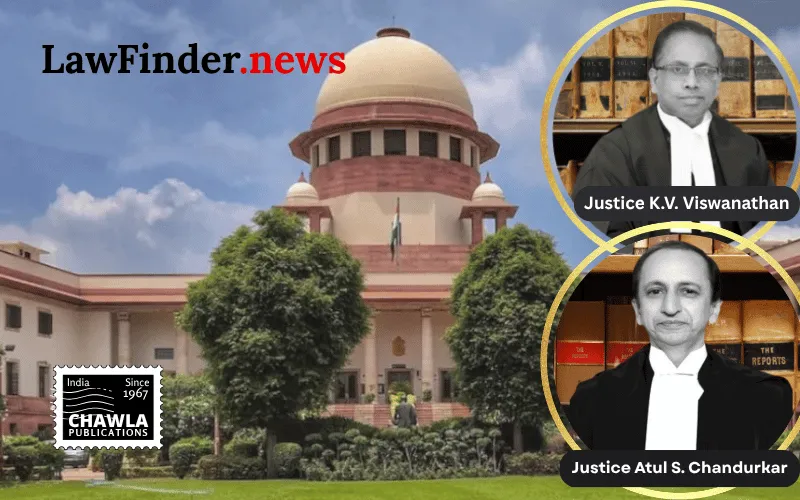
In a significant judgment, the Supreme Court of India has quashed the criminal proceedings against Balaji Jaiswal, who was accused of abetting the suicide of one Komal Sahu in Chhattisgarh. The apex court, comprising Justices K.V. Viswanathan and Atul S. Chandurkar, found no substantial evidence of instigation or incitement by Jaiswal that could link him directly to the suicide.
The case, titled "Balaji Jaiswal v. State of Chhattisgarh," revolved around the alleged suicide of Komal Sahu, who was found hanging from a tree in his village. The Chhattisgarh High Court had earlier dismissed Jaiswal's plea to quash the charges under Section 306 of the Indian Penal Code (IPC), which pertains to abetment to suicide.
The Supreme Court, however, disagreed with the High Court's assessment, observing that the material on record did not reveal any direct or indirect act of instigation by Jaiswal. The court emphasized that mere allegations of an illicit relationship between Jaiswal and the deceased's wife, Revati Bai, were insufficient to constitute the offence of abetment to suicide. The court noted that the absence of a suicide note and the statements from family members and neighbors did not establish a clear mens rea or intent to provoke the suicide.
The Supreme Court highlighted the necessity of a positive act of instigation, as well as the proximity between the alleged instigation and the act of suicide, to sustain charges under Section 306 IPC. The court also referred to established precedents that require a deliberate and conspicuous intent to provoke or contribute to the act of suicide for a conviction under this section.
As a result, the Supreme Court set aside the High Court's order and quashed the charges against Jaiswal. However, the court clarified that the trial against the co-accused, Revati Bai, would continue uninfluenced by this judgment.
This decision underscores the stringent requirements for proving abetment to suicide under Indian law and highlights the judiciary's cautious approach in cases where the main person involved is not available for testimony.
Bottom Line:
Ingredients of Section 306 IPC - For sustaining a charge under Section 306 IPC, instigation or incitement on the part of the accused person is the gravamen of the offence of abetment to suicide. The act of instigation must be in close proximity to the act of suicide, forming a nexus to indicate that the suicide was a direct result of the accused's act.
Statutory provision(s): Indian Penal Code, 1860 Sections 306, 34; Bhartiya Nyaya Suraksha Sanhita, 2023 Sections 438, 442
Balaji Jaiswal v. State of Chattisgarh, (SC) : Law Finder Doc id # 2883980