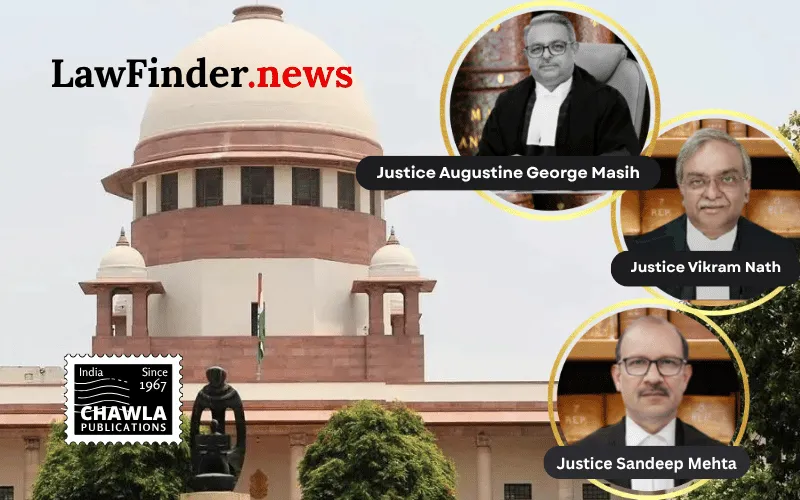
Supreme Court Halts Mining in Aravalli Hills Pending Expert Review Apex Court Mandates Comprehensive Evaluation to Resolve Ambiguities in Aravalli Definition and Safeguard Ecological Integrity
In a landmark judgment, the Supreme Court of India has taken decisive action to protect the Aravalli Hills, a crucial ecological zone in North Western India, by halting all new mining activities. This decision comes as part of a suo moto writ petition addressing the definitional inconsistencies and ecological concerns surrounding the Aravalli Hills and Ranges. The judgment, delivered on December 29, 2025, mandates a thorough expert examination to establish a uniform definition and ensure sustainable practices in the region.
The Court acknowledged the historical and environmental significance of the Aravallis, often referred to as the 'green lungs' of the region, which have been under mounting anthropogenic pressures from unchecked urbanization and resource extraction. The need for a uniform definition was underscored to preserve the ecological and socioeconomic integrity of the Aravallis, which span across the National Capital Territory of Delhi, Rajasthan, Haryana, and Gujarat.
A Committee constituted by the Court had previously submitted a report on October 3, 2025, providing an operational definition of the Aravalli Hills and Ranges. This definition, however, has faced criticism for potentially narrowing the geographical scope of protected areas and leaving ecologically contiguous regions vulnerable to exploitation.
In response to these concerns, the Supreme Court has directed the formation of a High-Powered Expert Committee to conduct a holistic assessment of the Committee's recommendations. The Court emphasized the need for exhaustive evaluation of ecological impacts, territorial inclusions and exclusions, and sustainable mining practices.
The judgment has also placed a moratorium on the issuance of new mining leases and the renewal of existing ones within the Aravalli areas until further orders. This stay will remain in effect until the expert committee's findings are reviewed and incorporated into a comprehensive mining policy and strategy for the region.
Environmentalists and stakeholders have expressed cautious optimism about the Court's directive, viewing it as a vital step towards safeguarding the Aravalli ecosystem. The Supreme Court has further directed that no mining permissions shall be granted without prior approval, ensuring that the ecological integrity of the region is not compromised during the interim period.
The matter is set to be listed before the Green Bench on January 21, 2026, where the Union of India, the States involved, and other relevant parties will present their inputs. The Court has sought assistance from the Attorney General, the Solicitor General, and the Central Empowered Committee to guide the proceedings.
This judgment marks a significant intervention by the judiciary to address environmental concerns and promote sustainable development, reinforcing the importance of ecological preservation in India’s legal framework.
Bottom Line:
Supreme Court addresses definitional inconsistencies regarding 'Aravalli Hills and Ranges' and mandates expert examination for ecological protection.
Statutory provision(s): Environmental Law, Constitution of High-Powered Expert Committee, Prohibition of mining activities, Sustainable mining practices, Supreme Court directives on ecological protection.