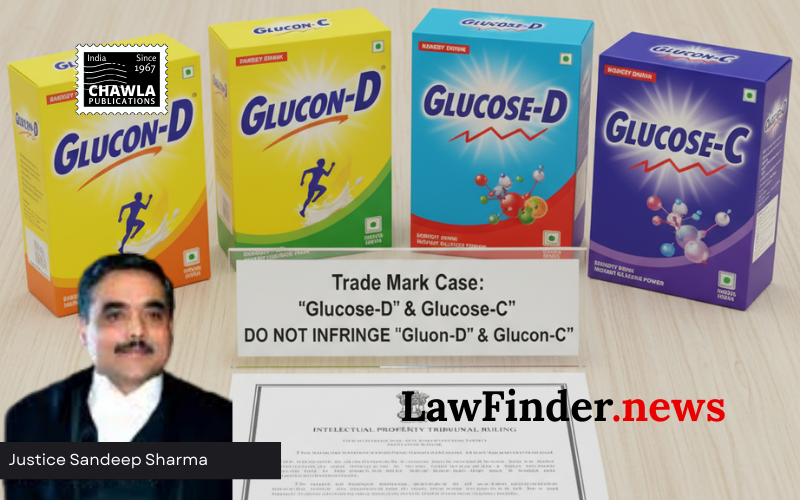
Himachal Pradesh High Court Denies Interim Injunction in Trademark Dispute Over ‘Glucon-D’ vs ‘Glucose-D’. Court holds defendant’s use of ‘Glucose-D’ and ‘Glucose-C’ as descriptive and common to trade, dismisses plaintiff’s claim of trademark infringement and passing off
In a significant judgment delivered on November 11, 2025, the Himachal Pradesh High Court dismissed the interim injunction application filed by Zydus Wellness Products Ltd., the plaintiff, seeking to restrain Leeford Healthcare Ltd., the defendant, from using the marks ‘Glucose-D’ and ‘Glucose-C’ on glucose-based energy drinks. The dispute centered around alleged infringement of plaintiff’s registered trademarks ‘Glucon-D’ and ‘Glucon-C’ and associated packaging and trade dress.
The plaintiff, a reputed Indian company with a history dating back to 1933 of marketing ‘Glucon-D’ and ‘Glucon-C’, contended that the defendant’s use of ‘Glucose-D’ and ‘Glucose-C’ marks, along with similar packaging and artwork, amounted to trademark infringement, passing off, and copyright violation. Zydus argued that these marks and trade dress were deceptively similar and likely to confuse consumers, thus warranting protection under Sections 29 and other provisions of the Trade Marks Act, 1999.
On the other hand, Leeford Healthcare Ltd. defended their usage by asserting that ‘Glucose-D’ and ‘Glucose-C’ are generic and descriptive terms indicating the composition of their products-glucose combined with vitamins D and C respectively. The defendant further highlighted that their registered mark ‘Rock-On’ was prominently displayed on packaging, and that the plaintiff’s own prior admissions before the Trademark Registry acknowledged that components like ‘Gluco’ or ‘Glucose’ are common to trade and not subject to exclusive rights. They also pointed to the long period of concurrent use without objection and argued that the plaintiff’s delay in filing the suit undermined their claim.
The Court thoroughly examined the submissions and relevant jurisprudence, including principles from the landmark Supreme Court ruling in Pernod Ricard India Pvt. Ltd. v. Karanveer Singh Chhabra (2025), which emphasizes a holistic approach in assessing trademark infringement and passing off. It applied the “Pianotist test,” assessing visual, phonetic, structural, and conceptual similarities from the perspective of an average consumer with imperfect recollection.
Key findings of the Court included:
- - The terms ‘Glucose-D’ and ‘Glucose-C’ are descriptive and denote the main ingredients of the products, thus falling within the statutory exception under Section 30(2)(a) of the Trade Marks Act that permits use of marks indicating kind, quality, or other characteristics of goods.
- - The plaintiff’s disclaimers and earlier admissions before the Registrar of Trademarks restricted their claim over elements like ‘D’ or ‘C’ as distinctiveness, limiting exclusivity to the coined part ‘Glucon’.
- - The defendant’s packaging prominently features their registered ‘Rock-On’ mark, and overall trade dress, when viewed in entirety, is not deceptively similar to the plaintiff’s.
- - The plaintiff’s delay of over 16 months after issuing a cease and desist notice before initiating the suit weakened the urgency and credibility of their claim for interim relief.
- - The presence of multiple other market players using similar descriptive terms for glucose-based products further diluted the plaintiff’s exclusivity.
Accordingly, the Court concluded that the plaintiff failed to establish a prima facie case for infringement or passing off, and that the balance of convenience and irreparable harm did not favor granting an interim injunction. The defendant was directed to maintain proper accounts of sales and furnish copies to the plaintiff. The judgment explicitly clarified that the dismissal of the interim application does not prejudice the merits of the suit itself, which remain to be decided at trial.
This ruling underscores the importance of the statutory exceptions for descriptive use under Indian trademark law and reinforces the principle that exclusive rights cannot be claimed over generic or descriptive terms common to trade. It also reiterates the necessity for prompt enforcement of trademark rights to secure equitable interim relief.
Bottom Line:
Use of the terms 'Glucose-D' and 'Glucose-C' by defendant for glucose-based energy drinks is descriptive and generic, indicating the essential ingredients of the products and does not amount to infringement of plaintiff's registered trademarks 'Glucon-D' and 'Glucon-C'.
Statutory provision(s):
Sections 2(1)(zg), 29(1), 29(2)(b), 29(2)(c), 29(6), 29(7), 29(8), 30(1)(a), 30(2)(a), 35 of the Trade Marks Act, 1999; Order XXXIX Rules 1 and 2 of the Code of Civil Procedure, 1908; Section 12A of the Commercial Courts Act, 2015; Sections 51 and 55 of the Copyright Act, 1957; Section 41(i) of the Specific Relief Act, 1963