Supreme Court Restores Civil Court Jurisdiction Over Appointment of Sajjadanashin, Distinguishing It from Mutawalli's Administrative Role, Top Court clarifies spiritual office of Sajjadanashin is distinct from Mutawalli under Waqf Act, 1995; directs High Court to decide merits expeditiously, rejecting implied bar on civil court jurisdiction
In a landmark judgment delivered on April 2, 2026, the Supreme Court of India clarified the distinction between the spiritual office of Sajjadanashin and the administrative office of Mutawalli in the context of Waqf institutions. The Court restored the jurisdiction of civil courts to adjudicate disputes concerning the appointment and succession to the office of Sajjadanashin, overruling the Karnataka High Court’s recent decision that had held civil courts lacked jurisdiction due to statutory exclusivity vested in the Waqf Board under the Waqf Act, 1995.
The case arose from a protracted family dispute over the rightful succession to the office of Sajjadanashin of the Hazarath Akhil Shah Quadri Dargah, a notified Waqf institution located at Channapatna, Ramanagara District, Karnataka. The appellant, Syed Mohammed Adil Pasha Quadri, claimed succession based on nomination by his grandfather, the original Sajjadanashin, through a Khilafatnama dated February 26, 1981, recognized by religious functionaries and community heads. Respondents contested this claim, asserting rival nominations and challenging the civil court’s jurisdiction.
Lower courts, including the Trial Court and First Appellate Court, after detailed examination of evidence, upheld the appellant's claim to the spiritual office of Sajjadanashin, recognizing the hereditary and customary nature of the office and the validity of the Khilafatnama. However, the Karnataka High Court set aside these judgments on the ground that the Waqf Board alone had exclusive jurisdiction over such appointments under Section 32(2)(g) of the Waqf Act, 1995, interpreting the definition of "Mutawalli" to include "Sajjadanashin" and thereby ousting civil court jurisdiction.
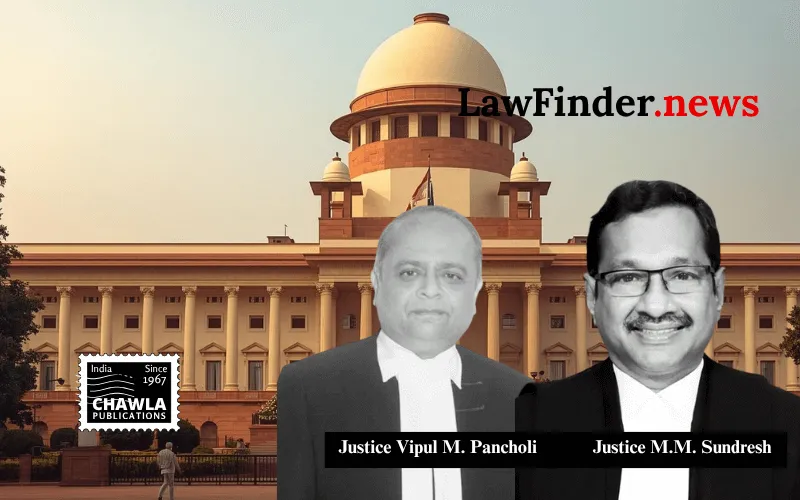
The Supreme Court, comprising Justices M.M. Sundresh and Vipul M. Pancholi, carefully analyzed the statutory provisions, established legal principles, and the nature of the offices in question. The Court emphasized that the office of Sajjadanashin is fundamentally spiritual, involving religious leadership, guidance, and the preservation of spiritual lineage (silsila), whereas the Mutawalli is primarily concerned with secular management and administration of Waqf properties.
Citing authoritative texts such as Mulla’s Principles of Mahomedan Law and prior Supreme Court precedents including Syed Mohd. Salie Labbai v. Mohd. Hanifa (1976), the Court observed that while a Sajjadanashin may also discharge Mutawalli functions if so appointed, the two offices are not identical. The Court noted Section 64(2) of the Waqf Act, 1995, which protects the personal rights of a Sajjadanashin even upon removal as Mutawalli, underscoring their distinct status.
Addressing the question of jurisdiction, the Supreme Court held that civil courts retain plenary jurisdiction under Section 9 of the Code of Civil Procedure, 1908, to try suits of a civil nature unless expressly or impliedly barred by statute. The Court found no explicit provision in the Waqf Act ousting civil court jurisdiction over disputes involving appointment to the spiritual office of Sajjadanashin. The Court also observed that the Waqf Tribunal had earlier declined jurisdiction, reinforcing that the matter was properly before the civil courts.
The Supreme Court criticized the High Court for raising the jurisdictional issue belatedly after nearly four decades of litigation and for setting aside concurrent factual findings without demonstrating perversity or legal error. The Court restored the Trial Court and First Appellate Court judgments, declaring the appellant the rightful Sajjadanashin, and remitted the matter to the High Court to decide the case on merits expeditiously, excluding the jurisdictional question.
The judgment thus delineates the boundaries of spiritual and administrative roles within Waqf institutions, affirming the continued role of civil courts in adjudicating spiritual succession disputes unless clearly barred. It provides significant clarity in the jurisprudence relating to Waqf management, succession to religious offices, and the scope of statutory authorities.
Bottom Line:
The office of Sajjadanashin is distinct from that of Mutawalli. While a Mutawalli primarily performs administrative functions related to Waqf management, the Sajjadanashin holds a spiritual office and serves as the spiritual head of a Dargah. Civil courts retain jurisdiction over disputes regarding the appointment of a Sajjadanashin unless specifically barred by statute.
Statutory provision(s):
Waqf Act, 1995 Section 3(i), Section 32(2)(g), Section 50, Section 64(2); Code of Civil Procedure, 1908 Section 9