New Delhi, Mar 11 Aruna Shanbaug and Harish Rana. The Mumbai nurse who died in 2015 after 42 years in a coma and the 32-year-old Ghaziabad man waiting to die with dignity bookend the long pending emotive debate over passive euthanasia.
The complex question, which touches on issues of morality, compassion and dignity and has been endlessly discussed over the years in various forums, was finally settled on Wednesday with the Supreme Court in a landmark first allowing the withdrawal of life support to Rana who has been in a coma since 2013.
“If there is dignity in life, and if there is meaning in life, by all means you continue,” Vipul Mudgal, director of the NGO Common Cause that had petitioned the Supreme Court on the issue in 2018, told PTI.
Dr Surendra Dhelia of the Society for the Right to Die with Dignity, one of the earliest advocates for euthanasia in India, hailed the verdict as a “very good step”.
Passive euthanasia is the intentional act of letting a patient die by withholding or withdrawing life support or the treatment necessary to keep him alive.
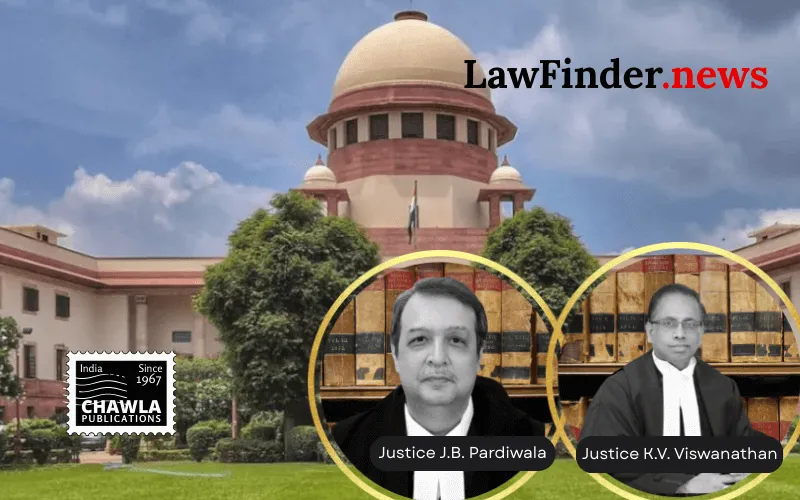
While asking the Union government to consider bringing comprehensive legislation on passive euthanasia, a bench of Justices J B Pardiwala and K V Viswanathan also directed AIIMS-Delhi to ensure that life support to Rana is withdrawn with a tailored plan so dignity is maintained.
The bench allowed the plea filed by Rana through his father Ashok Rana and said AIIMS-Delhi should grant him admission in palliative care so medical treatment can be withdrawn in a "humane manner".
“It's a very good verdict and probably it is the first time that passive euthanasia will be carried out under supervision of the court. In a way, passive euthanasia was legalised in 2011 in Aruna Shanbaug's case, but then the instructions, the guidelines, how one could apply and get passive euthanasia was so lengthy that nobody committed passive euthanasia the way it was described by the Supreme Court,” Dhelia told PTI.
In 2011, the top court rejected a euthanasia plea on behalf of Aruna Shanbaug, bedridden in a vegetative state in a Mumbai hospital since a brutal sexual assault in November 1973. The court then had also said passive euthanasia can be allowed in cases of permanent vegetative state. Shanbaug finally died in 2015 of pneumonia.
Three years after that, the apex court in the Common Cause v. Union of India recognised the "right to die with dignity" as a fundamental right under Article 21. It legalised passive euthanasia and “living wills”, or “Advance Medical Directive and laid down strict procedures for implementing these directives.
According to Mudgal, the Harish Rana verdict vindicates the Common Cause position. He noted that by legalising a “living will” in 2018, the Supreme Court gave everyone a right to decide their fate once they are terminally ill.
“We also said that everybody should be permitted to write their own (living) will in which you specify that ‘should I be in a vegetative state, or should I be terminally ill, I should not be subjected to say ventilator or artificial resuscitation’,” Mudgal said.
On January 24, 2023, a five-judge Constitution bench modified the 2018 guidelines to ease the process of granting passive euthanasia to terminally ill patients. A primary and a secondary medical board will have to be formed for an expert opinion on the withdrawal of artificial life support for a patient in a vegetative state, the guidelines stated.
Mudgal also noted that the apex court’s verdict in Rana’s case also implies that “one does not need to go to the courts every time”.
“If a person writes an advanced medical directive, they should not be subjected to unwanted medical intrusion… If the hospital is following the protocol, which is very simple, that you have a two-tier medical review. First is just a subject expert and your physician... they will first give a medical opinion and they will also certify the chances of survival.
“And then there is a secondary medical board, which has a doctor nominated by the chief medical officer of the district. They give an opinion in 48 hours. So, I think today's judgment is very important for many reasons. One is it gives a message to the hospitals that look, just follow the guidelines,” he said.
Dhelia, who said passive euthanasia is a practice often carried out in hospitals, added that the process needs to be simplified further in the best interest of a terminally ill patient.
“The legal framework as of now takes too long. Primary board and then secondary board and what have you. I think hospitals and doctors are more practical. If the patient is beyond hope of recovery, they would come, they would talk to the relatives, if the relatives agree, they would quietly withdraw the life support system. It has been happening for decades,” Dhelia said.
“...but passive euthanasia needs to be simplified further, so that a patient is not kept suffering unnecessarily to get consent of the courts. It's probably only a matter of time that we will have voluntary active euthanasia, we will have involuntary euthanasia, we may have physician assisted suicide,” he added.
On Wednesday, the apex court noted that Rana survived only through clinically administered nutrition via 'percutaneous endoscopic gastrostomy' tubes, and medical boards had unanimously concluded that continuation of treatment merely prolonged biological existence without any possibility of recovery.
When primary and secondary boards have certified withdrawal of life support, there is no need for judicial intervention, the apex court said.
Not far away from the Supreme Court premises in Delhi, crowds started building up outside the Rana home in Ghaziabad. As media crews started gathering, security personnel at the Brahm Raj Empire residential complex limited access and prevented outsiders from entering the premises.
The family was not in a position to comment, said their lawyer Rashmi Nandakumar.
Local residents told their story instead. One neighbour said Ashok Rana and his wife Nirmala Rana had sold their house in Delhi to meet the medical expenses of their son, a football enthusiast who was pursuing a B.Tech degree at Panjab University in 2013 when he fell from the fourth floor of his paying guest accommodation and sustained a brain injury leading to coma.
The court made special mention of Rana's devoted parents, expressing its appreciation to them for showing their immense love and care for their son. "His family never left his side," the bench said.
Passive euthanasia is legal in many countries, including the Netherlands, Belgium, Spain, Canada, New Zealand, Australia, Germany, France, Italy, the UK, Columbia and the US.
Harish Rana v. Union of India, (SC) : Law Finder Doc Id # 2864455