Supreme Court Upholds Wife's Claim Over Property, Discards Will as Suspicious, High Court's decision reversed; Supreme Court finds will disinheriting sole heir invalid due to unexplained suspicious circumstances
In a significant judgment, the Supreme Court of India has upheld the claim of a widow over her late husband's property, setting aside a will that purportedly disinherited her. The case, Sardari Lal v. Bishan Dass, scrutinized the validity of a will under the Indian Succession Act, 1925. The apex court found the will to be shrouded in suspicious circumstances, which were not satisfactorily explained by its propounders.
The legal battle began when Bhambo Devi, the widow, filed a suit against Bishan Dass and others, claiming sole ownership of her late husband Chhajju Ram's property. The trial court and the first appellate court ruled in her favor, but the High Court of Himachal Pradesh overturned these decisions, prompting an appeal to the Supreme Court.
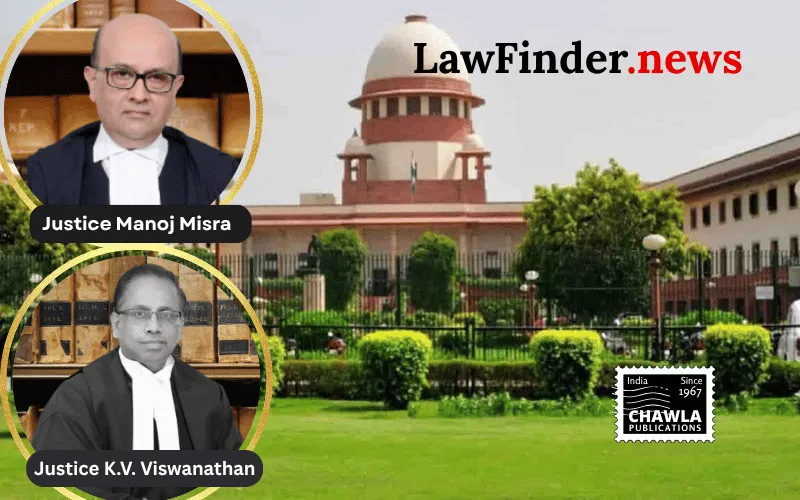
The Supreme Court, led by Justices Manoj Misra and K.V. Viswanathan, meticulously analyzed the evidence and circumstances surrounding the will. The court observed that the will, which disinherited the widow in favor of non-relatives, was executed amid suspicious conditions. The will contained incorrect statements regarding the relationship between the testator and the beneficiaries and lacked credible reasons for disinheriting the sole Class I heir.
The court noted that the will was executed when the testator was an illiterate agriculturist, raising doubts about his understanding of the document's contents. Additionally, the endorsement on the will by the Sub-Registrar was marred by uninitialed cuttings, which further cast doubt on its authenticity.
The Supreme Court emphasized that the burden of proving the will's validity in such suspicious circumstances lay with the propounders, who failed to dispel the doubts and satisfy the judicial conscience. Consequently, the court reinstated the trial court's decree, recognizing the widow as the rightful owner of the property.
This judgment underscores the judiciary's commitment to ensuring that wills, particularly those disinheriting close family members, are scrutinized thoroughly for authenticity and fairness.
Bottom Line:
Validity of a will under Indian Succession Act - A will disinheriting the sole Class I heir in favor of non-relatives and containing incorrect statements raises suspicion about its execution. The propounder must dispel doubts and satisfy the judicial conscience to prove its validity.
Statutory provision(s): Indian Succession Act, 1925 Section 63, Civil Procedure Code, 1908 Section 100, Evidence Act, 1872 Section 68, Registration Act, 1908 Sections 34, 35, 58, 59, 60
Sardari Lal v. Bishan Dass, (SC) : Law Finder Doc id # 2935545