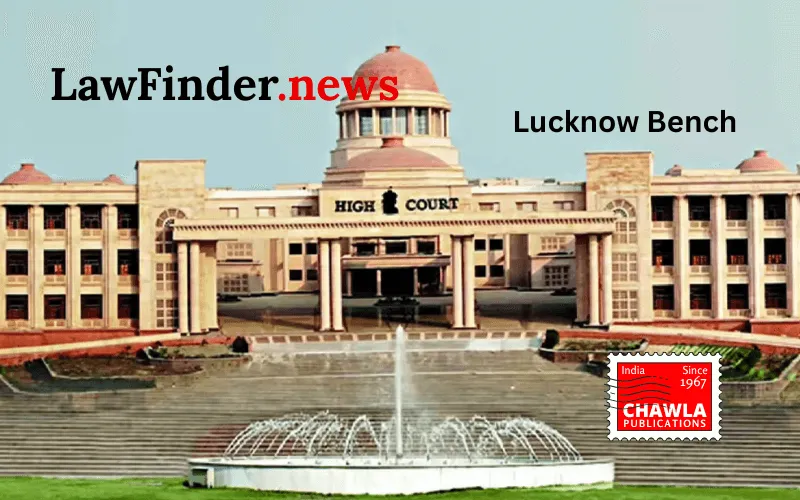
Lucknow, Sep 15 The Allahabad High Court on Tuesday directed the Uttar Pradesh government to prepare a tangible and conclusive roadmap with timelines to strengthen medical facilities in newly opened medical colleges and prevent critically ill patients from being shuttled between hospitals.
A Lucknow bench of Justice Rajan Roy and Justice Manjive Shukla directed the additional chief secretary, medical health and family welfare, to place the roadmap before it on affidavit, covering both immediate and long-term measures. The court also sought details of the proportion of the state budget allocated for medical facilities and services, observing that lack of finance should not impede the provision of medical care.
The directions came while hearing a PIL filed by Ashutosh Kumar Singh concerning the recent death of a newborn who was taken from Sultanpur to Lucknow for treatment and subsequently taken to KG Medical University (KGMU), Dr Ram Manohar Lohia Institute of Medical Sciences (RMLIMS) and SGPGI.
The bench has fixed the next hearing on October 1, directing the additional chief secretary, medical education, and doctors familiar with the case from KGMU, SGPGI and RMLIMS to join the court proceedings through video conferencing.
The bench said the case raised larger issues beyond why adequate treatment and care could not be provided to the child. It stressed the urgent need to decentralise healthcare and equip newly established medical colleges with adequate infrastructure, including special and super-speciality facilities and ventilators, so that patients are not forced to travel to Lucknow for critical treatment.
The court noted that the child was suffering from an ailment requiring immediate attention. Even if the child had to be shifted from Sultanpur to a referral hospital in Lucknow, the ambulance should have been equipped with the necessary facilities. However, an ordinary ambulance was used.
The court noted that SGPGI doctors had said that this was the first stage at which the child's condition was compromised and that it may have deteriorated further.
The bench also highlighted the need for qualified personnel to guide patients and their attendants in major government hospitals.
It said people from rural areas, particularly those unfamiliar with the functioning of large hospitals, should not suffer because of lack of awareness or difficulties in navigating hospital procedures.
The court also suggested an online referral mechanism under which a referring hospital would first ascertain whether the required bed and facilities were available at the referral hospital. This, the court said, would prevent valuable time being lost in transportation and repeated visits to hospitals.
About the present case, KGMU doctors told the court that the child arrived in an ambulance and the relatives went to the fourth floor, where the Neonatal Care Intensive Care Unit is located, but no bed was available.
According to KGMU, the child's medical papers were examined and the relatives were asked to bring the child to the fourth floor, which they did not do.
The family disputed this account, claiming that KGMU personnel asked them to take the child to RMLIMS because no bed was available.
They also alleged that despite requesting examination of the child in the ambulance, no such examination was carried out.
At this, the court said it would examine the issue further, but observed that the differing accounts themselves highlighted the need for a proper guidance and counselling mechanism.
The bench directed the state government to conduct an objective and fair inquiry into the incident and submit its report within 15 days. It clarified that it had not yet reached any conclusion regarding any lapse by any doctor or hospital.
However, it said that if the inquiry found deficiencies or lapses in providing requisite care and facilities, it would consider fixing accountability and granting compensation to the family for negligence, if any, on the part of the state or other authorities. The court also directed that the family's version be recorded and considered by the inquiry officer.