Court directs comprehensive verification of educational credentials of all primary teachers, mandates affidavit disclosures of relatives in education department, and holds officials personally accountable for non-compliance
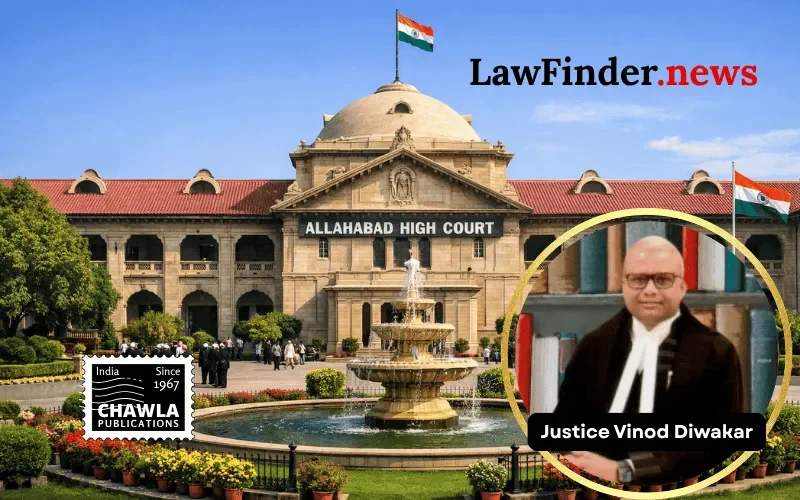
In a significant judgment delivered on October 16, 2026, the Allahabad High Court, presided over by Justice Vinod Diwakar, addressed the rampant issue of fraudulent appointments of teachers in Uttar Pradesh's Basic Education Department. The case arose following allegations against Kusumlata, a petitioner accused of obtaining employment by submitting forged or borrowed educational documents. The petitioner also reportedly avoided cooperation with the Special Task Force set up for verification, heightening concerns about systemic malpractice in teacher recruitment.
The Court noted disturbing findings from an ongoing investigation by the Special Task Force that exposed a large-scale fraud in recruitment, including instances where multiple individuals secured teaching positions using a single set of educational certificates. Highlighting the gravity of the situation, Justice Diwakar observed that such fraudulent appointments undermine the quality of education and contribute to the closure of primary schools due to declining student enrollment, which is attributed not to resource shortages but to poor teaching standards.
Drawing attention to a previous ruling in Garima Singh v. State of U.P. (dated January 22, 2026), the Court reiterated the directive that all teachers appointed through fraudulent means must face cancellation of appointments, recovery of salaries, and strict disciplinary action. Moreover, officials complicit in facilitating or ignoring such fraud should be held accountable.
To effectively combat this menace, the Court issued the following key directions:
1. Document Submission:
All teachers of Classes I to VIII must submit legible copies of their appointment letters and complete educational credentials, including High School, Intermediate, Graduation, B.Ed./B.T.C./D.El.Ed./B.El.Ed., and TET/CTET certificates, to their respective Basic Shiksha Adhikari within one week of notification.
2. Affidavits on Relatives:
Teachers must also file notarized affidavits disclosing immediate relatives employed or retired at the level of Basic Shiksha Adhikari or above in the Education Department. If no such relatives exist, an undertaking to that effect must be submitted. This measure aims to uncover potential nepotism or collusion.
3. Administrative Coordination:
Basic Shiksha Adhikaris are directed to coordinate with Headmasters to collect the required documents, compile detailed records in an Excel sheet, and forward all materials to the Special Task Force's Range Offices for verification.
4. Verification and Supervision:
The Special Task Force, with 18 Range Offices and 7 Commissionerates across the state, will oversee the verification process, possibly with police assistance. The Director of Education will supervise Basic Shiksha Adhikaris, while the Additional Director General of Police, Special Task Force, will supervise verification and investigations. Both are empowered to appoint officers for day-to-day oversight.
5. Accountability:
The Court sternly warned that any negligence or dereliction of duty by officers involved in this exercise would be taken seriously, with personal accountability enforced.
The Court underscored that the quality of teachers is paramount to restoring the credibility and effectiveness of primary education in Uttar Pradesh. It emphasized that educators who secure their positions through deceit cannot be entrusted with the responsibility of shaping young minds.
The matter is scheduled for further hearing on November 4, 2026, for compliance reporting and additional directions.
This landmark judgment reflects the judiciary's commitment to preserving the integrity of public education and ensuring that government resources are utilized effectively for the nation's future.
Bottom Line:
Fraudulent appointments of primary teachers on the basis of forged or borrowed educational documents - High Court directed all teachers of Classes I to VIII to submit appointment letters, educational documents and notarised affidavits regarding relatives in Education Department - Basic Shiksha Adhikaris directed to compile service and qualification data and forward same to Special Task Force for verification - Director of Education and ADG, STF to supervise entire exercise and non-compliance to entail personal accountability.
Statutory provision(s):
Directives based on service law principles, educational regulations, and administrative law.
Kusumlata v. State of U.P., (Allahabad) : Law Finder Doc Id # 2999776