Court reprimands Uttar Pradesh Police for procedural lapses under Bharatiya Nagarik Suraksha Sanhita, 2023; highlights violations of preventive detention norms and right to legal counsel
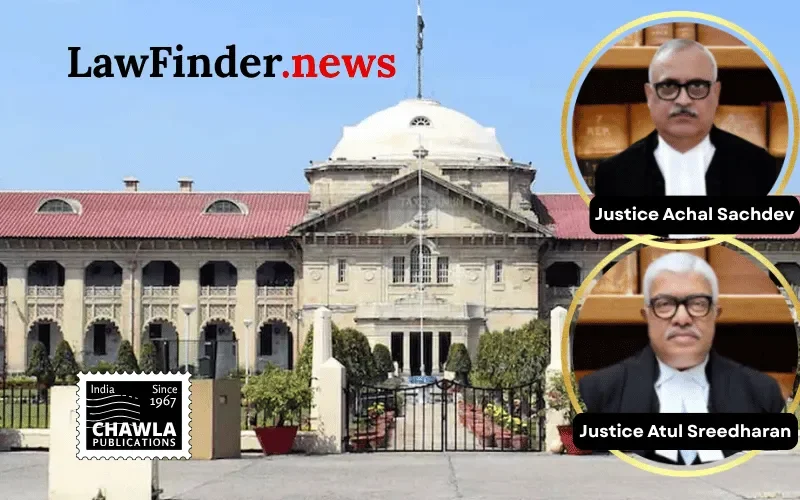
In a significant judgment dated October 7, 2026, the Allahabad High Court (Division Bench comprising Justices Atul Sreedharan and Achal Sachdev) quashed the arrest and detention of Deepak, the petitioner, holding them illegal and directed his immediate release. The Court's order highlights a disturbing pattern of procedural violations by the Uttar Pradesh Police under the preventive detention and arrest provisions of the Bharatiya Nagarik Suraksha Sanhita (BNSS), 2023.
The case arose from Crime No. 370 of 2026, registered on August 23, 2026, involving multiple offences under the BNSS. Deepak was initially taken into custody on August 23, 2026, under preventive detention provisions of Sections 126, 130, and 170 BNSS before being formally arrested on August 24, 2026. However, the Court found the preventive detention and subsequent arrest to be fraught with procedural irregularities and unlawful practices.
Key findings of the Court include:
1. Misuse of Preventive Powers After Offence:
The Court emphasized that Sections 126, 130, and 170 BNSS relate to preventive action to maintain public peace and can only be invoked before the commission of a cognizable offence. Since the offence had already occurred, reliance on these provisions was erroneous. Instead, the police should have proceeded under Section 35(1)(c) BNSS, which permits arrest without warrant after the commission of a cognizable offence punishable with imprisonment exceeding seven years.
2. Improper Notice and Bond Procedure under Section 130 BNSS:
The Court scrutinized the preventive detention notice served under Section 130 BNSS and found it defective and otiose. The notice was issued after the petitioner's detention, lacked specification of the bond amount, and was signed irregularly by a different ACP than the one named. Such procedural lapses rendered the preventive detention unlawful.
3. Contradictory and Fabricated Arrest Documents:
The arrest documents bore inconsistent dates-while the grounds of arrest and search papers were signed and dated August 23, 2026, the arrest date was recorded as August 24, 2026. The Investigating Officer admitted these discrepancies but failed to rectify them, leading the Court to suspect fabrication and continuous unlawful custody.
4. Violation of Right to Legal Counsel:
The Court held that merely informing the arrested person that he may apply for bail through a lawyer does not satisfy the mandatory requirement of informing the arrestee of their right to legal assistance at the time of arrest as per Section 38 BNSS and Article 22(1) of the Constitution. The arrest memo and grounds of arrest failed to properly communicate this right, violating statutory and constitutional safeguards.
5. Judicial Oversight and Police Accountability:
The Magistrate failed in his duty to scrutinize the police papers to ensure compliance with statutory safeguards. The Court expressed serious displeasure at the cavalier and ignorant handling of the case by the police officers, particularly ACP Kamlesh Kant and SI Anuj Kumar, and directed that this be recorded in their service records. Furthermore, the Director General of Police, Uttar Pradesh, was urged to enhance police training on civil liberties and legal procedures related to arrest and detention.
6. Order for Immediate Release:
Given the unlawful detention starting from August 23, 2026, and the subsequent flawed arrest on August 24, 2026, the Court ordered the petitioner's immediate release if not wanted in any other case.
This judgment reaffirms the constitutional protections against illegal detention and underscores the necessity for police to strictly adhere to the procedural safeguards enshrined in the BNSS, 2023, and the Constitution. It sends a clear message that preventive powers cannot be misused to circumvent legal processes once an offence has been committed, and that rights to legal counsel are fundamental and must be communicated without fail.
Bottom Line:
Habeas corpus - Illegal detention and arrest - Preventive powers under Sections 126, 130 and 170 BNSS cannot be misused after commission of cognizable offence - Notice under Section 130 BNSS must precede coercive action - Arrest documents containing contradictory dates and inadequate grounds of arrest render detention unlawful - Arrestee must be informed of right to legal counsel under Section 38 BNSS and Article 22(1).
Statutory provision(s):
Bharatiya Nagarik Suraksha Sanhita, 2023 Sections 126, 130, 170, 35(1)(c), 38; Constitution of India, 1950 Article 22(1)
Deepak v. State of U.P., (Allahabad)(DB) : Law Finder Doc Id # 2998023