Court Emphasizes Civil Jurisdiction in Land Disputes, Recommends Government Reevaluation of Court Fee Structure
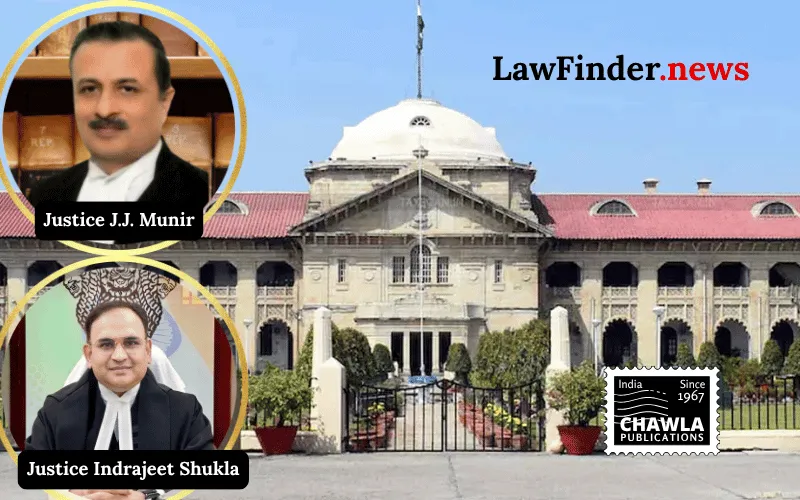
The Allahabad High Court, in a significant ruling on July 28, 2026, dismissed a writ petition filed by Laxmikant Aggarwal, a senior citizen, seeking protection against alleged land grabbing. The Division Bench, comprising Justices J.J. Munir and Indrajeet Shukla, emphasized that civil disputes involving questions of fact should be addressed in civil courts rather than through writ petitions.
The petitioner, Laxmikant Aggarwal, aged 70, claimed that his property, comprising Plot Nos. 2149 and 2150 in Kanpur Dehat, was illegally encroached upon by Amrish Pratap Singh, a person with a criminal background. Aggarwal contended that due to his age and the financial burden of court fees, he was unable to pursue litigation in a civil court. Instead, he sought relief through a writ petition under Article 226 of the Constitution, hoping for a mandamus directing the District Magistrate to take action against the alleged encroachment.
However, the court reiterated its stance that civil jurisdiction is the appropriate forum for resolving such disputes. In its judgment, the court noted that the petitioner had previously approached the court with a similar plea, which was declined, advising him to seek redress in a civil court. The court observed that the relief sought in the present writ petition was essentially identical to the earlier one.
The court also addressed the petitioner's reliance on a Government Order dated May 1, 2017, which allegedly empowered an Anti Land Grabbing Committee to handle such disputes. The judges expressed concern over this order, questioning its legality as it seemingly transferred judicial powers to an administrative body.
While acknowledging the challenges faced by senior citizens in pursuing civil litigation, the court maintained that it could not convert executive authorities into judicial bodies. However, it recommended that the government reconsider the current ad valorem court fee structure, which imposes a significant financial burden on litigants, especially senior citizens.
The court's judgment underscores the importance of maintaining clear boundaries between judicial and executive functions and reiterates the necessity of pursuing civil disputes through the appropriate legal channels. The ruling also highlights the need for systemic reforms to facilitate access to justice for vulnerable groups.
Bottom Line:
Land dispute - Relief sought under Article 226 of the Constitution - Mandamus cannot be issued for civil disputes involving disputed questions of fact - Remedy lies before Civil Court of competent jurisdiction.
Statutory provision(s): Article 226 of the Constitution of India, 1950; Uttar Pradesh Maintenance and Welfare of Parents and Senior Citizens Rules, 2014, Rules 21 and 22
Laxmikant Aggarwal v. State of U.P., (Allahabad)(DB) : Law Finder Doc id # 2950680