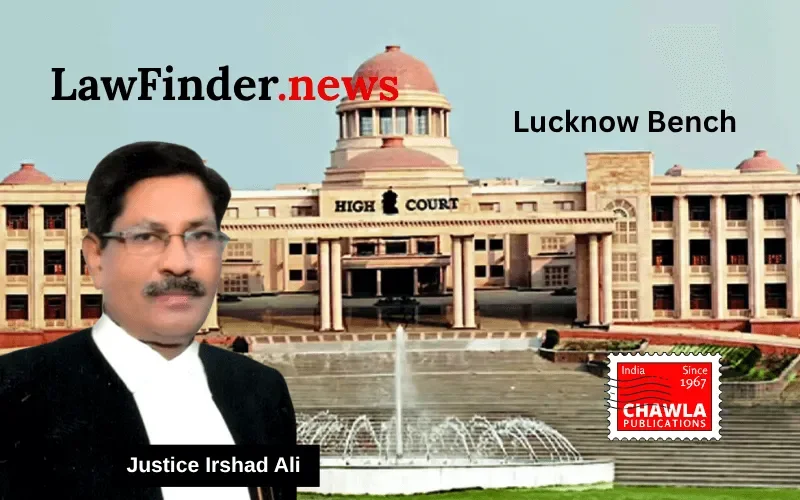
Court mandates fair completion of 2005 selection process by awarding average interview marks where records are missing; no guarantee of appointment or filling all vacancies.
In a significant ruling on October 28, 2026, the Allahabad High Court (Lucknow Bench) addressed a long-pending grievance concerning the recruitment process for the post of Junior Clerk/Typist at Uttar Pradesh King George Dental Science University (KGMU). The petitioner, Ms. Ruchi Sinha, contested the university's failure to declare the final result of the selection process initiated in 2005, despite her participation in all requisite stages including the typing test and interview.
The Court clarified that inclusion of a candidate's roll number in the list of those called for interview does not equate to a position in the final merit list nor confer any right to appointment. The university had advertised 40 vacancies but reportedly allowed only 21 candidates to join without declaring the final consolidated result, leading to allegations of arbitrariness and non-transparency in the selection.
While acknowledging that public employers are not invariably bound to fill every advertised vacancy, the Court emphasized that once a recruitment process commences and candidates participate in the prescribed stages, the authority must bring the process to a lawful, transparent conclusion by declaring the outcome in accordance with applicable rules.
A critical issue was the non-availability of original records detailing the interview marks of the petitioner due to the elapsed time since 2005. The Court observed that the marks stated in the university's counter-affidavit lacked support from contemporaneous final select lists and thus could not be accepted as conclusive.
To remedy this, the Court directed the respondents to objectively calculate and award average interview marks to the petitioner based on verifiable data from other candidates' records in the same selection. This average would be used to compute the petitioner's aggregate marks, enabling declaration of the final result of her candidature within three months of the Court's order.
Importantly, the Court emphasized that this direction does not amount to mandating the petitioner's appointment or require the university to fill all 40 vacancies. The decision seeks to ensure a fair and transparent conclusion of the recruitment process without disturbing appointments already made.
The judgment drew upon precedents including the Supreme Court's rulings in Central Board of Secondary Education v. Aditya Bandopadhyay (2011), and Harkirat Singh Ghuman v. Punjab and Haryana High Court (2022), underscoring the principles of transparency, fairness, and the right of candidates to know their evaluation results.
This ruling reinforces the obligation of public authorities to conclusively complete recruitment processes and maintain transparent records, safeguarding candidates' rights to know the outcome of their participation in public employment selection.
Bottom Line:
Public employment - Selection process for post of Junior Clerk/Typist - Mere inclusion of candidate in list of candidates called for interview does not amount to placement in final merit list - Even if employer is not bound to fill all advertised vacancies, recruitment process once undertaken must be brought to lawful and transparent conclusion - Where final result is not available and interview marks of petitioner cannot be verified from surviving records, authority directed to award average interview marks on objective and verifiable basis and declare final result of candidature - No direction for appointment or for filling all vacancies.
Statutory provision(s): Article 14, Article 16, Article 226 of the Constitution of India; Uttar Pradesh Procedure for Direct Recruitment for Group 'C' Posts (Outside the Purview of the Uttar Pradesh Public Service Commission) Rules, 2002 (as amended 2003)