Court holds writ petition maintainable under Article 226 for payment of admitted dues against State instrumentality; orders payment of Rs.7.92 lakh immediately and balance dues subject to formalities, awarding 6% interest on delayed payments.
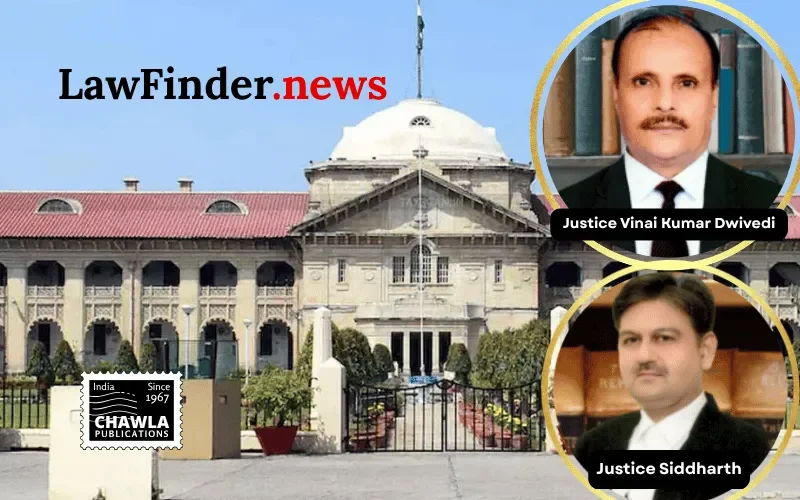
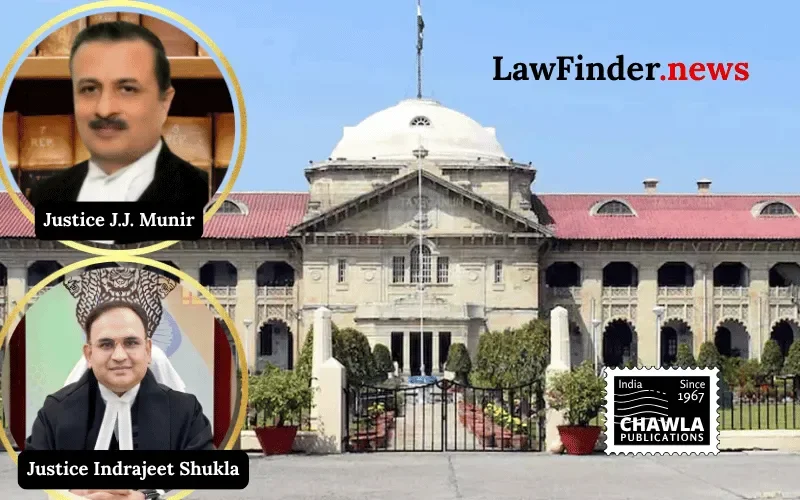
In a significant judgment delivered on October 8, 2026, the Allahabad High Court in a Division Bench comprising Justices J.J. Munir and Indrajeet Shukla ruled in favor of M/s Vikas Constructions, a civil contractor, directing the State of Uttar Pradesh and Nagar Panchayat, Chandauli, to promptly pay admitted contractual dues for construction work carried out during the financial years 2018-19 and 2021-22.
The petitioner had entered into contracts for civil construction with the Nagar Panchayat, completing the work as per the agreed terms. However, despite raising bills totaling Rs.41,00,127, only Rs.12,56,684 was paid, leaving an outstanding balance of Rs.28,43,443. The petitioner's repeated requests for payment, including applications and reminders over nearly a year, were met with no relief, leading to the filing of a writ petition under Article 226 of the Constitution.
The Court observed that there is no absolute bar on entertaining writ petitions for payment of admitted contractual dues against the State or its instrumentalities, especially where the amount claimed is not in dispute and no complex factual issues requiring detailed evidence arise. The Court relied on authoritative Supreme Court precedents such as M/s Utkal Highways Engineer and Contractors v. Chief General Manager (2025 SCC Online SC 1400), ABL International Ltd. v. Export Credit Guarantee Corporation of India Ltd. (2004) 3 SCC 553, and State of U.P. v. Bridge & Roof Co. (1996) 6 SCC 22 to emphasize that non-payment of admitted dues by a State agency amounts to arbitrary action and can be remedied by writ jurisdiction.
The respondent Nagar Panchayat admitted liability of Rs.7,92,580 towards the first work order and expressed readiness to clear the dues forthwith. However, the balance amount of Rs.6,31,890 related to the second work order was held contingent upon the petitioner submitting a proper bill in the prescribed format along with necessary certifications from the Junior Engineer and verification by the Assistant Engineer. The Court underscored that while procedural requirements for disputed amounts must be complied with, legitimate dues already admitted cannot be withheld on technical grounds.
Importantly, the Court awarded the petitioner simple interest at the rate of 6% per annum on the entire admitted dues from the date they fell due until actual payment, citing the principle that a person deprived of the use of legitimately due money is entitled to compensation by way of interest. The petitioner was directed to complete the formalities and raise the fresh bill within two weeks, with the entire admitted amount to be paid within four weeks thereafter.
This ruling reiterates the judiciary's stance that public authorities must act fairly and reasonably in contractual dealings and cannot arbitrarily withhold payments, thereby upholding principles of equity and justice under Article 14 alongside the writ jurisdiction provisions of Article 226.
Bottom Line:
Writ jurisdiction under Article 226 is maintainable for payment of admitted contractual dues against the State or its instrumentality; admitted dues cannot be withheld arbitrarily. Disputed balance amount may be directed to be processed on completion of prescribed formalities. Interest can be awarded on admitted dues for delayed payment.
Statutory provision(s):
Article 226, Constitution of India; Section 34, Civil Procedure Code
M/s Vikas Constructions v. State of U.P., (All)(DB) : Law Finder Doc Id # 2995540