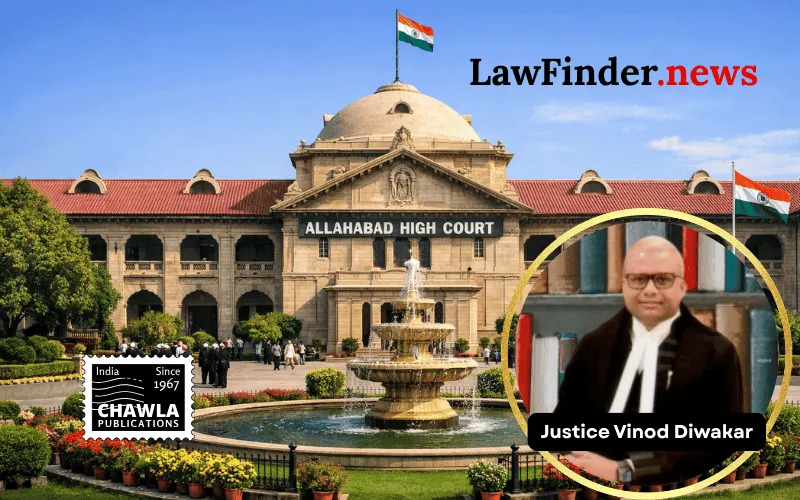
Court highlights systemic flaws in case allocation, counter affidavit preparation, and government counsel accountability; Principal Secretary (Law) ordered to submit comprehensive action plan
In a significant judgment dated September 1, 2026, the Allahabad High Court, presided over by Justice Vinod Diwakar, underscored critical inefficiencies plaguing government litigation in Uttar Pradesh. The Court expressed grave concern over the procedural and administrative deficiencies that have long hindered the effective representation of the State in judicial proceedings, resulting in delays and compromised administration of justice.
The matter came to the fore during the hearing of a writ petition filed by Neetu Agarwal and another against the State of Uttar Pradesh and others. While addressing the issues raised, the Court was compelled to delve into the systemic problems related to the State's litigation machinery, particularly the allocation of cases to Government Counsel, preparation and filing of counter affidavits, and the accountability of Law Officers appearing before the Court.
The Court observed that the current practice involves a fragmented approach where a limited panel of advocates drafts counter affidavits but does not appear in Court to argue the matters, leading to a disconnect between the pleadings and oral arguments. This often results in counsel appearing without adequate briefing or knowledge of case records, thereby undermining the quality of assistance provided to the Court.
Justice Diwakar noted the absence of a formal policy or procedure governing the nomination and allocation of government cases, the preparation of affidavits, and the briefing of counsel. Files are frequently handed over during court proceedings, leaving counsel insufficient time for preparation. The Court highlighted that such practices not only impede timely adjudication but also waste valuable judicial time through avoidable adjournments and non-compliance with judicial directions.
Emphasizing the gravity of the issue, the Court directed the Principal Secretary (Law), Government of Uttar Pradesh, to personally examine and address these concerns. The Principal Secretary was ordered to file a detailed affidavit outlining the existing mechanisms, administrative rationale behind current practices, accountability frameworks, and any procedural or financial obstacles in instituting reforms. The affidavit must also explore the feasibility of appointing departmental liaison officers in Prayagraj to facilitate timely communication and instructions via electronic modes, thereby reducing delays in affidavit preparation.
Furthermore, the Court mandated that the Principal Secretary appear before it, even through video conferencing, to assist in framing effective solutions. The judgment clarified that this move is not indicative of any adverse opinion but a necessary step towards ensuring that the State's legal representation meets the standards required for just and efficient adjudication.
The Court's directions aim to foster transparency, accountability, and professionalism in government litigation, which is essential for safeguarding public interest and upholding the rule of law. The next hearing is scheduled for September 15, 2026, at 2:00 PM, where the Court will review the Principal Secretary's affidavit and progress on the implementation of recommended reforms.
Bottom Line:
Government litigation - Court highlights inefficiencies in the allocation of cases, preparation of counter affidavits, and representation of the State in Court. Directions issued to the Principal Secretary (Law), Government of Uttar Pradesh, to address procedural, administrative, and accountability issues in Government litigation to ensure timely and effective assistance to the Court.
Statutory provision(s):
Government Litigation
Neetu Agarwal v. State of U.P., (Allahabad) : Law Finder Doc Id # 2972553