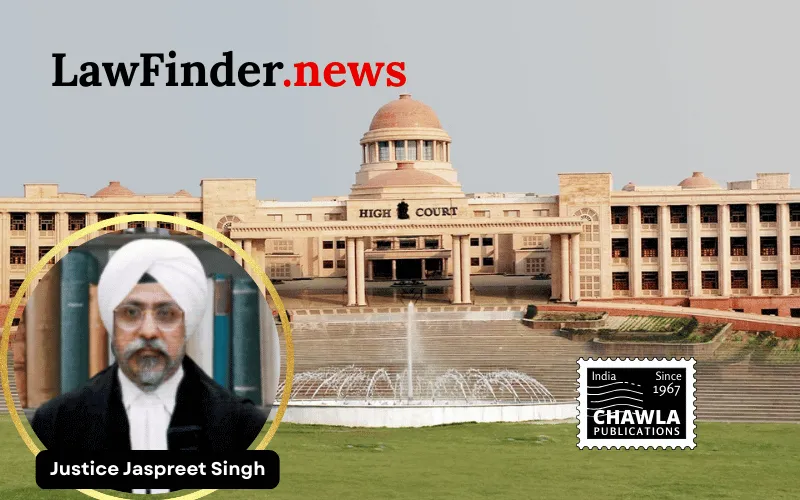
Court Upholds Three-Member Arbitral Tribunal Agreement, Emphasizes Party Autonomy
In a notable decision, the Allahabad High Court, Lucknow Bench, dismissed a petition filed by M/s S. H. Infratech Pvt. Ltd. seeking the appointment of a sole arbitrator in a contractual dispute with the Government of Uttar Pradesh. The court, presided over by Justice Jaspreet Singh, reinforced the principle of party autonomy in arbitration agreements and stressed adherence to the original terms agreed upon by the disputing parties.
The petitioner, represented by Apoorv Dev and Prashant Kumar Singh, sought the appointment of an independent sole arbitrator under Section 11(6) of the Arbitration and Conciliation Act, 1996. This request arose following the demise of the respondent's party-nominated arbitrator, and subsequent procedural lapses in replacing the arbitrator. The petitioner argued that the arbitral tribunal's mandate had expired and that the appointment of a new arbitrator by the respondent was not valid under Section 12(5) of the Act.
However, the court dismissed the petition, emphasizing that the original agreement between the parties prescribed a three-member arbitral tribunal, which had been constituted accordingly. Justice Singh highlighted that Section 11(6) is a default provision and cannot override the agreed terms of the contract where parties have decided upon a multi-member tribunal.
The court noted that procedural steps, such as the timely challenge to arbitrator appointments under Sections 12 and 13, were not adhered to by the petitioner. Additionally, the court pointed out that the petitioner failed to exhaust remedies available under Section 29-A of the Act for an extension of the tribunal's mandate or for appointing a substitute arbitrator.
The judgment underscores the importance of following established arbitration procedures and respecting the terms of arbitration agreements. It serves as a reminder that courts are bound to uphold party autonomy in arbitration and cannot unilaterally alter the agreed framework unless both parties consent.
The decision also referenced the Supreme Court's judgment in "Jagdeep Chowgule v. Sheela Chowgule" and others, underscoring that applications for extensions and substitute arbitrator appointments should be directed to the appropriate court, as defined under Section 2(e) of the Act.
The petition's dismissal leaves the petitioner with the option to pursue other legal remedies available under the arbitration framework.
Bottom Line :
Arbitration and Conciliation Act, 1996 - Petition under Section 11(6) for appointment of a Sole Arbitrator dismissed on grounds of non-maintainability due to existing agreement for a three-member Arbitral Tribunal and procedural lapses by the petitioner.
Statutory provision(s):
Section 11(6), Section 12(5), Section 15, Section 29A of the Arbitration and Conciliation Act, 1996
M/s S. H. Infratech Pvt. Ltd. v. Govt. of U.P., (Allahabad)(Lucknow) : Law Finder Doc id # 2969177