Court says officiating headmasters are entitled to pay from the date they began discharging higher duties; cites Supreme Court’s Maya Banerjee ruling to hold that limiting arrears to three years is unsustainable.
Lucknow: In a significant ruling for basic education teachers, the Allahabad High Court has held that assistant teachers functioning as officiating or in-charge headmasters are entitled to receive the salary of the headmaster from the date they actually began performing those duties, and not merely for the three years preceding the filing of their writ petitions.
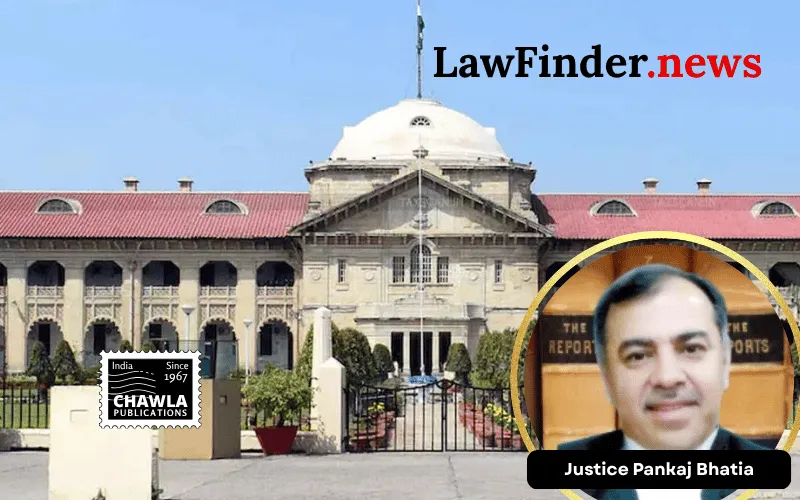
Justice Pankaj Bhatia delivered the decision while disposing of a batch of writ petitions filed by Poonam Rani Varshvey and 299 others, all of whom claimed that they had been continuously discharging the responsibilities of headmasters in the absence of regularly appointed incumbents but were not being paid the higher pay scale attached to the post.
The petitioners relied on an earlier decision of the High Court in Tripurari Dubey, where similarly placed teachers had been granted relief. In that case, the Single Judge had directed payment of arrears from the date the teachers began functioning as officiating headmasters. However, on special appeal, the Division Bench had restricted the arrears to three years prior to the filing of the writ petition, relying on the Supreme Court’s ruling in Union of India v. Tarsem Singh.
Before the High Court in the present case, the petitioners argued that the legal basis for the three-year restriction had since weakened after the Supreme Court’s later judgment in Maya Banerjee v. Union of India. They pointed out that in Maya Banerjee, the Supreme Court held that Tarsem Singh had been rendered per incuriam because it had failed to consider the earlier decision in S.K. Mastan Bee, where arrears were allowed from the date the benefit became due.
The State opposed the petitions, arguing that the Supreme Court’s rulings in S.K. Mastan Bee and Maya Banerjee were confined to pension and gratuity matters, and could not be extended to salary claims. It was also argued that the Division Bench’s earlier restriction to three years remained binding.
The High Court rejected these objections. It observed that the principle laid down in Maya Banerjee effectively eroded the foundation of the Division Bench’s reliance on Tarsem Singh. The Court noted that salary, like pension and gratuity, is a property right in the hands of a person who has rendered service, and there was no valid reason to distinguish between these forms of monetary entitlement for denying full arrears to teachers who had actually worked on a higher post.
The Court further held that while a Single Judge is ordinarily bound by a Division Bench decision, that rule does not apply where the basis of the earlier judgment has been undermined by a subsequent Supreme Court ruling. In such a situation, the law declared by the Supreme Court prevails.
Accordingly, the High Court maintained the rest of the Division Bench’s directions in Tripurari Dubey, but set aside the limitation restricting arrears to three years. The petitioners were held entitled to salary as officiating headmasters from the date they started working in that capacity until actual payment or realization.
With this, the writ petitions were disposed of.
Bottom Line:
Service Law - Assistant teachers functioning as officiating/in-charge headmasters are entitled to salary of the post of headmaster from the date they started discharging duties of officiating headmaster and not merely for three years prior to filing of the writ petition - Restriction of arrears to three years based on Tarsem Singh held unsustainable in view of subsequent Supreme Court judgment in Maya Banerjee treating Tarsem Singh as per incuriam for not considering S.K. Mastan Bee.
Statutory provision(s): Article 21 of the Constitution of India
Poonam Rani Varshvey v. State of U.P., (Allahabad)(Lucknow) : Law Finder Doc Id # 2983096