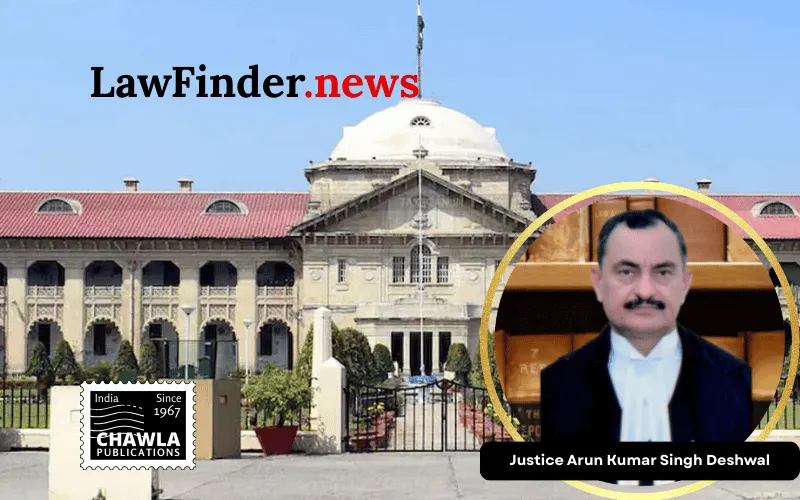
Court mandates audio-video recording of witness statements under Bharatiya Nagarik Suraksha Sanhita, 2023, emphasizes victim-friendly procedures in sexual assault cases, and directs DGP Uttar Pradesh to enforce stringent investigation protocols to prevent harassment of innocent persons.
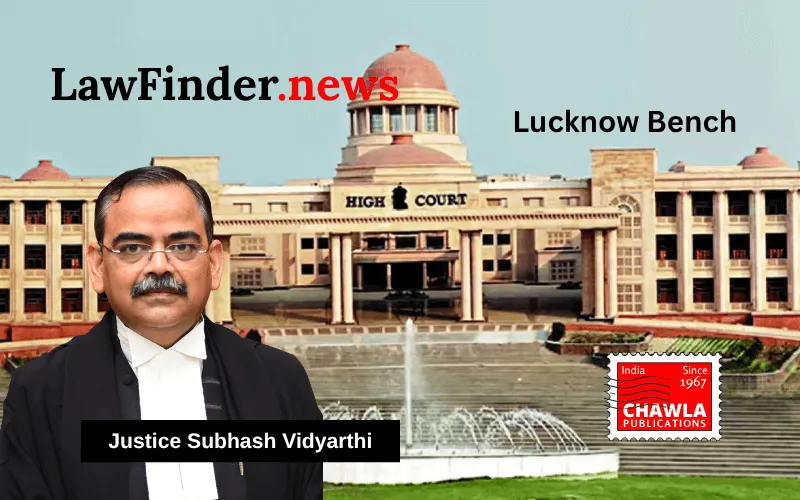
In a significant judgment dated September 15, 2026, the Allahabad High Court, presided over by Justice Arun Kumar Singh Deshwal, has laid down comprehensive guidelines to ensure fair, transparent, and unbiased police investigations in the State of Uttar Pradesh. The directions come under the ambit of the newly enacted Bharatiya Nagarik Suraksha Sanhita (BNSS), 2023, aimed at reforming investigation practices and safeguarding citizens' rights.
The case, Criminal Miscellaneous Bail Application No. 30325 of 2026, involved Smt. Chandrakanta, the mother-in-law of a deceased woman who allegedly committed suicide by hanging. The FIR was registered under Sections 85, 80(2), 352, 115(2), 351(3) of the BNSS and Section 3/4 of the Dowry Prohibition Act at Police Station Basauni, District Agra. The applicant sought bail, contending that she had been falsely implicated without sufficient evidence and was languishing in jail since May 18, 2026.
During the hearing, the Court pointed out that the Investigating Officer (IO), Sri Anil Kumar, had failed to record the statement of the first informant with audio-video as mandated by the DGP's Circulars No. 24 of 2025 and No. 39 of 2026, which require such recordings under Section 180 BNSS to promote transparency and prevent tampering. The IO offered an unconditional apology but could not justify the lapse.
The Court expressed concern over widespread non-compliance by police officers who, by neglecting to record audio-video statements, risk undermining the integrity of investigations and facilitating false allegations. The Court underscored that under Section 180(3) BNSS and Rule 20(1) BNSS Rules, recording audio-video statements is permissible and strongly encouraged, especially to protect against claims that statements are fabricated or manipulated.
Citing U.P. Police Regulations and Supreme Court precedents, the Court elaborated on the duties of Investigating Officers, emphasizing that they must not act as mere clerks but should actively use their expertise to observe and infer facts to uncover the truth, not merely to secure convictions. The Court highlighted the procedural safeguards such as immediate inspection of the crime scene, recording statements of independent witnesses, conducting test identification parades, and proper identification of recovered property, all designed to ensure fairness.
Particular attention was given to investigations of sexual assault and rape cases, with directions that statements of victims must be recorded by women police officers at their residence or a place convenient to them, and medical examinations must be conducted within 24 hours with the victim's consent. The Court also mandated the use of Cyber Cell and Forensic Science Laboratory support for retrieving electronic evidence such as mobile phone data and Call Detail Records (CDR).
In light of these principles, the Court directed the Director General of Police (DGP), Uttar Pradesh, to consider making audio-video recording of statements under Section 180 BNSS mandatory to enhance transparency and aid judicial scrutiny. The DGP was also instructed to disseminate these guidelines to all Investigating Officers to prevent harassment of innocent persons and ensure that investigations focus on identifying the real culprits.
Regarding the bail application, the Court observed that the applicant had no prior criminal record and was implicated based on vague and general allegations without substantive evidence of dowry harassment prior to the deceased's death. The Court noted that invocation of the presumption of dowry death requires cogent proof of cruelty soon before death, which was lacking.
Balancing the nature of the offence, the evidence on record, the applicant's profile as a lady, and considerations such as overcrowded prisons and judicial precedents on bail, the Court granted bail to Smt. Chandrakanta subject to conditions including non-interference with witnesses, cooperation in trial, abstaining from criminal activity, and attendance as required by the court.
The Court further ordered identity verification of the applicant and sureties, and mandated that the trial court facilitate early release through the Bail Order Management System. Compliance with the judgment was to be monitored by the Registrar (Compliance) who was directed to communicate the guidelines to the DGP for enforcement.
This judgment marks a crucial step in strengthening the criminal justice system by making investigations more accountable and victim-sensitive, thereby enhancing public trust and upholding the rule of law.
Bottom Line:
Guidelines issued for fair, transparent, and unbiased investigations under Bharatiya Nagarik Suraksha Sanhita, 2023, emphasizing preparation of audio-video statements, adherence to proper procedures, and ensuring justice without harassment of innocent persons.
Statutory provision(s):
Bharatiya Nagarik Suraksha Sanhita, 2023 Sections 176, 179, 180, 183(6), 184(1), 480; Dowry Prohibition Act Sections 3, 4; U.P. Police Regulations Paragraphs 107, 108, 116, 117
Smt. Chandrakanta v. State of U.P., (Allahabad) : Law Finder Doc Id # 2980170