Court finds police guilty of document fabrication and perjury in habeas corpus case under Bharatiya Nyaya Sanhita, 2023; Registrar General instructed to initiate proceedings against offenders.
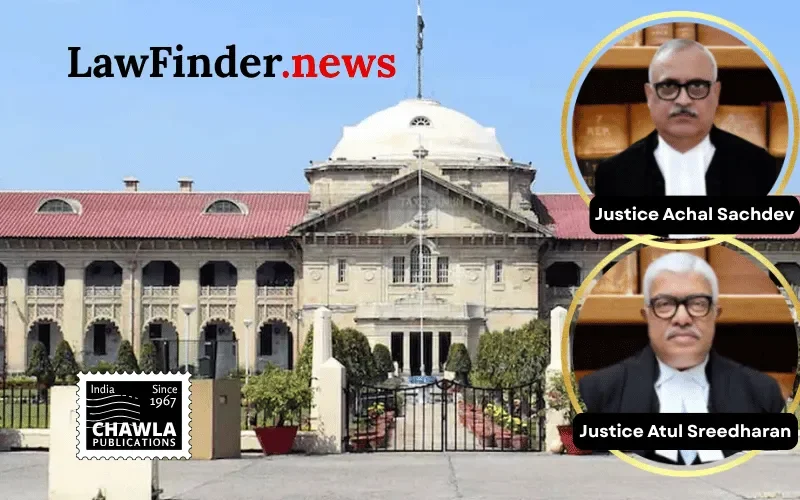
In a significant judgment dated October 14, 2026, the Allahabad High Court (Division Bench comprising Justices Atul Sreedharan and Achal Sachdev) ordered the immediate release of Junaid, who was detained under FIR Crime No. 650 of 2026 at Police Station Quarsi, Aligarh. The arrest was registered under Sections 336(3), 338, and 340(2) of the Bharatiya Nyaya Sanhita (BNS), 2023, corresponding to Sections 467, 468, and 471 of the Indian Penal Code.
The petitioner's counsel challenged the arrest on grounds that the arrest memo-required under Section 47 of the Bharatiya Nagarik Suraksha Sanhita, 2023 which mandates detailed disclosure of arrest grounds-was perfunctory and insufficient. The original arrest memo provided to the petitioner merely cited "HINDI MATTER" as the reason for arrest, lacking any substantive explanation. This inadequacy deprived the petitioner of the ability to effectively apply for bail.
During the proceedings, the court uncovered a more serious issue: the police had fabricated the arrest memo after the petitioner's detention and submission of the habeas corpus petition. The State's counter-affidavit produced a different arrest memo containing additional arrest particulars and grounds, including allegations of fabrication of valuable security and defrauding people-claims absent in the original memo. The certified copy of the original arrest memo, placed before the remand magistrate, matched the petitioner's copy, confirming the police had altered the document post-remand.
Furthermore, the police denied the existence of CCTV cameras at the police chowki, a claim contradicted by photographic evidence submitted by the petitioner. This was indicative of an attempt to conceal evidence and mislead the court.
The court acknowledged the gravity of these actions, terming them as fabrication of documents and perjury before a judicial authority. Although the deponent of the counter-affidavit was not personally blamed-since the affidavit was based on information he received and he was not the investigating officer-the court directed the Registrar General of the Allahabad High Court to initiate proceedings under Section 379 read with Section 215 of the Bharatiya Nagarik Suraksha Sanhita, 2023. These provisions address offences relating to fabrication of documents and perjury committed in judicial proceedings.
The court emphasized that the petitioner must be released forthwith if not required in any other case, while reserving the police's right to re-arrest in accordance with the Supreme Court's precedent in Jaskaran Jeet Singh Deol v. State of Punjab (2026 INSC 1022), which governs lawful re-arrest procedures.
This judgment highlights the judiciary's intolerance towards police misconduct, especially fabrication of documents that undermine the legal rights of detainees. It reinforces constitutional safeguards relating to arrest and detention under the new legal framework established by the Bharatiya Nyaya Sanhita and Bharatiya Nagarik Suraksha Sanhita, 2023, ensuring transparency and accountability in law enforcement.
Bottom Line:
Habeas corpus - Arrest memo containing perfunctory and inadequate grounds of arrest vitiates custody - Where police subsequently fabricated entries in arrest memo and placed altered document before Court, Court directed release of detenue and ordered action for fabrication/perjury in judicial proceedings.
Statutory provision(s):
Bharatiya Nagarik Suraksha Sanhita, 2023 Section 47, Section 215, Section 379; Bharatiya Nyaya Sanhita, 2023 Sections 336(3), 338, 340(2) (corresponding to IPC Sections 467, 468, 471)
Junaid v. State of U.P., (Allahabad)(DB) : Law Finder Doc Id # 2999880