Court Finds No Prima Facie Evidence of Caste-Based Insult; Dispute Deemed Civil in Nature
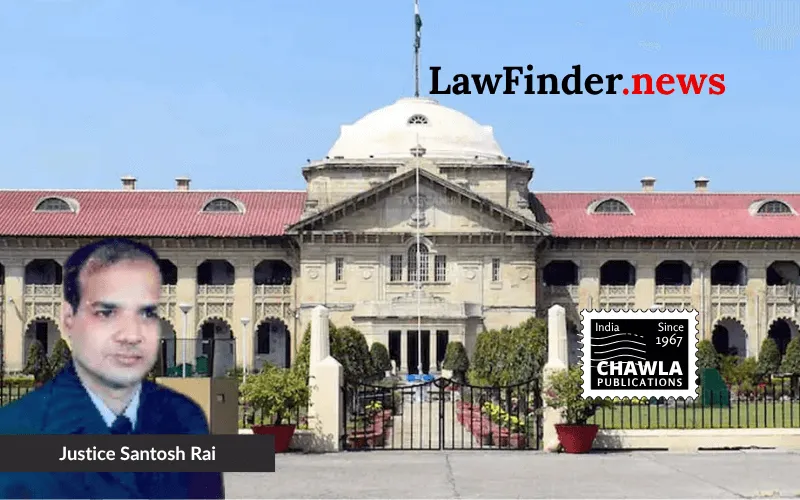
In a significant decision, the Allahabad High Court, presided over by Justice Santosh Rai, has quashed the criminal proceedings against Lalit Kumar alias Lalit Arya, who was charged under Sections 3(1)(r) and 3(1)(s) of the Scheduled Castes and Scheduled Tribes (Prevention of Atrocities) Act, 1989, along with Sections 323, 504, and 506 of the Indian Penal Code. The case, which originated from a civil dispute over tenancy and rent, was found to lack the essential ingredients for prosecution under the SC/ST Act.
The case stemmed from an FIR filed on April 9, 2024, more than a year after the alleged incident on March 12, 2023. The prosecution claimed that Kumar, who worked as a cashier at the Arya Samaj Temple, had insulted the victim using casteist remarks. However, the Court noted that the FIR was lodged after an unexplained delay, casting doubt on its credibility.
Justice Rai's analysis concluded that the dispute was primarily civil, relating to rent and tenancy issues, and the criminal proceedings appeared motivated by animosity linked to temple affairs. The Court highlighted the absence of public view during the alleged insult, which is crucial for charges under the SC/ST Act.
The Court referred to several Supreme Court judgments, including those in "Swaran Singh v. State" and "Gorige Pentaiah v. State of AP," emphasizing that without intentional caste-based insult or humiliation in public view, the proceedings amounted to an abuse of the legal process.
In light of these findings, the Court set aside the summoning order from the Special Judge, SC/ST (PA) Act, Bulandshahr, effectively quashing the proceedings against Lalit Kumar. The appeal filed by Kumar was allowed, underscoring the judiciary's role in preventing misuse of the SC/ST Act for civil disputes.
Bottom line:-
Criminal proceedings under the Scheduled Castes and Scheduled Tribes (Prevention of Atrocities) Act, 1989 cannot be sustained if the allegations and materials on record do not prima facie disclose the essential ingredients of the offences under the Act and appear to be motivated by a civil dispute.
Statutory provision(s): Sections 3(1)(r), 3(1)(s) of the Scheduled Castes and Scheduled Tribes (Prevention of Atrocities) Act, 1989; Sections 323, 504, 506 of the Indian Penal Code; Section 482 of the Criminal Procedure Code, 1973.
Lalit Kumar @ Lalit Arya v. State of U.P., (Allahabad) : Law Finder Doc id # 2942997