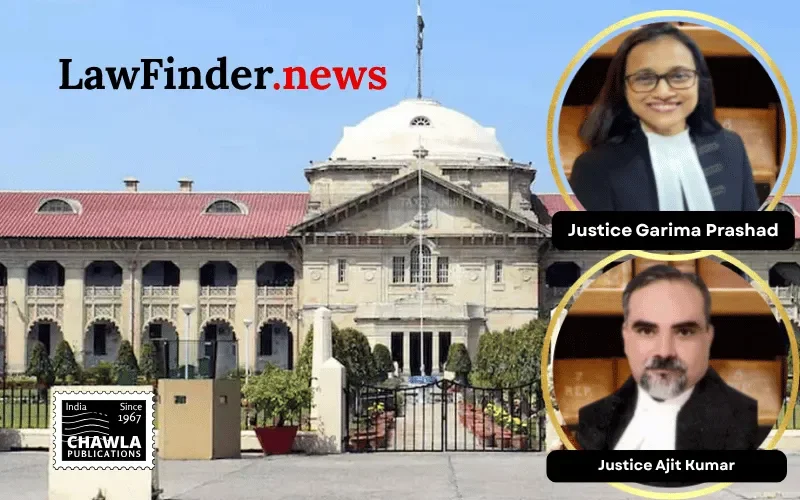
Court Rules Bar Council Lacks Power to Impose Interim Suspension Pending Disciplinary Enquiry; Suspension under Section 35(3)(c) of Advocates Act Must Be Final and After Due Process
In a significant judgment delivered on October 1, 2026, the Allahabad High Court (Division Bench, Lucknow) has struck down the interim suspension orders issued by the Chairman, Disciplinary Committee of the Bar Council of Uttar Pradesh against two advocates, Akhilesh Jaiswal and Avnish Dixit. The Court held that the Bar Council does not possess the statutory authority under the Advocates Act, 1961 to place an advocate under interim suspension pending the conclusion of disciplinary proceedings.
The case arose when the petitioners, who are office bearers of the Central Bar Association, Civil Court Lucknow, were suspended indefinitely from practicing law by the Disciplinary Committee on September 26, 2026. This suspension was ordered simultaneously with an adjournment of the disciplinary hearing to October 11, 2026. The petitioners had sought a copy of the complaint against them, but the order failed to clarify whether the complaint was furnished, raising procedural fairness concerns.
The Court scrutinized Section 35(3) of the Advocates Act, which enumerates the disciplinary sanctions available to a Bar Council after affording an advocate an opportunity of hearing. These include: dismissal of complaint, reprimand, suspension for a definite period, or removal from the roll of advocates. The Court emphasized that suspension under Section 35(3)(c) is a final order and cannot be imposed as an interim measure without due notice, hearing, and supply of necessary documents.
Citing the precedent set by the Madras High Court in R. Jim v. Secretary, Bar Council of Tamil Nadu and Puducherry (2025 SCC Online Mad 14556), the bench reiterated that the Advocates Act does not confer power on Bar Councils to impose interim suspensions pending disciplinary enquiry. The Court noted that such powers cannot be extended by judicial interpretation, and any suspension must comply strictly with the procedural safeguards under the Act.
Consequently, the Allahabad High Court quashed the indefinite suspension orders and directed the petitioners to appear before the Bar Council on the next scheduled date, October 11, 2026. The Court also mandated the Bar Council to furnish the complaint and relevant documents to the petitioners upon request, ensuring transparency and fairness in disciplinary proceedings. The judgment cautioned both parties against unnecessary adjournments and underscored adherence to due process.
This ruling reinforces the procedural safeguards for advocates facing disciplinary action and clarifies the limits of Bar Council powers under the Advocates Act, thereby safeguarding the rights of legal practitioners while maintaining the integrity of the legal profession.
Bottom Line:
Advocates Act, 1961 - Bar Council has no power to place an advocate under interim suspension pending disciplinary enquiry - Suspension from practice under Section 35(3)(c) is a final order and cannot be passed at an interim stage without due notice, hearing and supply of necessary documents.
Statutory provision(s):
Advocates Act, 1961 Section 35(3)(a), 35(3)(b), 35(3)(c), 35(3)(d), Section 6; Constitution of India, Article 226
Akhilesh Jaiswal v. Bar Council of India, (All)(DB)(Lucknow) : Law Finder Doc Id # 2990442