Court finds no prima facie evidence of caste-based intent in property transaction dispute; dismisses abuse of process concerns while allowing prosecution for cheating and criminal breach of trust to proceed
In a significant judgment balancing the protection of Scheduled Castes and Scheduled Tribes against frivolous invocation of atrocity laws, the Allahabad High Court has partially quashed criminal proceedings against appellant Raju Kuraishi @ Umardaraj, discharging him of offences under the Scheduled Castes and Scheduled Tribes (Prevention of Atrocities) Act while allowing the trial for Indian Penal Code offences to continue.
Background of the Case
The case arose from a property transaction dispute concerning the sale of land (Khasra No. 1245) located at Village Banthla, Chirodi Road, Ghaziabad. The appellant allegedly received Rs. 2,41,000 from the victim towards executing a sale deed but subsequently failed to complete the transaction. An agreement to sell was executed between the parties. The First Information Report was filed on 17.01.2025, nearly ten months after the alleged incident on 10.03.2024. The accused was charged under multiple sections of the Indian Penal Code (420, 406, 120B, 504, 506) as well as under Sections 3(1)(r), 3(1)(s), and 3(2)(va) of the SC/ST Act.
Court's Key Findings
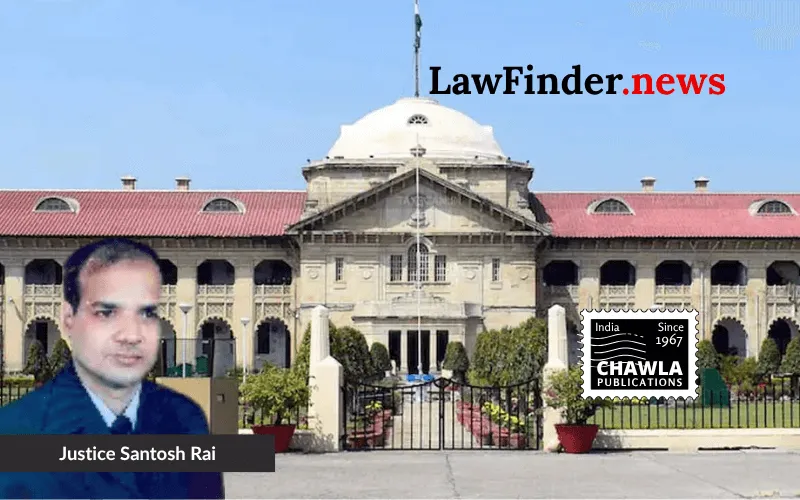
Justice Santosh Rai, after examining the entire case file and hearing arguments from both sides, concluded that while the IPC offences could be pursued, the SC/ST Act provisions lacked the essential legal ingredients. The court emphasized that the dispute fundamentally stemmed from a property transaction rather than any caste-based animus.
The judgment articulated a crucial distinction: merely because a complainant belongs to a Scheduled Caste or Scheduled Tribe does not automatically attract the provisions of the SC/ST Act. Instead, the prosecution must establish that the insulting or humiliating conduct was specifically motivated by the victim's caste status. In this case, the court found no evidence in the FIR or case diary demonstrating any caste-based words, abuse, or conduct deliberately targeting the victim on the ground of caste.
Absence of Public Element
The court noted that even the requirement of "public view"—a statutory necessity under SC/ST Act provisions—was absent from the allegations. Drawing upon the Supreme Court's guidance in Swaran Singh v. State, the judgment clarified that merely because an incident occurs in public does not satisfy this requirement unless it is actually within public view with independent public witnesses. The dispute, as alleged, occurred within the private sphere of a property transaction without any public element.
Concurrent Application of IPC Sections 420 and 406
The court addressed another significant legal issue raised by the appellant regarding the simultaneous invocation of Sections 420 (Cheating) and 406 (Criminal Breach of Trust) of the IPC. Citing the landmark Supreme Court judgment in Delhi Race Club (1940) Ltd. v. State of Uttar Pradesh (2024), the court noted that these are distinct offences with different essential ingredients. Section 420 requires dishonest or fraudulent intention from the inception of the transaction, whereas Section 406 requires entrustment of property followed by dishonest misappropriation. However, the court directed the trial court to examine this issue carefully at the stage of framing charges in accordance with the Supreme Court's guidance.
Distinguishing Civil and Criminal Disputes
A substantial portion of the judgment addressed the critical issue of distinguishing between civil disputes and criminal offences. The court noted that while the pendency of a civil dispute does not automatically bar criminal prosecution for cognizable offences, criminal proceedings should not be used as an instrument of harassment or to exert pressure in disputes that are predominantly civil in nature. The unexplained delay of ten months in lodging the FIR, coupled with the purely transactional nature of the dispute, raised concerns about potential misuse.
However, the court clarified the settled legal position: the mere existence of a parallel civil dispute is not grounds for quashing criminal proceedings if the complaint prima facie discloses a cognizable offence. The Supreme Court's guidance in Ganga Dhar Kalita v. State of Assam was invoked to establish that giving criminal colour to essentially civil disputes amounts to abuse of process, but simultaneous civil and criminal proceedings are permissible where actual offences are disclosed.
Protection Against Misuse of SC/ST Act
The judgment served as an important safeguard against the misuse of SC/ST Act provisions. Drawing upon recent Supreme Court jurisprudence, particularly Hitesh Verma v. State of Uttarakhand and Shajan Skaria v. State of Kerala, the court emphasized that the Act was specifically enacted to protect vulnerable communities from indignities and humiliations targeting their caste status—not to resolve property or contract disputes where SC/ST persons happen to be parties.
The court observed that every citizen, regardless of caste, has the right to avail remedies in accordance with law through civil courts. Merely asserting a title over land or pursuing civil remedies does not constitute an offence under the SC/ST Act unless such assertion or pursuit is motivated by caste-based animus.
Outcome and Future Course
The appeal was partly allowed. The appellant stands discharged of all offences under Sections 3(1)(r), 3(1)(s), and 3(2)(va) of the SC/ST Act. However, the trial for offences under Sections 420, 406, 120B, 504, and 506 of the IPC shall continue. The trial court was directed to examine at the charge-framing stage whether both Sections 420 and 406 can be simultaneously invoked in light of the Delhi Race Club precedent.
The appellant was given two weeks to appear before the trial court and file a bail application, with the court directed to consider the bail expeditiously.
Bottom Line:
The proceedings under Sections 3(1)(r), 3(1)(s), and 3(2)(va) of the Scheduled Castes and Scheduled Tribes (Prevention of Atrocities) Act were quashed due to the absence of prima facie evidence suggesting caste-based intent or conduct. However, the trial for offences under Sections 420, 406, 120B, 504, and 506 IPC was allowed to continue.
Statutory Provisions
Section 420 IPC (Cheating), Section 406 IPC (Criminal Breach of Trust), Section 120B IPC (Conspiracy), Section 504 IPC (Intentional Insult with Intent to Provoke Breach of Peace), Section 506 IPC (Criminal Intimidation), Sections 3(1)(r), 3(1)(s), and 3(2)(va) of the Scheduled Castes and Scheduled Tribes (Prevention of Atrocities) Act, 1989, Section 482 CrPC (Quashing of Proceedings)
Raju Kuraishi @ Umardaraj v. State of U.P., (Allahabad) : Law Finder Doc Id # 2977523