Court affirms child maintenance for illegitimate daughter, sets aside spousal support due to non-recognition of marriage under Hindu law.
In a significant judgment, the Allahabad High Court has partially allowed the criminal revision petition filed by Santosh Kumar, challenging the maintenance order awarded by the Principal Judge, Family Court, Chitrakoot. The court upheld the trial court’s decision to grant maintenance to the minor daughter, Shivani, but set aside the maintenance awarded to the woman claiming to be Santosh Kumar's wife.
The case involved a complex marital situation where the woman, identified as Ranno, had married Santosh Kumar following a notarized compromise despite not having divorced her first husband, Sharda Prasad. The trial court had initially granted maintenance under Section 125 of the Criminal Procedure Code (Cr.P.C.), awarding Rs. 2,000 per month to Ranno and Rs. 1,000 per month to Shivani, the daughter, until she reached adulthood.
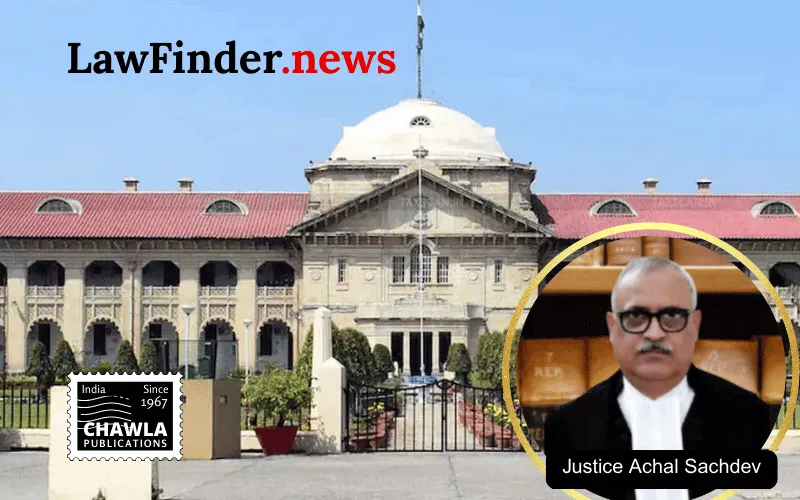
Justice Achal Sachdev, presiding over the revision petition, meticulously examined the legality of the marriage between Ranno and Santosh Kumar. It was revealed through cross-examination that Ranno had not legally divorced her first husband before entering into a relationship with Santosh Kumar, thereby not qualifying as a “legally wedded wife” under Section 125 Cr.P.C. Consequently, the maintenance order favoring Ranno was overturned.
However, the court found substantial evidence, including a DNA report, confirming Shivani as the biological child of Santosh Kumar. Stressing the moral and legal obligation of a father to support his children, legitimate or illegitimate, Justice Sachdev upheld the maintenance awarded to Shivani, ensuring her educational and basic needs are met.
The judgment underscores the legal nuances surrounding marital relationships and the entitlement to maintenance under Indian law. It reinforces the legal stance that only a legally wedded wife is entitled to spousal maintenance, while children, irrespective of legitimacy, have a right to parental support.
The decision provides clarity on the application of Section 125 of Cr.P.C., especially in cases involving complex marital histories and the rights of children born out of such unions. It also serves as a precedent for similar cases, emphasizing the importance of legal recognition of marriage in claims for spousal maintenance.
Bottom line:-
Maintenance under Section 125 Cr.P.C. - A woman who is not a legally wedded wife is not entitled to maintenance under Section 125 Cr.P.C.; however, a child, legitimate or illegitimate, is entitled to maintenance from the father.
Statutory provision(s): Section 125(1)(b) Cr.P.C., Section 125(4) Cr.P.C.
Santosh Kumar v. State of U.P., (Allahabad) : Law Finder Doc id # 2938664