Court holds NOIDA, though an instrumentality of the State under Article 12 of the Constitution, is not a State Government or Central Government within the meaning of Section 80 CPC; Suit against NOIDA can be filed without prior notice
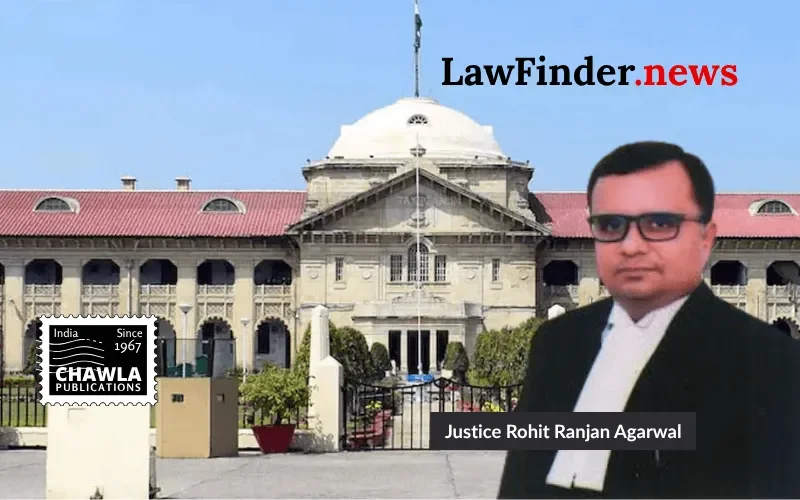
In a significant judgment delivered on November 2, 2026, the Allahabad High Court clarified the applicability of Section 80 of the Civil Procedure Code (CPC) regarding mandatory notice requirements before instituting suits against government entities. The bench, presided over by Justice Rohit Ranjan Agarwal, ruled that the New Okhla Industrial Development Authority (NOIDA), despite being an instrumentality of the State under Article 12 of the Constitution of India, does not qualify as a State Government or Central Government as contemplated under Section 80 CPC. Consequently, the mandatory two-month notice under Section 80(1) CPC is not required before filing a suit against NOIDA.
The case arose when the plaintiff petitioners instituted a suit seeking a declaration and permanent injunction against multiple defendants, including NOIDA as defendant number four. The trial court initially rejected the objections raised by the plaintiffs and refused to register the suit, relying on a supplementary report that NOIDA was a State entity and thus subject to the mandatory notice provision under Section 80 CPC.
The petitioners challenged this order through a writ petition, contending that NOIDA was created under the Uttar Pradesh Industrial Area Development Act, 1976, as a statutory authority and not a government per se. Therefore, the notice requirement under Section 80 CPC should not apply. The counsel for the petitioners cited several authoritative precedents, including the Supreme Court judgment in U.P.S.E.B. & another Vs. Sant Kabir Sahakari Katai Mills Ltd. (2005), and decisions from the Allahabad and Bombay High Courts affirming that statutory corporations or instrumentalities of the State do not equate to the State Government for the purpose of Section 80 CPC.
The Court examined the provisions of Section 80 CPC, which mandates a two-month written notice before suing the Government or a public officer in respect of acts done in official capacity. It emphasized that the legislature intended this requirement to apply strictly to the Central or State Governments and not to statutory bodies or instrumentalities merely because they fall under the definition of "State" in Article 12 of the Constitution.
Drawing from the Apex Court's reasoning in U.P.S.E.B. and other coordinate Bench decisions, the Court held that NOIDA is not the Government but an entity created for planned development, supervised but not controlled in the governmental sense. The Court further relied on the Bombay High Court's decision in Baldev Krishan Ashta Vs. State of Maharashtra through Maharashtra Industrial Development Corporation (2020), which similarly held that statutory corporations are not synonymous with the Government under Section 80 CPC.
Accordingly, the Allahabad High Court set aside the trial court's order refusing to register the suit and directed the court below to immediately register the suit and proceed to hear the application for temporary injunction within one month.
This judgment provides clarity on the procedural requirement under Section 80 CPC in cases involving statutory bodies like NOIDA, ensuring litigants are not unnecessarily delayed by the notice requirement intended for the Government alone.
Bottom Line:
NOIDA, being an instrumentality of the State under Article 12 of the Constitution of India, is not a State Government or Central Government as per Section 80 of the Code of Civil Procedure, 1908. Thus, the mandatory requirement of serving notice under Section 80(1) CPC does not apply to NOIDA.
Statutory provision(s): Section 80 of the Civil Procedure Code, 1908; Article 12 of the Constitution of India
Omveer v. Parul Tomar, (Allahabad) : Law Finder Doc Id # 3017437