Court Rules that Rectification Under Section 161 of U.P. GST Act Cannot Substitute Personal Hearing When Replies Remain Unconsidered
In a significant judgment dated August 13, 2026, the Allahabad High Court (Division Bench) in the matter of M/s Wonder Enterprises v. State of U.P. scrutinized the scope of rectification powers under Section 161 of the U.P. GST Act, 2017. The court underscored the essentiality of the principles of natural justice, particularly the right to a personal hearing, when the adjudicating authority passes orders without considering the replies submitted by the assessee.
The petitioner, M/s Wonder Enterprises, had received a show cause notice under Section 74 of the U.P. GST Act on June 17, 2021. The company duly submitted its replies on July 13 and July 18, 2021. However, the adjudicating officer passed an ex-parte order on January 30, 2025, which seemingly did not consider these replies. Subsequently, without issuing any notice to the petitioner, the authority passed a rectification order on February 5, 2025, under Section 161, ostensibly to rectify the error of non-consideration of the replies.
The petitioner challenged this second order, arguing that the rectification power was improperly used to pass a fresh ex-parte order without granting an opportunity for hearing, thereby violating the principles of natural justice. The State contended that the rectification order was not prejudicial since it reduced some part of the tax demand.
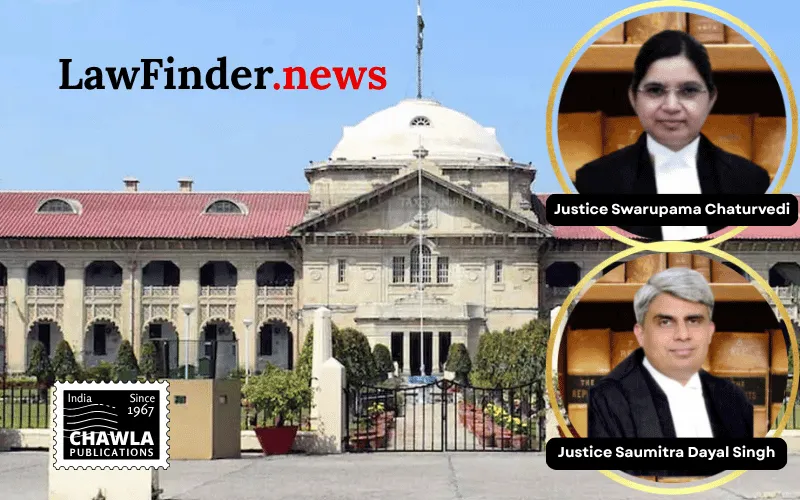
The High Court, comprising Justices Saumitra Dayal Singh and Swarupama Chaturvedi, analyzed the statutory provision of Section 161, which empowers authorities to rectify errors apparent on the face of the record within stipulated timelines. While recognizing the power to rectify clerical or arithmetical errors without notice, the court clarified that procedural errors affecting the adjudication process, such as failure to consider replies and denial of hearing, cannot be cured by mere rectification.
Citing the Supreme Court precedent in Grindlays Bank Ltd. v. Central Govt. Industrial Tribunal (1980) and Patel Narshi Thakershi v. Pradyumansinghji Arjunsinghji (1971), the court elucidated the distinction between procedural review (inherent power to correct procedural defects) and merit review (correction of errors on merits). The court held that denial of opportunity to be heard vitiates the adjudication process and mandates recall of the order and fresh adjudication with notice.
Consequently, the Allahabad High Court set aside the rectification order dated February 5, 2025, and remitted the matter to the adjudicating authority to pass a fresh order after affording the petitioner a proper hearing. The writ petition was allowed with no order as to costs.
This judgment reinforces the fundamental principle that even in tax adjudications, the right to a hearing and proper consideration of submissions cannot be bypassed under the guise of rectification powers. Authorities must exercise rectification powers within the bounds of natural justice and procedural fairness.
Bottom Line:
Section 161 of the U.P. GST Act, 2017 provides authority with the power to rectify errors apparent on the face of the record; however, procedural errors that vitiate the adjudication process require recall and fresh adjudication.
Statutory provision(s):
Section 161 of the U.P. GST Act, 2017, Section 74 of the U.P. GST Act, 2017
M/s Wonder Enterprises v. State of U.P., (All)(DB) : Law Finder Doc Id # 2962224