Court emphasizes stringent procedural requirements under Sections 173(4), 175(3), and 175(4) of Bharatiya Nagarik Suraksha Sanhita, 2023, and issues guidelines to ensure judicial caution in cases involving public servants.
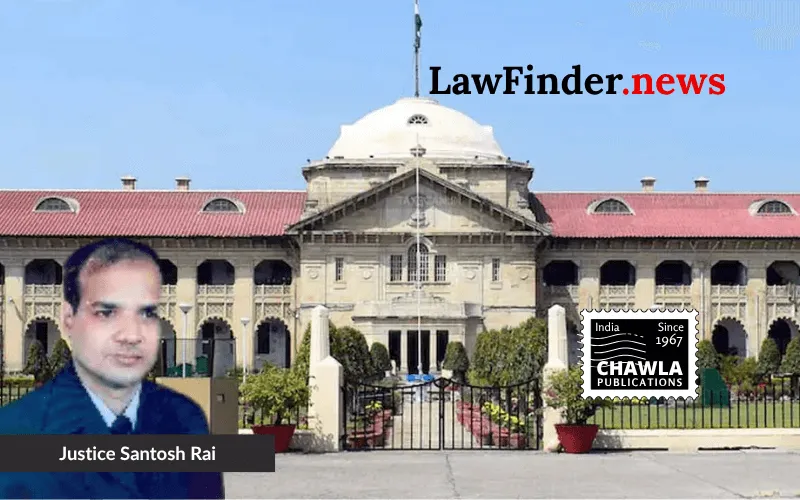
The Allahabad High Court, in a significant judgment dated October 9, 2026, quashed the order passed by the Special Judge, Exclusive Special Court (SC/ST Act), Maharajganj, which had directed the registration of a First Information Report (FIR) against police personnel including a Sub-Inspector and Constable. The Court found that the impugned order was passed mechanically, without proper application of judicial mind, and failed to comply with the mandatory procedural safeguards prescribed under the Bharatiya Nagarik Suraksha Sanhita, 2023 (BNSS).
The criminal appeal was filed by Rakesh Kumar Yadav, a Sub-Inspector, challenging the order dated August 11, 2026, which directed the registration of an FIR based on allegations of house trespass, obscenity, and caste-based abuse made by two women belonging to the Scheduled Caste category. The allegations arose from a dispute between families over land and money and involved cross-cases registered at the same police station on the same day.
The Court meticulously analyzed the statutory scheme under Sections 173(4), 175(3), and 175(4) BNSS, the latter providing special safeguards where complaints are made against public servants in the course of their official duties. It was observed that the Special Judge failed to consider crucial contemporaneous police records, including General Diary entries, cross-case details, and the fact that the accused police personnel were performing official duties related to law and order maintenance.
Key findings of the judgment include:
1. Mandatory Exhaustion of Police Remedies: The Court emphasized that an aggrieved person must first approach the officer-in-charge and Superintendent of Police before seeking judicial intervention under Section 175(3) BNSS. The Magistrate's power to direct investigation is not automatic upon receipt of an application under Section 173(4) BNSS.
2. Judicial Scrutiny and Inquiry: Before ordering investigation, the Magistrate must apply judicial mind by considering the application supported by an affidavit, the police submissions, and making such inquiry as deemed necessary. The Court found the absence of such inquiry in the impugned order as a material irregularity.
3. Additional Safeguards for Public Servants: Where allegations concern public servants acting in their official capacity, Section 175(4) BNSS mandates the Magistrate to obtain and consider a report from the superior officer and hear the accused public servant's assertions. This procedural safeguard was overlooked by the Special Judge.
4. Avoiding Mechanical Orders: The Court underscored that a non-speaking, non-reasoned order directing FIR registration without appropriate consideration of material amounts to non-application of judicial mind and is unsustainable.
5. Contextual Examination of Allegations: The Court noted the close familial ties between complainants and accused persons in cross-cases and the role of the police personnel as investigating officers in those cases, highlighting the need for heightened judicial caution.
In light of these findings, the Allahabad High Court set aside the order directing FIR registration and quashed any consequential proceedings arising solely out of the impugned order.
Further, the Court issued comprehensive guidelines for all Judicial Officers in Uttar Pradesh exercising jurisdiction under Sections 173(4) and 175 BNSS to ensure:
- Speaking and reasoned judicial orders reflecting compliance with statutory requirements.
- Verification of prior police approach and police reports before directing investigation.
- Strict adherence to additional safeguards when public servants are accused.
- Heightened judicial caution in cases involving police officials, especially where prior police action or connected cases exist.
- Periodic monitoring and training of Judicial Officers on these procedural mandates.
The judgment reaffirms the balance between protecting citizens' rights to seek investigation and safeguarding public servants from frivolous or motivated complaints, ensuring judicial discretion is exercised judiciously and transparently.
Bottom Line:
Bharatiya Nagarik Suraksha Sanhita, 2023 Sections 173 175(3) and 175(4) - Application seeking direction for registration of FIR against police/public servants cannot be allowed mechanically - Magistrate/Special Court must consider prior approach to police authorities, affidavit, police submission/report, necessity of inquiry, and where allegations arise in course of official duty, additional safeguards under Section 175(4) BNSS - Non-speaking order directing registration of FIR without such consideration is unsustainable.
Statutory provision(s): Bharatiya Nagarik Suraksha Sanhita, 2023 Sections 173, 175(3), 175(4); Scheduled Castes and Scheduled Tribes (Prevention of Atrocities) Act Sections 3(1)(r), 3(1)(s)
Rakesh Kumar Yadav v. State of U.P., (Allahabad) : Law Finder Doc Id # 2993825