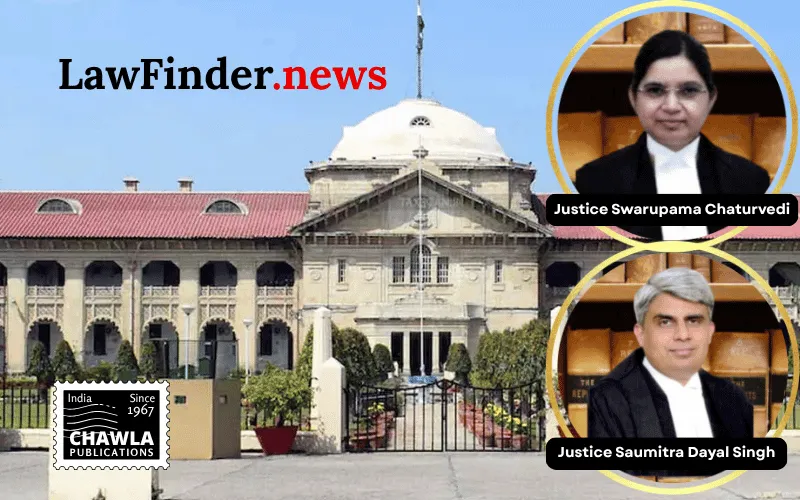
Court finds no violation of natural justice despite denial of cross-examination of revenue officers; cross-examination of panch witnesses allowed and documents supplied.
In a significant ruling dated October 8, 2026, the Allahabad High Court (Division Bench comprising Justices Saumitra Dayal Singh and Swarupama Chaturvedi) dismissed a writ petition filed by M/s Laxmi Narayan Gupta challenging an adjudication order passed under Section 74 of the Uttar Pradesh Goods and Services Tax (UPGST) Act, 2017 read with the Central Goods and Services Tax (Compensation to States) Act, 2017 for the financial year 2021-22.
The petitioner had raised serious contentions about alleged violations of natural justice principles, particularly the denial of opportunity to cross-examine two revenue officers involved in the adjudication process. The petitioner argued that these officers were improperly granted immunity from cross-examination under Section 157 of the UPGST Act, and that the statements recorded in the panchnama (inspection report) were unreliable since the panch witnesses denied that the panchnama was prepared in their presence.
This litigation was a continuation of earlier proceedings wherein the High Court had set aside previous adjudication orders due to violations of Section 75(7) of the UPGST Act, which mandates that the show cause notice and documents relied upon must be supplied to the taxpayer with adequate opportunity of personal hearing. Following the Court's earlier directions, fresh show cause notices were issued, documents were provided, and cross-examination of the two panch witnesses was allowed. The panch witnesses admitted signing the panchnama but gave conflicting statements about whether the document was blank when signed.
Despite these developments, the petitioner sought to cross-examine the revenue officers, which the adjudicating authority denied on the ground of statutory immunity under Section 157. The petitioner contended that such denial violated the principles of natural justice and the order was unsustainable.
The Court analyzed the submissions and the procedural history in detail. While it agreed with the petitioner that the adjudicating authority's reasoning for denying cross-examination of the revenue officers was legally untenable, it clarified that the mere wrong reasoning does not automatically entitle a party to cross-examination of every officer involved. The necessity and scope of cross-examination depend on the facts and merits of each case and are better suited for determination in appeal proceedings.
The Court noted that copies of all documents relied upon had been supplied to the petitioner, and the two panch witnesses had been cross-examined. Whether the panchnama was prepared before or after their signatures and the weight to be given to their statements are issues involving merit evaluation. Such questions are not appropriate for adjudication in writ proceedings, especially when an efficacious statutory appeal remedy is available.
Importantly, the Court held that the petitioner was not left remediless. The appellate authority has the jurisdiction to consider the grievance about denial of cross-examination of the revenue officers. It may allow such cross-examination or call for an appropriate report after following due procedure.
Consequently, the Court disposed of the writ petition, directing that if the petitioner files an appeal within four weeks, the appeal shall be entertained and decided on merits without objection on limitation grounds.
This judgment underlines the principle that writ jurisdiction should be sparingly exercised where a statutory appeal is available, and issues involving detailed factual and merit-based evaluation should be left to the appellate forums. It also clarifies the scope of cross-examination rights in tax adjudication proceedings under the GST regime.
Bottom Line:
GST - Challenge to adjudication order under Section 74 of UPGST/SGST Act - Though adjudicating authority gave unsustainable reason for denying cross-examination of revenue officers by invoking Section 157 immunity, writ court declined interference as copies of relied upon documents had been supplied and cross-examination of panch witnesses had been allowed - Question whether further cross-examination was necessary and effect of panch witness statements held to involve merit evaluation, to be examined in statutory appeal - Appeal directed to be entertained without objection as to limitation if filed within four weeks.
Statutory provision(s):
UPGST Act, 2017 Section 74, Section 75(7), Section 157; SGST Act, 2017 Section 74; Goods and Services Tax (Compensation to States) Act, 2017 Section 8; Constitution of India Article 226.
Laxmi Narayan Gupta v. State of U.P., (All)(DB) : Law Finder Doc Id # 2996381