Court Rules Procedural Irregularities in Arrest Memos and Intimation to Relatives Do Not Render Arrest Illegal; Grounds of Arrest Communicated via Recovery Memo Held Sufficient
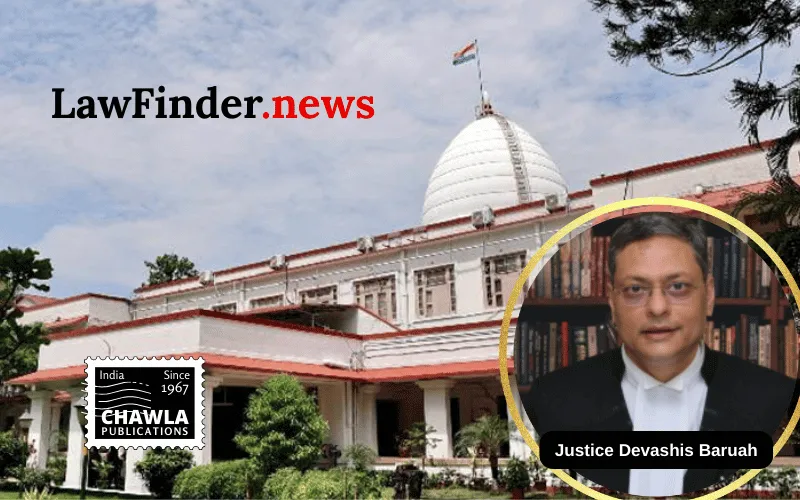
In a significant judgment dated 15th September 2026, the Allahabad High Court (Division Bench, Lucknow) dismissed a habeas corpus petition filed by Karolyn @ Caroline Kharnaior and others, challenging their arrest in connection with a large-scale cyber fraud operation run through an illegal call centre in Lucknow. The petitioners contended that their arrest was illegal due to non-compliance with mandatory provisions of the Bharatiya Nagarik Suraksha Sanhita, 2023 (BNSS), specifically regarding the preparation and furnishing of arrest memos and intimation to relatives as required under Sections 36, 47, and 48 of BNSS, as well as Article 22(1) of the Constitution of India.
The case arose from a police raid conducted on 30th June 2026 at the 11th floor of the Summit Building, Vibhuti Khand, Lucknow, based on secret information about an illegal cyber call centre defrauding foreign nationals, particularly U.S. citizens, by impersonating authorities such as the U.S. Treasury and FBI. During the raid, 119 persons, including the petitioners, were found involved and arrested. The police seized a vast array of electronic devices, including laptops, mobile phones, biometric machines, and routers, which were sealed on the spot. The first information report (FIR) was lodged under multiple sections of the BNSS, the Information Technology Act, and the Telecommunication Act.
The petitioners challenged their arrest on several grounds:
1. Alleged illegal detention beyond the permissible 24-hour limit before being produced before a magistrate.
2. Failure to prepare or furnish arrest memos containing specific grounds and reasons for arrest as required by BNSS and Article 22(1) of the Constitution.
3. Non-intimation of arrest to their family members or nominated persons and absence of corresponding entries in the police general diary.
4. Mechanical and non-judicious remand order by the Magistrate without verifying compliance of statutory safeguards.
The State refuted these claims, asserting that arrest and recovery memos were prepared simultaneously at the spot, containing detailed grounds and reasons for arrest. Copies of these documents were provided to the petitioners, who signed the recovery memo acknowledging receipt. Phone calls to the relatives and nominated persons of the arrestees were made, supported by call detail records (CDRs), although entries in the general diary were not fully maintained. The remand order was passed after the Magistrate had examined the case diary and found sufficient grounds for judicial custody.
The Court analyzed the facts and relevant legal provisions, including recent Supreme Court judgments such as Mihir Rajesh Shah v. State of Maharashtra (2026), Pankaj Bansal v. Union of India (2024), and Prabir Purkayastha v. State (NCT of Delhi) (2024), which emphasize the constitutional mandate under Article 22(1) that grounds of arrest must be communicated in writing in a language understood by the arrested person, and failure to do so renders arrest illegal. However, the Court also acknowledged the practical challenges in large-scale operations involving multiple arrests and extensive seizure of evidence.
Key findings of the Court included:
- - The initial detention from the raid until formal arrest and production before the Magistrate did not exceed reasonable limits considering the scale of the operation and evidence seized.
- - The arrest memo, although not signed by the petitioners, was appended with a personal search memo that bore their signatures, and importantly, the recovery memo detailed the grounds and reasons of arrest and was acknowledged by the petitioners.
- - Substantial compliance with BNSS Sections 36 and 47 was achieved by furnishing the grounds and reasons of arrest through the contemporaneously prepared recovery memo.
- - Under Section 48 of BNSS, while the police did not maintain proper entries in the general diary regarding intimation to relatives, phone calls were made to the nominated persons, and the failure to record this in the diary was procedural irregularity, not fatal to the legality of arrest.
- - The Magistrate's remand order, though on a printed proforma and not elaborately reasoned, was not invalidated because the statutory requirements for informing the arrestees of grounds of arrest had been substantially complied with.
- - The Court reiterated that irregularities in the format of arrest memos or failure to follow specific prescribed forms do not necessarily vitiate the arrest if the accused are made aware of the grounds and reasons for arrest in a timely and effective manner.
- - The petitioners' claim of ignorance regarding the fraudulent nature of the call centre activities was rejected based on evidence seized and the modus operandi described in the recovery memo.
The Court also noted that the Uttar Pradesh Government's rules on arrest memos require amendment to align with Supreme Court precedents and existing statutory safeguards to avoid confusion in future cases.
Ultimately, the Allahabad High Court held that the petitioners' arrests were lawful and dismissed the habeas corpus petition. However, the Court made clear that the dismissal does not express any opinion on the merits of the criminal case, bail applications, or other proceedings.
This judgment underscores the importance of balancing constitutional safeguards with practical realities of law enforcement, affirming that substantial compliance with procedural requirements suffices to uphold the legality of arrest in complex criminal investigations.
Bottom Line:
Compliance with statutory provisions under Bharatiya Nagarik Suraksha Sanhita, 2023 (BNSS) regarding arrest and furnishing grounds of arrest to the accused is mandatory but procedural irregularities do not automatically render the arrest or detention illegal.
Statutory provision(s):
Bharatiya Nagarik Suraksha Sanhita, 2023 Sections 36, 47, 48; Constitution of India Article 22(1); Bharatiya Nyaya Sanhita, 2023 Sections 3(5), 61(2), 318(4), 319(2), 336(3), 337, 338, 339, 340(2); Information Technology Act, 2000 Sections 66C, 66D; Telecommunication Act, 2023 Section 42(2)
Karolyn @ Caroline Kharnaior v. State of U.P., (All)(DB)(Lucknow) : Law Finder Doc Id # 2979137