Court emphasizes regulatory measures to protect public health from unqualified practitioners; dismisses plea for practicing modern medicine.
In a significant judgment, the Allahabad High Court has reinforced the regulatory framework governing medical practice by ruling that individuals holding qualifications in electrohomeopathy cannot practice modern allopathic medicine without recognized qualifications and registration. The decision came in response to a writ petition filed by Santosh Kumar Sharma, who sought the court's intervention to lift the seal on his clinic and permit him to practice allopathic medicine based on his electrohomeopathy certificate.
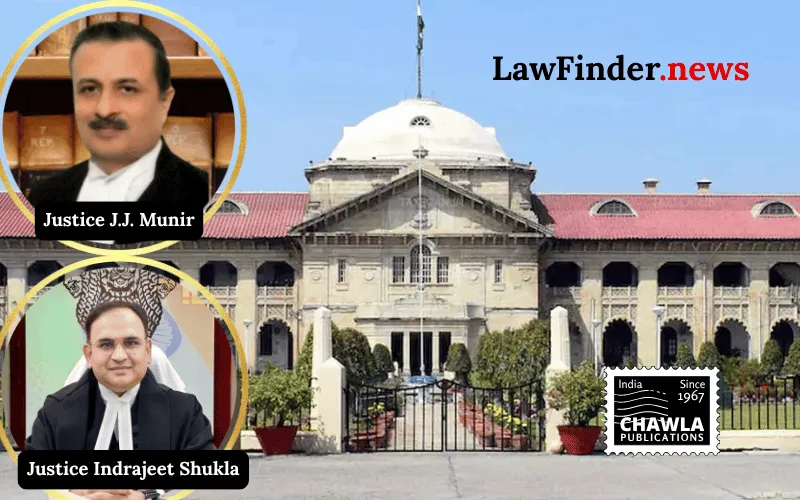
The court, comprising Justices J.J. Munir and Indrajeet Shukla, concluded that the right to practice a profession, including medicine, under Article 19(1)(g) of the Constitution is not absolute and can be subjected to reasonable restrictions in the interest of public health. The judgment emphasized that regulatory measures ensuring only qualified and registered individuals practice medicine are valid and do not infringe upon constitutional rights.
The petitioner, Santosh Kumar Sharma, had previously been issued a show cause notice by the Chief Medical Officer of Etah for operating his clinic without proper qualifications and failing to meet prescribed standards, including biomedical waste management and fire safety measures. Despite submitting multiple representations to justify his practice, the petitioner's claims were not accepted, leading to the sealing of his clinic.
The court referred to precedents set by the Supreme Court, highlighting that practitioners of one system of medicine cannot transgress into another without proper authorization or qualifications. The judgment cited the Supreme Court's ruling in Poonam Verma v. Ashwin Patel, which underscored the risks of practicing medicine without requisite knowledge.
Furthermore, the judgment reiterated that the petitioner's reliance on an electrohomeopathy certificate does not confer the right to practice allopathic medicine. The court observed that permitting unqualified individuals to practice medicine poses grave risks to public health and emphasized the state's duty to safeguard its citizens from quackery.
In conclusion, the court dismissed Santosh Kumar Sharma's plea, reinforcing the importance of compliance with statutory provisions and government orders regulating medical practice. The judgment serves as a reminder of the stringent standards required for medical practitioners, underscoring the necessity of recognized qualifications and registration to ensure public safety.
Bottom line:-
A person holding a certificate in electrohomeopathy is not entitled to practice modern medicine (allopathy) without recognized qualifications and registration. The State has a duty to protect public health from unqualified practitioners, and regulatory measures to ensure standards in medical practice do not violate Article 19(1)(g) of the Constitution of India.
Statutory provision(s): Article 19(1)(g) of the Constitution of India, Government Order No.2374/5-2001, Manak Dainik Sthapan (Registrikaran aur Viniyaman), Adhiniyam, 2010, National Commission for Indian System of Medicine (NCISM) Act, 2020.
Santosh Kumar Sharma v. State of U.P., (Allahabad)(DB) : Law Finder Doc id # 2939372