Court rules exclusion is neither arbitrary nor discriminatory, aligning with Supreme Court directives.
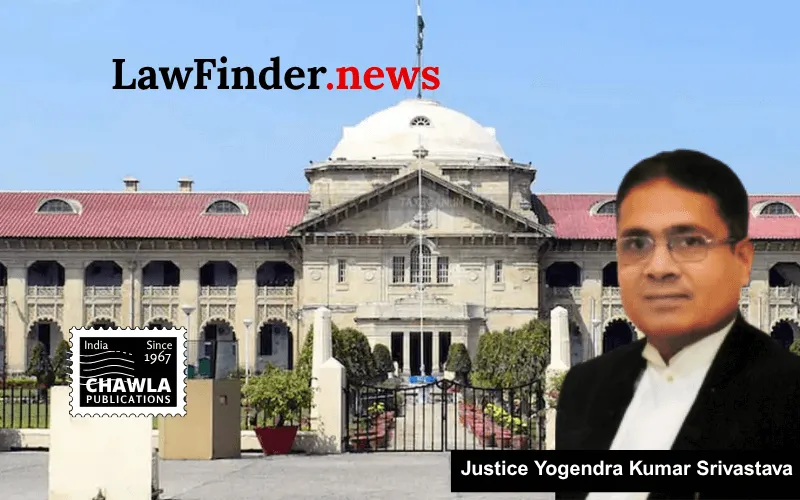
In a significant ruling, the Allahabad High Court dismissed a petition challenging the exclusion of Shiksha Mitras from the Special Teacher Eligibility Test (TET) in Uttar Pradesh, thereby upholding the state's decision to limit participation to in-service teachers. The judgment was delivered by Justice Manju Rani Chauhan, who emphasized that the exclusion of Shiksha Mitras from the Special TET was reasonable and in line with the directives of the Supreme Court of India.
The petitioners, a group of 221 Shiksha Mitras, contended that the state’s decision to exclude them from the Special TET violated Articles 14 and 16 of the Constitution, which guarantee equality before the law and equal opportunity in matters of public employment. They argued that since they have been performing teaching duties for over two decades, their exclusion was arbitrary and lacked a rational basis.
However, the court noted that the Special TET was designed specifically for in-service teachers who were appointed before the TET was mandated as a qualification, allowing them a transitional period to meet the new requirements without losing their jobs. This decision was based on the Supreme Court's directions in the Anjuman Ishaat-e-Taleem Trust case, which extended the deadline for in-service teachers to acquire TET certification until August 31, 2028.
Justice Chauhan highlighted that the classification between in-service teachers and Shiksha Mitras was based on intelligible differentia. The court observed that in-service teachers and Shiksha Mitras did not form a homogeneous class; the latter were engaged under different contractual terms and administrative arrangements. Therefore, the exclusion did not amount to discrimination but was a necessary distinction to comply with the Supreme Court's mandate.
The court further clarified that the Special TET was not a recruitment process but a transitional qualifying mechanism. It did not confer any right to appointment or promotion, merely enabling existing teachers to satisfy a statutory requirement for continuation in service. Consequently, the exclusion of Shiksha Mitras did not violate the principle of equality of opportunity in public employment.
The judgment also stressed that the petitioners had the opportunity to participate in the regular TET examinations held earlier in the year, which they did not avail themselves of. Thus, the Special TET could not be viewed as a second chance for them but was strictly for those whose service continuation depended on acquiring the TET qualification.
In conclusion, the court dismissed the writ petition, affirming that the government's decision to exclude Shiksha Mitras from the Special TET was neither arbitrary nor discriminatory, but rather a lawful execution of Supreme Court directives.
Bottom Line :
Special TET meant for in-service teachers appointed prior to introduction of TET as mandatory qualification cannot be claimed by Shiksha Mitras as a matter of parity - classification between in-service teachers and Shiksha Mitras held reasonable and based on binding directions of Supreme Court - exclusion of Shiksha Mitras from Special TET not violative of Articles 14 and 16.
Statutory provision(s): Constitution of India, 1950 Articles 14, 16, 144; Right of Children to Free and Compulsory Education Act, 2009 Section 23; National Council for Teacher Education notifications dated 23.08.2010 and 29.07.2011.
Vaseem Ahamad v. State of U.P., (All) : Law Finder Doc id # 2989563