Court Rules That Concerns Raised by Elected Representative on Minority Issues Are Protected Under Article 19(1)(a) of Constitution; Mere Suspicions Insufficient to Register FIR Under Section 152 of Bharatiya Nyaya Sanhita, 2023
In a significant judgment delivered on November 5, 2026, the Allahabad High Court dismissed an application seeking registration of a First Information Report (FIR) against Rahul Gandhi, a prominent opposition leader and Member of Parliament, for his alleged speech made during a foreign visit. The speech in question raised concerns about an "atmosphere of insecurity among Sikhs in India," questioning whether Sikhs would be allowed to wear turbans or attend Gurudwaras. The applicants accused Gandhi of inciting secession and endangering the sovereignty, unity, and integrity of India under Section 152 of the Bharatiya Nyaya Sanhita (B.N.S.), 2023.
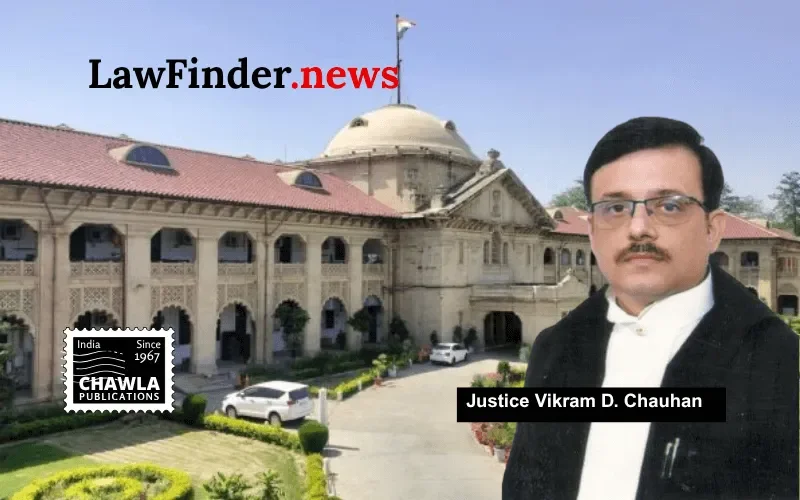
The Court, presided over by Justice Vikram D. Chauhan, reaffirmed the constitutional protection afforded to freedom of speech and expression under Article 19(1)(a) of the Constitution of India. The judgment emphasized that such freedom is subject only to reasonable restrictions under Article 19(2), which include considerations like sovereignty, security, and public order. In this case, the Court found no material or concrete evidence to establish that the speech either incited secession, armed rebellion, or separatist activities, or otherwise endangered India's sovereignty and unity.
Rejecting the application, the Court underscored that mere suspicion or apprehension that the speech could be misused by separatist elements or terrorists cannot form the basis for criminal prosecution or FIR registration. The judgment noted that the applicants failed to demonstrate how the speech met the threshold of an offence as defined under Section 152 of the Bharatiya Nyaya Sanhita, 2023, which requires purposeful or knowing conduct that excites or attempts to excite secession or armed rebellion.
The Court further observed that elected representatives have the right and duty to raise public concerns, including those related to minority communities, and such speech plays a vital role in democratic discourse and governance accountability. It emphasized that disagreement or disapproval of such views by sections of society does not transform the speech into a criminal offence. Instead, the appropriate democratic response lies in public debate and parliamentary scrutiny.
The judgment also highlighted procedural deficiencies in the application, such as the absence of details regarding the date, time, and place of the alleged speech, and the failure to produce a complete extract of the speech, which further weakened the case for lodging an FIR.
This ruling reinforces the judiciary's role in protecting fundamental rights and cautions against the misuse of criminal law provisions to stifle political dissent or legitimate expression, especially by elected representatives.
Bottom Line:
Bharatiya Nyaya Sanhita, 2023 Section 152 - Alleged speech by elected representative regarding insecurity among Sikhs - Mere raising of concerns about a community, even on foreign soil, without material showing incitement to secession, armed rebellion, separatist activity, or endangerment to sovereignty, unity and integrity of India, does not disclose cognizable offence - Freedom of speech and expression under Article 19(1)(a) protects such speech unless case is brought within reasonable restrictions under Article 19(2) - FIR cannot be directed on basis of suspicion alone.
Statutory provision(s):
Bharatiya Nyaya Sanhita, 2023 Section 152, Bharatiya Nagarik Suraksha Sanhita, 2023 Section 173(4), Bharatiya Nagarik Suraksha Sanhita, 2023 Section 528, Constitution of India Articles 19(1)(a), 19(2)
Nageshwar Mishra v. State of U.P., (All) : Law Finder Doc Id # 3012944