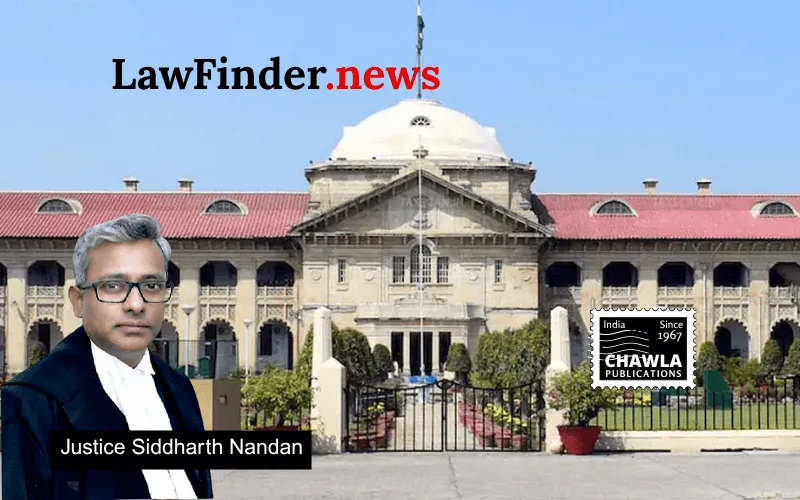
Court Rejects Challenges by Officiating Principals and Senior Lecturers; Validates Chairman’s Solo Declaration of Results under Doctrine of Necessity
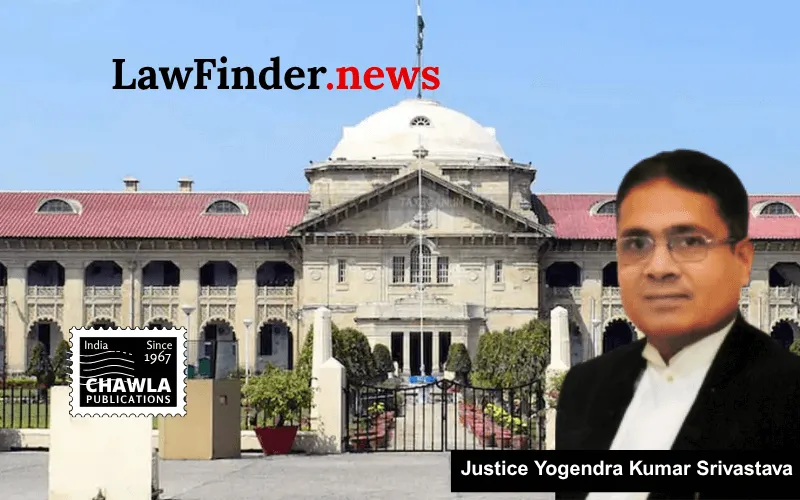
In a significant judgment dated October 5, 2026, the Allahabad High Court dismissed a batch of writ petitions challenging the selection process for the post of Principals/Headmasters conducted by the Uttar Pradesh Secondary Education Service Selection Board. The petitions were filed primarily by senior-most lecturers functioning as officiating principals who, after participating in interviews, were not selected.
The selection process was governed by the U.P. Secondary Education Service Selection Board Rules, 1998 (hereinafter “Rules, 1998”), which replaced earlier rules and guidelines. The petitioners contended that the Board deviated from earlier guidelines upheld in the landmark case of Indra Raj Singh Yadav v. UP Madhyamik Shiksha Sewa Ayog (1984), which provided for institution-wise consideration of the two senior-most teachers vis-à-vis only the top five direct candidates. However, the Court clarified that those guidelines were framed under the earlier Rules, 1983, where detailed procedures were absent.
The Court emphasized that after the enforcement of the Rules, 1998, a comprehensive statutory procedure exists, including awarding quality point marks, conducting interviews, preparing institution-wise panels, and considering candidate preferences. The selection must be governed by these Rules, not the old guidelines. It further held that forwarding the names of the two senior-most teachers by management ensures their inclusion in the zone of consideration but does not grant them overriding preference over direct candidates. These teachers may also apply as direct candidates and express preferences for other institutions.
The Court also addressed a preliminary objection raised by the respondents that petitioners who participated in the interview without objections were estopped from challenging the selection procedure. While acknowledging the general principle that unsuccessful candidates who participate cannot later challenge the process, the Court held this principle is not absolute. Where there are allegations of illegality or hidden procedural defects discovered only after the selection result, candidates are entitled to judicial review. However, on merits, the petitions failed.
A notable aspect of the judgment concerns the declaration of the selection result. By the time the results were declared, all Board members except the Chairman had retired. The petitioners argued that the Chairman alone could not validly declare results as the Board is a multi-member body requiring quorum. The Court invoked the “doctrine of necessity,” a principle allowing actions in exceptional administrative exigencies where strict compliance is impossible. It held that since interviews were conducted when the Board was functional and only result declaration remained, the Chairman’s solo declaration was valid and did not vitiate the selection.
The Court further clarified that candidates not eligible on the last date of application or who had superannuated during pendency of petitions had no enforceable right to challenge the select list. It emphasized that such candidates have no vested right to continue as officiating principals or to seek appointment after superannuation.
The judgment relied on extensive precedents, including Supreme Court decisions on estoppel in selection processes, service law, and the doctrine of necessity. It reaffirmed that recruitment rules and procedures must be followed strictly, and deviation without lawful authority attracts judicial scrutiny, but mere disappointment at non-selection is insufficient for interference.
In conclusion, the Allahabad High Court upheld the validity of the selection process under the Rules, 1998, rejected challenges based on outdated guidelines, validated the Chairman’s declaration of results in absence of other members, and dismissed the writ petitions, thereby bringing closure to a protracted selection process initiated in 2013.
Bottom Line :
Selection to the post of Principal/Headmaster under the U.P. Secondary Education Services Selection Board Rules, 1998 is governed by the statutory scheme of Rules 11 and 12 and not by earlier guidelines framed under the 1983 Rules and approved in Indra Raj Singh Yadav. Candidates who participated in the interview were not estopped from raising challenge where alleged illegality was asserted, but the challenge failed on merits. Declaration of result by the Chairman alone, in absence of other members of the Board, was upheld by applying the doctrine of necessity. Officiating Principals not eligible on the last date of application or those who had already superannuated had no enforceable right to challenge the select list.
Statutory provision(s):
Uttar Pradesh Secondary Education Service Selection Board Rules, 1998 (Rules 11, 12), U.P. Secondary Education (Services Selection Boards) Act, 1982 (Sections 4, 9, 10), U.P. Secondary Education Service Selection Commission Rules, 1983, Constitution of India Article 226
Dr. Sanjay Kumar Mishra v. State of U.P., (Allahabad) : Law Finder Doc id # 2990681